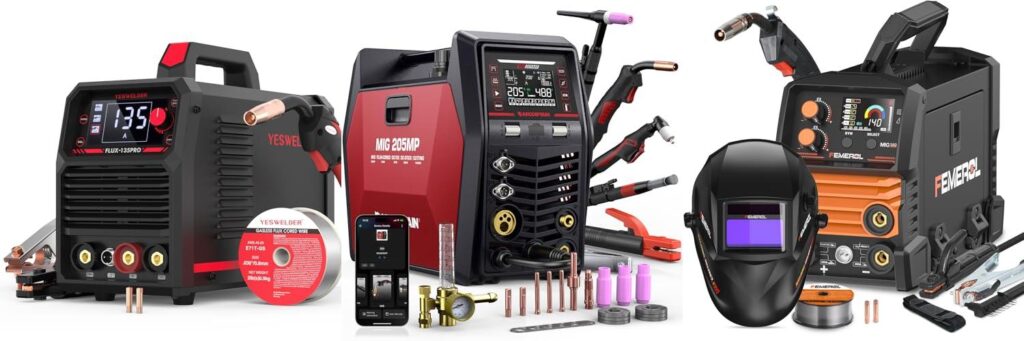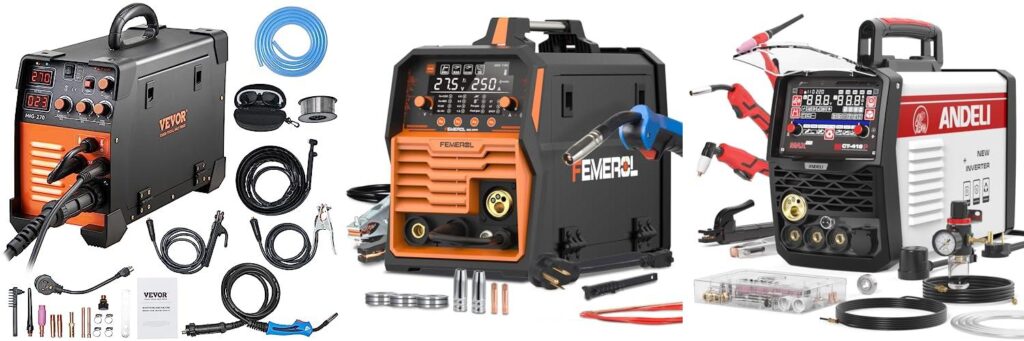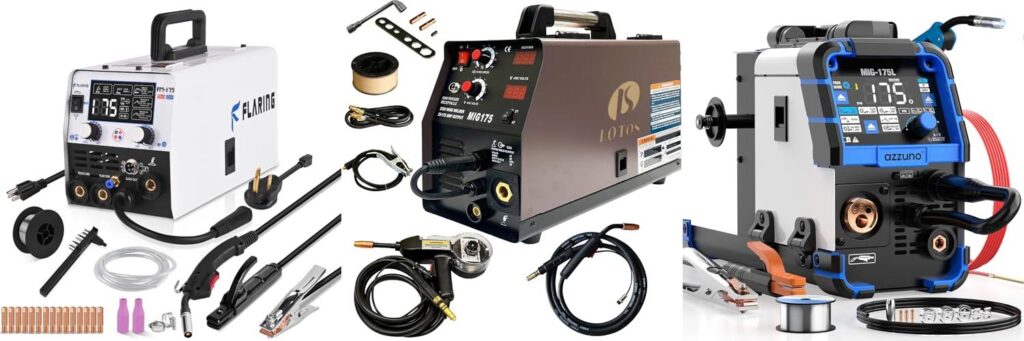
For DIY enthusiasts, hobbyists, and home-based fabricators, the dream of achieving clean, professional TIG welds often seems out of reach, limited by the need for specialized 240V electrical outlets. However, the rise of advanced, plug-and-play 120V TIG welders has completely changed the game.
These compact yet capable machines allow you to harness the precision of TIG welding using a standard household outlet, bringing studio-quality results right into your garage.
While a 120V welder won’t have the raw power for thick aluminum or heavy structural steel, it is perfectly suited for a vast range of projects that define the home workshop. From crafting custom exhaust systems and repairing motorcycle frames to building decorative metal art and fixing thin-gauge sheet metal, a 120V TIG machine offers incredible versatility.
The key is to find a unit that maximizes its available power, offering features like AC capability for aluminum, high-frequency start for clean arc ignition, and adjustable amperage control for delicate work.
Navigating the options in this category requires a focus on value, features, and real-world performance. This guide is designed to help you find the perfect match for your needs and budget. We have researched and tested to bring you a curated list of the 5 best 120V TIG welders on the market. We’ll break down the strengths of each model, from multi-process all-stars to dedicated TIG units, ensuring you can make an informed decision and invest in a machine that will unlock your creative potential without requiring a costly electrical upgrade.
Our Top 5 120V Tig Welder Recommendations at a Glance
| Image | Product | Rating | Links |
|---|---|---|---|
 |
YESWELDER 205A Tig Welder with Pulse Large LED Display | 8.7/10 | Check Price |
 |
YESWELDER 125Amp Mini Stick Welder Large LED Display with Lift TIG Torch | 9.0/10 | Check Price |
 |
YESWELDER 135Amp MIG Welder | 8.7/10 | Check Price |
 |
TIG Welder | 8.7/10 | Check Price |
 |
H HZXVOGEN 200A TIG Welder | 9.3/10 | Check Price |
Top 5 120V Tig Welder Detailed Reviews
1. YESWELDER 205A Tig Welder with Pulse Large LED Display
Rating: 8.7/10
The YESWELDER 205A Tig Welder is a versatile 3-in-1 machine that can handle STICK, DC TIG, and PULSE TIG welding. It works with both 110V and 220V power, making it adaptable for different locations. This welder is designed for ease of use, even for beginners, and can weld various metals like stainless steel and mild steel. It’s a great option for workshops, outdoor projects, and even auto repair.
What We Like:
- The large LED display makes it easy to see all your welding settings.
- Starting the weld is simple with features like Hot Start, which prevents the electrode from sticking.
- The Auto Memory function remembers your settings, so you don’t have to re-enter them every time.
- It’s lightweight at only 10.7 pounds, so it’s easy to move around and store.
- With up to 200 amps, it has enough power for most welding jobs.
- High-Frequency (HF) non-touch starting makes it easy to get the arc started.
- The 3-in-1 capability means you can tackle many different welding tasks.
- It has a foot pedal interface, allowing for more control over the welding current.
- Pulsed TIG welding helps create cleaner, better-looking welds.
What Could Be Improved:
- This welder cannot be used to weld aluminum.
Overall, the YESWELDER 205A is a powerful and user-friendly welding machine that offers great value for its features. It’s a solid choice for hobbyists and professionals working with steel.
2. YESWELDER 125Amp Mini Stick Welder Large LED Display with Lift TIG Torch
Rating: 9.3/10
The YESWELDER 125Amp Mini Stick Welder is a compact and versatile welding machine designed for both beginners and DIY enthusiasts. It offers a range of features that make it easy to use and effective for various projects.
What We Like:
- Great for beginners: The 20-125 amp range is perfect for welding thin materials and simple DIY projects. It works well with common welding rods like E6011, E6013, E6010, and E7018 up to 1/8 inch.
- Clear, large LED display: This intelligent display shows important information like current, function, and welding mode. The easy-to-use knob makes adjustments quick and precise, even with gloves on.
- Super portable: It’s small (9.3*3.7*5.1 inches) and weighs less than 4.4 lbs. The handle makes it easy to carry, which is great for working in different locations or tight spaces.
- Built-in safety features: The welder has automatic protection against voltage changes, over current, overload, and overheating. This keeps you and the machine safe.
- Two welding modes: You can use it as a stick welder or a Lift TIG welder. This flexibility lets you tackle different jobs and materials like stainless steel, mild steel, and cast iron.
- Helpful welding aids: The Hot Start feature makes starting the arc easy and reliable. The Arc Force feature prevents the electrode from sticking, leading to better welds and less mess.
What Could Be Improved:
- Lift TIG functionality might be basic for advanced users.
- The 110V power limitation might not be suitable for heavy-duty industrial work.
This YESWELDER mini stick welder is a solid choice for anyone looking for a user-friendly and portable welding solution for home or light-duty tasks.
3. YESWELDER 135Amp MIG Welder
Rating: 9.3/10
The YESWELDER FLUX-135PRO is a fantastic 3-in-1 welding machine that’s perfect for all sorts of projects. It’s a budget-friendly option that can handle Flux Core MIG, Stick, and even Lift TIG welding (with an extra torch). This makes it super versatile for different welding jobs.
What We Like:
- It’s a 3-in-1 welder, so you can do MIG, Stick, and Lift TIG welding.
- It can weld mild steel up to 2/5” thick.
- The digital display makes it easy to see what you’re doing.
- It’s lightweight, only 11.4 lbs, so you can carry it around easily.
- It comes with extra flux core wire, so you can start welding right away.
- It has safety features like protection against over-current and over-heating.
- The synergetic control helps match voltage to wire speed automatically, which is great for beginners.
What Could Be Improved:
- You need to buy a separate torch for Lift TIG welding.
- The MIG welding capacity is limited to 135 amps, which might not be enough for very thick materials.
This welder is a great choice for anyone looking for a versatile and easy-to-use welding machine. It’s ready to go for many projects, making it a smart buy.
4. TIG Welder
Rating: 9.3/10
The TIG Welder, 200 Amp 3-in-1 Multifunctional Machine is a handy tool for anyone who needs to weld different kinds of metal. It can do three jobs: TIG welding, pulse TIG welding, and arc welding. This makes it super useful for projects at home or for work. It works with both 110V and 220V power, so you can use it in most places. It can even use a 3/32 tungsten welding rod, which is great for precise work.
What We Like:
- It’s a 3-in-1 machine, meaning it can do TIG, Pulse TIG, and Arc welding. This makes it very versatile.
- It comes with everything you need to start welding: a TIG torch, ground clamp, electrode holder, and welding tongs.
- It can weld many different metals like stainless steel, mild steel, and copper.
- The hot start TIG and non-contact arc start make welding easier and use less material.
- It supports welding different thicknesses of metal, from thin sheets to thicker pieces.
- It’s energy-saving and has built-in protections to keep it safe and running efficiently.
- With 200A of power, it handles various welding jobs well, whether you’re new to welding or a pro.
What Could Be Improved:
- The manual might be a bit hard for beginners to understand fully.
- The cooling fan can be a little loud during operation.
This welder is a solid choice for many welding tasks. It offers great performance and flexibility for its price.
5. H HZXVOGEN 200A TIG Welder
Rating: 8.8/10
The H HZXVOGEN 200A TIG Welder is a powerful and versatile tool for anyone who welds. It can do TIG welding and stick welding. It works with both 110V and 220V power. This welder makes it easy to get great results.
What We Like:
- High-frequency start makes starting the arc easy and protects the tungsten.
- It’s a 2-in-1 welder, so you can TIG or stick weld up to 200A.
- It works with both 110V and 220V power.
- Hot start and arc force help you make smooth, strong welds.
- An 80% duty cycle means it can run for a long time without overheating.
- The post-gas delay feature protects your welds from bad gases while they cool.
- It’s easy to use for both beginners and experts.
What Could Be Improved:
- More detailed instructions for advanced features could be helpful for absolute beginners.
- While it’s easy to use, a slightly larger display for settings might be nice for some users.
This HZXVOGEN welder offers excellent quality and control. It’s a solid choice for hobbyists and professionals alike.
Your Guide to Choosing the Right 120V TIG Welder
Picking out a 120V TIG welder can feel like a big decision. But don’t worry! This guide will help you understand what to look for so you can find the perfect tool for your projects. TIG welding is a precise way to join metals, and a 120V welder is great for home workshops and smaller jobs.
Key Features to Look For
When you’re shopping, keep these important features in mind:
- Amperage Range: This tells you how much power the welder has. A wider range means you can weld thinner and thicker metals. Look for a welder that can go up to at least 100 amps for most 120V machines.
- Duty Cycle: This is how long the welder can run at a certain amperage before it needs to cool down. A higher duty cycle means you can weld for longer periods without stopping. For example, a 30% duty cycle at 100 amps means you can weld for 3 minutes out of every 10.
- AC/DC Capability: Some TIG welders can do both AC (for aluminum) and DC (for steel and stainless steel). If you plan to weld different types of metal, this feature is essential.
- High-Frequency Start: This feature makes starting your arc easier and cleaner. It avoids the need to scratch the tungsten on the metal, which can contaminate your weld.
- Portability: Many 120V TIG welders are small and light. This makes them easy to move around your shop or take to different locations.
- Included Accessories: Check what comes with the welder. Does it include a TIG torch, ground clamp, regulator, and consumables? Having these included saves you extra trips to the store.
Important Materials You Can Weld
A 120V TIG welder is versatile. It works well with many common metals:
- Steel: This is a very common metal for TIG welding. You can join mild steel, carbon steel, and more.
- Stainless Steel: TIG welding is excellent for stainless steel, giving you clean and strong welds.
- Aluminum: If your welder has AC capability, you can also weld aluminum. This is great for projects like custom car parts or decorative items.
- Chromoly: This is a strong type of steel often used in custom fabrication for things like bicycle frames or roll cages.
Factors That Improve or Reduce Quality
Several things can make a TIG welder better or worse:
What Improves Quality:
- Brand Reputation: Well-known brands often use better components and have more reliable machines.
- Build Quality: Look for a sturdy metal casing and good-quality connectors. A well-built welder will last longer.
- Advanced Features: Features like pulse TIG welding (which helps control heat) can significantly improve weld quality, especially on thin metals.
- Customer Reviews: Real users can tell you a lot about a welder’s performance and reliability.
What Reduces Quality:
- Cheap Components: Machines made with low-cost parts might break down sooner or perform poorly.
- Limited Amperage: If the amperage is too low, you won’t be able to weld thicker materials effectively.
- Poor Cooling: A welder that overheats quickly will interrupt your work and can damage the machine.
- Lack of Features: Missing essential features like a high-frequency start can make welding frustrating.
User Experience and Use Cases
A 120V TIG welder is perfect for hobbyists, DIYers, and light professional use. Many people use them for:
- Home Garage Projects: Building custom furniture, repairing tools, or creating metal art.
- Automotive Repair and Customization: Working on exhaust systems, fabricating brackets, or repairing body panels.
- Bicycle Frame Building: Creating custom bikes with precise and strong welds.
- Sculpture and Art: Welding intricate metal designs.
- Small Fabrication Jobs: Creating small parts or prototypes.
The ease of use depends on the welder’s controls. Simple machines are great for beginners. More advanced machines might have more settings to learn, but they offer greater control for experienced welders.
Frequently Asked Questions (FAQ)
Q: What is the main advantage of a 120V TIG welder?
A: The main advantage is its portability and the fact that it plugs into a standard household outlet. This makes it very convenient for home users.
Q: Can I weld thick metal with a 120V TIG welder?
A: You can weld thinner metals very well. For thicker metals (over 1/4 inch), you might need more passes or a higher amperage welder, possibly a 240V model.
Q: Is TIG welding difficult to learn?
A: TIG welding requires practice and coordination, but with patience, most people can learn it. Many online tutorials and courses can help.
Q: Do I need a special outlet for a 120V TIG welder?
A: No, most 120V TIG welders plug into a standard 15 or 20-amp household outlet. Make sure the circuit can handle the welder’s power draw.
Q: What safety gear do I need for TIG welding?
A: You absolutely need a welding helmet with a dark lens, welding gloves, a welding jacket or apron, and sturdy, non-synthetic clothing. Good ventilation is also crucial.
Q: How do I choose between AC and DC TIG welding?
A: Use DC for steel and stainless steel. Use AC for aluminum because it helps break up the aluminum oxide layer.
Q: What is a duty cycle and why is it important?
A: The duty cycle tells you how long the welder can run at a certain amperage before it needs to cool down. A higher duty cycle is better for longer welding sessions.
Q: Can I use a 120V TIG welder for professional work?
A: For light professional use and small fabrication shops, yes. For heavy industrial work, you would typically need a more powerful 240V or higher-end machine.
Q: What are common problems with budget TIG welders?
A: Budget welders might have inconsistent arc quality, shorter lifespans, or lack essential features like reliable arc starting.
Q: Where can I buy a 120V TIG welder?
A: You can find them at welding supply stores, home improvement stores, and online retailers like Amazon.
In conclusion, every product has unique features and benefits. We hope this review helps you decide if it meets your needs. An informed choice ensures the best experience.
If you have any questions or feedback, please share them in the comments. Your input helps everyone. Thank you for reading.

I’m Darrell Julian, the founder, lead writer, and hands-on welding enthusiast behind ArcWeldingPro.com. With more than 15 years of real-world welding experience, I created this platform to share what I’ve learned in the field, in the shop, and in the heat of the arc.