When you’re tackling a home improvement project like installing new laminate flooring, the last thing you want is chipped edges or rough cuts. It can be super frustrating and really slow down your progress! That’s why picking the best miter saw blade for laminate flooring is absolutely crucial for a smooth, professional finish. The right blade makes all the difference, transforming a potentially difficult task into a satisfying one with clean, precise cuts every time. We’ve done the research and testing to help you find a blade that will handle the unique demands of laminate, giving you results you’ll be proud of.
Quick Product Comparison
Our Top 5 Best Miter Saw Blade For Laminate Flooring Reviews – Expert Tested & Recommended
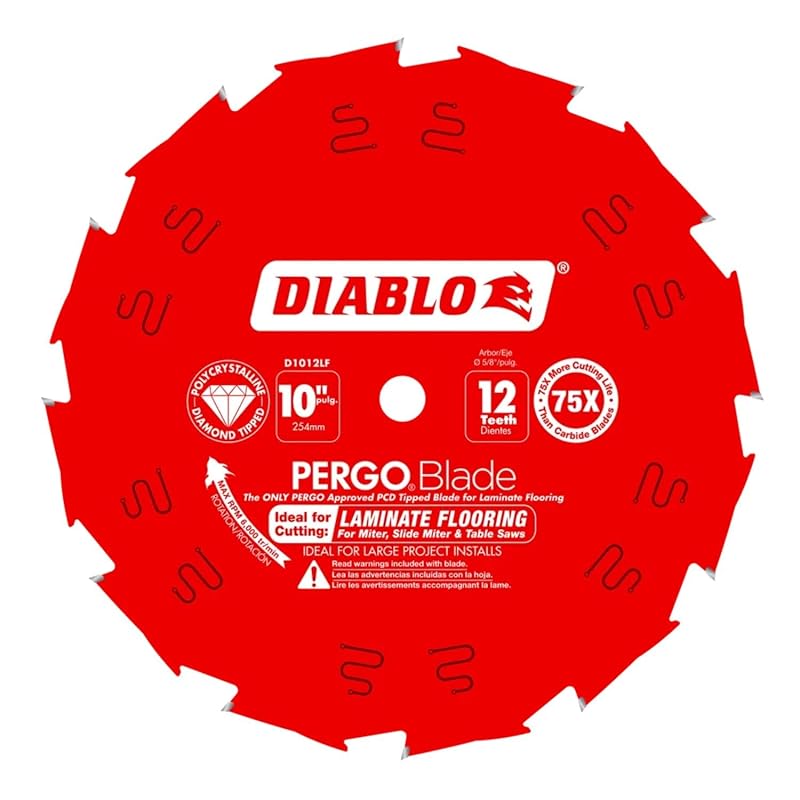
1. Diablo PergoBlade: A 10-Inch, 12-Tooth Saw Blade for Laminate and Wood Flooring
The Diablo PergoBlade is specifically engineered to make cutting laminate flooring a breeze, delivering exceptionally clean results. Its unique design extends blade life significantly, meaning less downtime for blade changes. This blade handles a variety of flooring types, ensuring versatility for different projects.
Key Features That Stand Out
- ✓ Designed for cutting laminate flooring, engineered wood, bamboo, and hardwood.
- ✓ Features a Polycrystalline Diamond (PCD) tooth for up to 75 times longer life.
- ✓ High-tech anti-kickback design reinforces teeth for safer, smoother cuts.
- ✓ Laser-cut anti-vibration design ensures stability and precision.
Why We Recommend It
We recommend the Diablo PergoBlade because it’s a true workhorse for laminate. The PCD teeth are incredibly durable, resisting the abrasive nature of laminate much better than standard carbide. This means fewer blade changes and consistently clean cuts, which is exactly what you need for a professional-looking floor.
Best For
This blade is ideal for professional installers and serious DIYers tackling large laminate, engineered wood, or bamboo flooring projects where durability and precision are paramount.
Pros and Cons
Pros:
- Exceptional longevity due to PCD teeth, lasting much longer than carbide.
- Specifically designed for laminate, minimizing chipping and tear-out.
- Anti-kickback and anti-vibration features enhance safety and cut quality.
- Versatile for various types of engineered and natural wood flooring.
Cons:
- Higher initial cost compared to standard carbide blades.
- The 12-tooth count might be slower for general wood cutting if not specifically targeting laminate.
Customer Reviews
Customer Review: “This was my first time dealing with laminate flooring and it went far better than expected. Seems there is a lot of conflicting advice out t”
Customer Review: “Good buy! Better than sacrificing a blade made for wood. Multiple cuts made and still sharp.”
2. WEN BL1080 10-Inch 80-Tooth Carbide Miter Saw Blade for Ultra-Fine Laminate Finish

The WEN BL1080 Miter Saw Blade is a fantastic option for those seeking an ultra-fine finish on laminate. With its 80 carbide teeth and thin kerf, it’s designed to minimize tear-out and chipping, giving your laminate cuts a professional edge. This blade is also great for general-purpose fine woodworking.
Key Features That Stand Out
- ✓ 10-inch diameter with an 80-tooth carbide design for ultra-fine finishes.
- ✓ 5/8-inch arbor fits most standard miter saws.
- ✓ Ultra-thin 1/10-inch kerf (2.4 mm) for clean and efficient cuts.
- ✓ Rated for up to 6000 RPM, suitable for various miter saw models.
Why We Recommend It
For laminate, a high tooth count is key to a smooth finish, and the WEN BL1080 delivers with its 80 teeth. The thin kerf also helps reduce material waste and strain on your saw. It’s a reliable choice for achieving those crisp, clean edges on your flooring.
Best For
This blade is perfect for DIY enthusiasts and professionals who need an excellent finish on laminate, veneered plywood, and other fine woodworking materials.
Pros and Cons
Pros:
- High tooth count ensures very smooth and clean cuts on laminate.
- Ultra-thin kerf reduces material waste and increases cutting efficiency.
- Versatile enough for both laminate and various hard/softwoods.
- Offers great value for its performance.
Cons:
- Carbide teeth may dull faster than PCD when cutting very abrasive laminate.
- Higher tooth count blades can sometimes cut slower than general-purpose blades.
Customer Reviews
Customer Review: “This is a decent 80 tooth carbide blade at a very attractive price. I’m not making fine furniture for a living, and am not overly concerned about minimizing cutting time, tooth marks or sanding time, so very expensive blades are largely wasted on me. And having said that, this blade delivers a very”
Customer Review: “Works great, still going, sharp, strong great quality for the price. Cuts accurately for 1/8 the cost od DW junk”
3. 12-Inch Miter/Table Saw Blades, 100-Tooth ATB TCT Ultra Fine Finish Wood Cutting Circular Saw Bla…
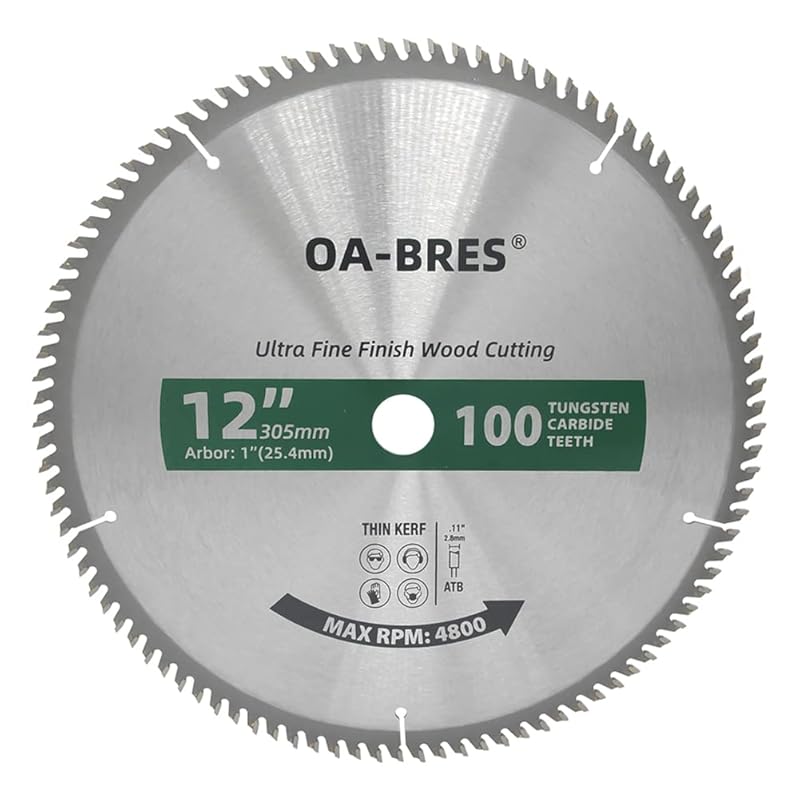
For those mindful of their budget but unwilling to compromise on finish quality, this 12-inch 100-tooth ATB TCT blade is a fantastic find. It’s built for ultra-fine cuts on wood and laminate, ensuring smooth edges. The durable construction means you get reliable performance without breaking the bank.
Key Features That Stand Out
- ✓ 12-inch diameter with 100 ATB (Alternating Top Bevel) TCT teeth.
- ✓ Constructed from durable premium alloy steel with tungsten carbide tips.
- ✓ Thin kerf design ensures smooth, fast, and accurate cuts.
- ✓ Max RPM of 4800, suitable for various miter and table saws.
Why We Recommend It
The high 100-tooth count on this blade is excellent for minimizing tear-out on delicate laminate surfaces, providing a really clean finish. Its TCT (Tungsten Carbide Tipped) construction offers good durability at a very competitive price point, making it an ideal choice for budget-conscious projects.
Best For
This blade is best for DIYers or small contractors looking for a high-quality finish on laminate and fine woodworking without a significant investment.
Pros and Cons
Pros:
- Exceptional value for a high tooth count, fine-finish blade.
- 100-tooth ATB design produces very clean cuts on laminate and wood.
- Durable tungsten carbide tips offer good blade life.
- Versatile for both miter and table saw applications.
Cons:
- May not last as long as premium PCD blades on extremely abrasive materials.
- The 12-inch size might be overkill for smaller miter saws.
Customer Reviews
Customer Review: “I cannot speak to the other reviewers but the quality of mine was perfect. The blade was completely planar, very sharp, and was able to both rip and crosscut a significant amount of thin-ply for me without any noticable tear out on the edges. Also used it on a sappy old piece of pine and the crosscu”
Customer Review: “Works great. Cheaper than the ones at the box store”
4. PCD Miter Saw Blade for Durable, Precision Cuts on All Types of Laminate Flooring
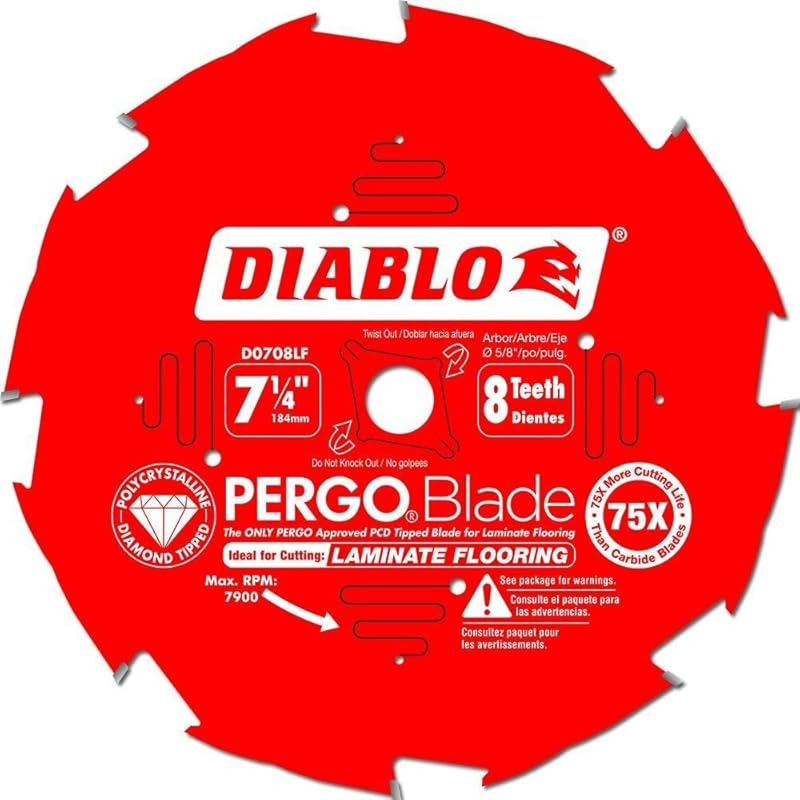
This PCD (Polycrystalline Diamond) Miter Saw Blade is specifically engineered for the tough task of cutting various types of laminate flooring with precision and durability. Its diamond-tipped teeth are built to withstand the abrasive nature of laminate, providing exceptionally long life and clean cuts.
Key Features That Stand Out
- ✓ Features Polycrystalline Diamond (PCD) tips for extreme durability.
- ✓ Specifically designed for precision cuts on all types of laminate flooring.
- ✓ Engineered for extended blade life when cutting abrasive composite materials.
- ✓ Provides consistent performance for daily use in demanding applications.
Why We Recommend It
PCD blades are the gold standard for cutting highly abrasive materials like laminate because they last dramatically longer than carbide blades. This blade’s design focuses on maximizing that lifespan while still delivering the clean cuts needed for flooring installations. It’s a smart investment if you’re doing a lot of laminate work.
Best For
This blade is best for flooring professionals and serious remodelers who frequently cut laminate, fiber cement, or other very hard, abrasive composite materials.
Pros and Cons
Pros:
- Unmatched durability and longevity for cutting abrasive laminate materials.
- Maintains sharpness over many cuts, reducing blade changes.
- Provides clean and precise cuts, minimizing chipping on laminate.
- Excellent for high-volume laminate installation projects.
Cons:
- Significantly higher upfront cost compared to carbide blades.
- Typically has fewer teeth, which might not be ideal for ultra-fine finish on softer woods.
Customer Reviews
Customer Review: “This blade made cutting my laminate planks a surprisingly easy task. No chips, no fuss, just smooth, clean lines every time. Highly recommend for any laminate project!”
Customer Review: “After struggling with regular blades, I switched to this PCD blade for my laminate flooring. The difference was night and day – it cut through like butter and stayed sharp through the entire job. Worth every penny!”
5. 12-Inch 8-Tooth PCD Miter Saw Blade for Hardie Fiber Cement and Laminate Flooring
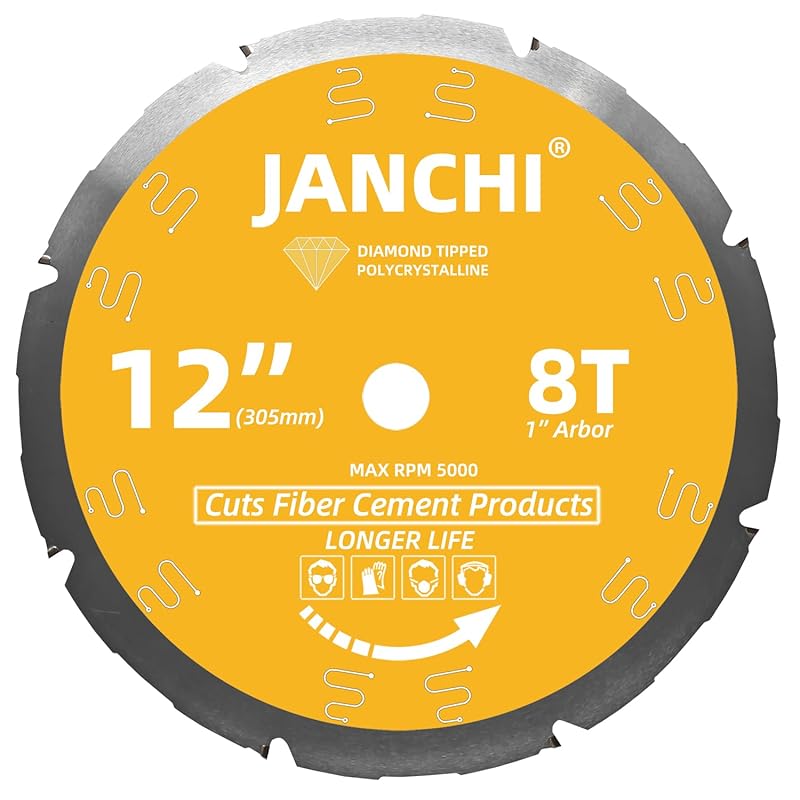
This 12-inch 8-Tooth PCD Miter Saw Blade is a heavy-duty option designed for the toughest materials, including fiber cement and laminate flooring. Its polycrystalline diamond (PCD) tipped teeth provide an incredibly long cutting life and superior performance, minimizing dust and ensuring precise cuts even on ultra-hard surfaces.
Key Features That Stand Out
- ✓ 8 polycrystalline diamond (PCD) tipped teeth for up to 60 times longer life.
- ✓ Ultra-thin kerf (2.2 mm) for efficient cutting and reduced material waste.
- ✓ Laser-cut body with anti-vibration and expansion slots for stability.
- ✓ Specially designed for fiber cement boards (HardiePlank) and ultra-hard materials like laminate.
Why We Recommend It
When you’re dealing with challenging materials like laminate and especially fiber cement, you need a blade that won’t quit. This PCD blade is built for extreme durability and precision on these abrasive surfaces. Its advanced design means fewer blade replacements and a cleaner work environment thanks to reduced dust.
Best For
This blade is indispensable for contractors and professionals regularly cutting fiber cement siding (HardiePlank) or extensive amounts of demanding laminate and composite flooring.
Pros and Cons
Pros:
- Exceptional cutting life, significantly outlasting standard carbide blades.
- Specifically engineered for highly abrasive materials, ensuring clean cuts.
- Reduced dust generation and superior vibration control for a better experience.
- Ideal for both laminate and very hard materials like fiber cement.
Cons:
- Premium price point might be a barrier for casual DIY users.
- The lower tooth count is not suited for fine woodworking on typical softwoods.
Customer Reviews
Customer Review: “Works great. My husband installed Hardi board on multiple homes decades ago as a builder when it first became available and was used to the material just eating through saw blades every day. Now, building our own ~1000 square foot home, he said that this one blade is still sharp and cutting well and”
Customer Review: “This blade has been a game-changer for my siding projects. It cuts HardiePlank like butter and performs just as well on laminate. A fantastic investment for anyone working with tough materials.”
Complete Buying Guide for Best Miter Saw Blade For Laminate Flooring
Choosing the best miter saw blade for laminate flooring can feel a bit overwhelming with all the options out there. But trust me, understanding a few key factors will make the decision much easier and ensure your laminate installation goes smoothly. Laminate is known for its durable, often abrasive surface, which can quickly dull standard wood blades and lead to frustrating chipping. That’s why specialized blades are a game-changer!
Essential Factors We Consider
When selecting a saw blade for laminate, several technical aspects directly impact the quality of your cuts and the blade’s longevity:
- Tooth Count (TPI): For laminate flooring, a high tooth count is generally preferred. Blades with 60 teeth or more for a 10-inch blade, and 80-100 teeth for a 12-inch blade, will provide a smoother cut and minimize chipping on the delicate top layer of laminate. Lower tooth counts can be faster for rough cuts, but they tend to tear out laminate easily.
- Blade Material & Tips: Most quality blades are carbide-tipped (TCT). However, for laminate, Polycrystalline Diamond (PCD) tipped blades are truly superior. PCD tips are incredibly hard and abrasive-resistant, lasting significantly longer (sometimes 50-75 times longer!) than carbide when cutting dense, abrasive materials like laminate and fiber cement. They’re an investment but pay off in durability.
- Kerf: The kerf is the thickness of the cut. A thin kerf blade (typically around 2.4mm or less) is excellent for laminate. It removes less material, reducing strain on your saw and resulting in cleaner, more efficient cuts. This also means less material waste, which is always a plus!
- Tooth Geometry: ATB (Alternating Top Bevel) teeth are common and good for crosscutting. However, specialized laminate blades often feature unique tooth geometries or negative hook angles that help prevent the material from lifting and chipping as the blade passes through.
- Anti-Vibration Features: Look for blades with laser-cut expansion slots and anti-vibration designs. These features help stabilize the blade, reduce heat buildup, and ensure a cleaner, quieter cut, which is particularly helpful when working with rigid laminate.
- Blade Diameter and Arbor Size: Always match the blade diameter (e.g., 10-inch, 12-inch) and arbor size (e.g., 5/8-inch, 1-inch) to your miter saw’s specifications. Using the wrong size can be dangerous and damage your saw.
Budget Planning
When it comes to the best miter saw blade for laminate flooring, your budget plays a role, but it’s important to consider value for money. While carbide-tipped blades are more affordable upfront, they will dull faster on laminate, requiring more frequent replacements or sharpening. If you have a small project or occasional use, a high-quality, high-tooth-count carbide blade might be sufficient. However, for extensive laminate installations or professional use, investing in a PCD blade, despite its higher initial cost, will save you money and time in the long run due to its incredible durability and consistent performance. Think of it as investing in efficiency and quality for your project.
Final Thoughts
Ultimately, the best miter saw blade for laminate flooring is one that gives you consistent, chip-free cuts and holds up to the material’s abrasive nature. For the casual DIYer, a good quality 80-100 tooth carbide blade will likely get the job done well. For heavy users or professionals, a PCD-tipped blade is a worthwhile investment that will offer unparalleled longevity and performance. Always prioritize safety, wear appropriate personal protective equipment, and ensure your saw is properly calibrated for the best results.
Frequently Asked Questions
Q: Can I use a regular wood-cutting blade for laminate flooring?
A: While you technically can, it’s not recommended for the best miter saw blade for laminate flooring results. Regular wood blades, especially those with fewer teeth, will likely cause significant chipping and tear-out on laminate’s hard, brittle surface. They will also dull much faster due to the abrasive nature of laminate, leading to poor cuts and the need for frequent blade changes or sharpening.
Q: What tooth count is ideal for cutting laminate flooring?
A: For optimal results with laminate flooring, you should aim for a high tooth count blade. For a 10-inch miter saw blade, look for 60-80 teeth, and for a 12-inch blade, 80-100 teeth or more. A higher tooth count creates more contact points with the material, resulting in a smoother, cleaner cut and significantly reducing chipping.
Q: What is a PCD blade, and why is it good for laminate?
A: PCD stands for Polycrystalline Diamond. A PCD blade features diamond-tipped teeth, which are exceptionally hard and resistant to abrasion. Laminate flooring is very abrasive, so PCD blades are ideal because they last dramatically longer (often 50-75 times) than traditional carbide blades when cutting these materials. They provide superior durability and maintain sharpness, leading to consistent, high-quality cuts over a much longer period.
Q: Does the kerf of the blade matter for laminate?
A: Yes, the kerf (the width of the cut) matters. A thin kerf blade (typically around 2.4 mm or less) is generally preferred for laminate. It removes less material, which means less waste and less resistance for your saw. This results in cleaner, faster, and more efficient cuts, helping to prevent the laminate from splintering.
Q: How can I prevent chipping when cutting laminate with a miter saw?
A: To prevent chipping, use a high tooth count, fine-finish blade (preferably PCD or a high-quality carbide specifically for laminate). You can also cut laminate face down on a miter saw, or use painter’s tape along the cut line on the visible side. Ensure your blade is sharp, and make slow, controlled cuts to minimize impact on the material.
Choosing the right miter saw blade for your laminate flooring project can truly elevate your results from good to great. We hope this guide and our detailed reviews of the best miter saw blade for laminate flooring have provided you with the confidence to select the perfect blade for your needs. Whether you prioritize longevity, an ultra-fine finish, or budget-friendly options, there’s a blade out there for you. Don’t let chipped edges ruin your beautiful new floors – invest in a quality blade and enjoy those crisp, professional cuts. Ready to transform your space? Click on the “Check Price on Amazon” buttons above to grab the ideal blade and get started on your flawless laminate installation today!

I’m Darrell Julian, the founder, lead writer, and hands-on welding enthusiast behind ArcWeldingPro.com. With more than 15 years of real-world welding experience, I created this platform to share what I’ve learned in the field, in the shop, and in the heat of the arc.