Ever wondered why some TIG welds look so clean and strong, while others can be a bit messy? The secret often lies in the gas you use. Choosing the right shielding gas for your TIG welding project is like picking the perfect paintbrush for an artist – it makes a huge difference in the final masterpiece.
But let’s be honest, standing in front of a wall of gas cylinders can feel overwhelming. Should you pick Argon? Maybe a mix? Each choice seems to have its own pros and cons, and it’s easy to get confused. This can lead to wasted time, materials, and frustrating welds that just don’t turn out right.
Don’t worry, though! By the end of this post, you’ll understand exactly which gases work best for different TIG welding jobs. We’ll break down the options so you can confidently select the gas that will help you create beautiful, strong welds every time. Let’s dive in and discover the power of the right shielding gas!
Our Top 5 Gas For Tig Welding Recommendations at a Glance
Top 5 Gas For Tig Welding Detailed Reviews
1. New 60 cu ft Steel Argon Gas Cylinder with CGA580 Valve

Rating: 8.9/10
This New 60 cu ft Steel Argon Gas Cylinder with CGA580 Valve is a reliable choice for your welding and industrial needs. It’s built tough and ready to go.
What We Like:
- CERTIFIED: It’s DOT Approved, meaning it meets strict safety standards.
- DURABLE: The thick-walled steel tank is built to last, even on busy job sites.
- READY TO USE: The CGA580 Valve is already installed, saving you time and hassle.
- GOOD SIZE: With a 7″ diameter and 28.5″ height, it holds a generous 60 cu ft of argon.
What Could Be Improved:
- COLOR VARIATION: The color can be cranberry or black, so you might not get the exact shade you want.
- SHIPS EMPTY: Remember, the cylinder ships empty, so you’ll need to get it filled before use.
This cylinder offers solid construction and essential features for anyone needing argon gas. It’s a dependable piece of equipment for your projects.
2. RX WELD Argon Regulator Flowmeter Gas Gauge for Mig Tig Weld with Gas Welding Hose

Rating: 8.9/10
The RX WELD Argon Regulator Flowmeter Gas Gauge is a handy tool for anyone doing MIG or TIG welding. It helps you control the flow of gas from your tank to your welding torch. This means you get the right amount of gas for a clean and strong weld every time. It’s built tough and designed to be easy to use.
What We Like:
- It fits common Argon, Helium, and CO2 tanks thanks to its CGA-580 connector.
- You can connect it to different fittings, including a 9/16″ x 18 nut, a 5/8″ x 18 fitting, or a 1/4″ barbed fitting.
- The flow is adjustable from 10 to 60 cfh, shown by a ball in a tube, so you can get precise gas flow.
- It’s made of strong brass to last a long time, even in tough workshop conditions.
- The package comes with everything you need: the regulator, a 6.6-foot hose, and a hose clamp and mounting nut.
- RX WELD offers extra accessories, so you can be sure it will work with your setup.
- It’s a good choice for welders who want accurate gas control without spending too much.
What Could Be Improved:
- The flow rate indicator is a simple ball in a tube, which might not be as precise as a digital readout for some users.
- While made of brass, the overall durability for extremely heavy-duty, constant professional use might be a consideration for some.
This regulator is a solid option for hobbyists and those who need reliable gas flow for their welding projects. It offers good value and accurate metering for its price point.
3. YESWELDER 49Pcs TIG Welding Torch Stubby Gas Lens #10 Pyrex Glass Cup Kit For WP-17/18/26

Rating: 9.4/10
Looking to upgrade your TIG welding setup? The YESWELDER 49Pcs TIG Welding Torch Stubby Gas Lens #10 Pyrex Glass Cup Kit for WP-17/18/26 offers a comprehensive collection of essential consumables. This kit is designed to enhance your welding experience, making it easier to tackle various jobs.
What We Like:
- This kit comes with 49 pieces, giving you plenty of parts for your TIG welding torch.
- It’s region-free and simple to use, fitting popular WP-17, WP-18, and WP-26 TIG welding torches.
- The materials used offer great toughness and resistance to cracking, even in cold temperatures.
- You can use this kit for TIG welding on pipelines in many different places.
- It works well for welding carbon steel and some low alloy steels.
What Could Be Improved:
- The insulating rings might not fit perfectly with CK Torches.
This kit provides a solid set of tools for many TIG welding tasks. It’s a good option for welders who need reliable parts for their WP-17, WP-18, or WP-26 torches.
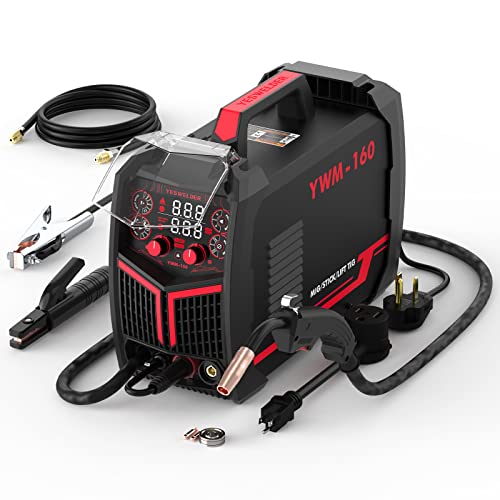
4. YESWELDER Gas Gasless 160A Multiprocess MIG Welder
Rating: 8.9/10
The YESWELDER Gas Gasless 160A Multiprocess MIG Welder is a versatile 4-in-1 welding machine that can handle Flux Core MIG, Gas MIG, Stick, and Lift TIG welding. Its dual voltage capability (110V/220V) and compact size make it easy to move and use in various locations. This welder is designed for both beginners and experienced users, offering smart synergic control and manual adjustment options.
What We Like:
- It’s a 4-in-1 welder, so you can do many kinds of welding jobs with just one machine.
- The synergic control helps beginners set it up easily by automatically adjusting settings.
- You can also manually control the settings, which is great for experienced welders.
- It’s lightweight and portable, making it easy to carry to different job sites.
- The dual voltage feature means you can use it with both 110V and 220V power outlets.
- It has safety features like protection against too much current and heat.
- The LED display makes it easy to see and understand the settings.
- It can work with different wire sizes and welding rods.
What Could Be Improved:
- You need to buy a separate torch for Lift TIG welding.
- The manual doesn’t go into great detail for every specific welding situation.
Overall, this YESWELDER welder offers a lot of features for its price. It’s a solid choice for anyone looking for a flexible and user-friendly welding machine.
5. Argon Co2 Professional Gas Flow Meter Tester Flowmeter (peashooter) for Mig Tig Welder Welding

Rating: 8.9/10
Are you a welder who wants to make sure your gas flow is just right for perfect MIG or TIG welds? This professional gas flow meter tester, nicknamed the “peashooter,” is designed to help you do exactly that. It’s a simple yet effective tool that lets you check the gas flow right at your welding torch. This ensures you get the best results every time you weld.
What We Like:
- It’s a professional tool designed to test gas flow.
- The tester has a clear scale from 0 to 25 liters per minute.
- The markings are easy to read in one-liter steps.
- You just place it over your MIG or TIG gas nozzle.
- The gas flow is measured by the ball at the top.
- It works with all types of welding gases.
- This tester is brand new and has never been used.
- It helps you check your gas flow on both TIG and MIG torches.
What Could Be Improved:
- The “peashooter” name might not be obvious to everyone.
- It’s a dedicated tester, so it doesn’t have other functions.
This flow meter tester is a must-have for any serious welder. It provides a simple way to ensure your gas settings are correct for optimal welding performance.
Choosing the Right Gas for Your TIG Welding Adventures
TIG welding is a fantastic way to create strong, clean welds. But to get the best results, you need the right shielding gas. Think of the gas as a protective shield that keeps the air away from your hot weld pool. This prevents nasty impurities from getting in and ruining your work. This guide will help you pick the perfect gas for your TIG welding projects.
Key Features to Look For in TIG Welding Gas
When you’re buying TIG welding gas, a few things are super important.
- Purity: This is number one! High-purity gas is crucial. It means there are very few other gases mixed in. Impurities can cause problems like porosity (little holes) in your welds. You want gas that’s 99.99% pure or even higher.
- Gas Type: Different gases are better for different metals. We’ll talk more about this later.
- Cylinder Size: Gas comes in cylinders. Bigger cylinders hold more gas, so they last longer. Think about how much welding you’ll do. If you weld a lot, a big cylinder is a good idea. If you only weld occasionally, a smaller one might be fine.
- Flow Rate: This is how much gas comes out of the cylinder. Your welding machine and the type of work you’re doing will tell you the right flow rate. It’s usually measured in cubic feet per hour (CFH).
Important Materials and Their Gas Needs
The metal you’re welding is the biggest factor in choosing your gas.
- Steel: For most steel, pure Argon is a great choice. It’s affordable and works well for many jobs. Sometimes, a little bit of Carbon Dioxide (CO2) or Argon-CO2 mix can be used for steel, but pure Argon is the most common.
- Stainless Steel: Stainless steel needs a bit more help to keep its shiny look and strength. Argon with a small percentage of Helium (He) is excellent. The Helium helps with heat and penetration.
- Aluminum: Aluminum welding is a little trickier. Pure Argon works, but many welders prefer Argon with Helium. The Helium helps to get the heat where it needs to go and clean the aluminum surface.
- Other Metals (Titanium, Copper, etc.): These special metals often need pure Argon or specific gas mixes. Always check the welding manufacturer’s recommendations for these.
Factors That Improve or Reduce Weld Quality
The gas you choose directly impacts how good your welds look and how strong they are.
- Gas Flow Rate: Too little gas means your weld isn’t protected. This leads to contamination and weak welds. Too much gas can cause turbulence and pull air into the weld. Finding the sweet spot is key.
- Gas Purity: As mentioned, impurities are bad news. They can cause porosity, discoloration, and reduce the strength of your weld. Always buy high-purity gas.
- Wind: Wind is the enemy of TIG welding gas! Even a slight breeze can blow your shielding gas away. If you’re welding outside or in a drafty area, you might need a higher flow rate or a windbreak.
- Gas Mixes: Using the correct gas mix for the metal you’re welding is vital. The wrong mix can lead to poor fusion, brittle welds, or a messy appearance.
User Experience and Use Cases
Most TIG welders start with pure Argon. It’s versatile and works for many common metals like steel. As you get more experience and tackle different materials, you’ll explore gas mixes.
- Hobbyist Welder: If you’re just starting out and mostly weld steel for fun projects, pure Argon is your best bet. It’s easy to use and won’t break the bank.
- Automotive Enthusiast: Welding car parts often involves steel and sometimes aluminum. Pure Argon is good for steel. For aluminum, you might consider Argon with a touch of Helium.
- Professional Fabricator: Professionals work with a wide range of metals. They’ll have different cylinders of pure Argon, Argon-Helium mixes, and other specialized gases on hand to handle diverse projects.
Frequently Asked Questions About TIG Welding Gas
Q: What is the most common TIG welding gas?
A: The most common TIG welding gas is pure Argon. It works well for many metals, especially steel.
Q: Can I use the same gas for all metals?
A: No, different metals need different gases. For example, aluminum often benefits from a gas mix that includes Helium.
Q: What happens if I use too little gas?
A: If you use too little gas, your weld won’t be protected from the air. This can cause porosity (holes) and weak welds.
Q: What happens if I use too much gas?
A: Using too much gas can cause turbulence. This can actually pull air into your weld and contaminate it.
Q: Is Helium expensive?
A: Yes, Helium is generally more expensive than Argon. Gas mixes containing Helium will cost more.
Q: How do I know what flow rate to use?
A: Your welding machine manual or the gas supplier can help you determine the right flow rate based on your welding process and the metal you’re using.
Q: Can I weld outside with TIG?
A: It’s difficult to weld outside with TIG because wind blows away the shielding gas. You should try to weld in a sheltered area.
Q: What is porosity in welding?
A: Porosity is when there are small holes or bubbles in your weld. It’s usually caused by contamination or poor shielding gas coverage.
Q: Where can I buy TIG welding gas?
A: You can buy TIG welding gas from welding supply stores, industrial gas suppliers, and some online retailers.
Q: Do I need a special regulator for TIG gas?
A: Yes, you need a gas regulator that fits the type of cylinder valve you have. This regulator controls the gas flow from the cylinder.
In conclusion, every product has unique features and benefits. We hope this review helps you decide if it meets your needs. An informed choice ensures the best experience.
If you have any questions or feedback, please share them in the comments. Your input helps everyone. Thank you for reading.

I’m Darrell Julian, the founder, lead writer, and hands-on welding enthusiast behind ArcWeldingPro.com. With more than 15 years of real-world welding experience, I created this platform to share what I’ve learned in the field, in the shop, and in the heat of the arc.