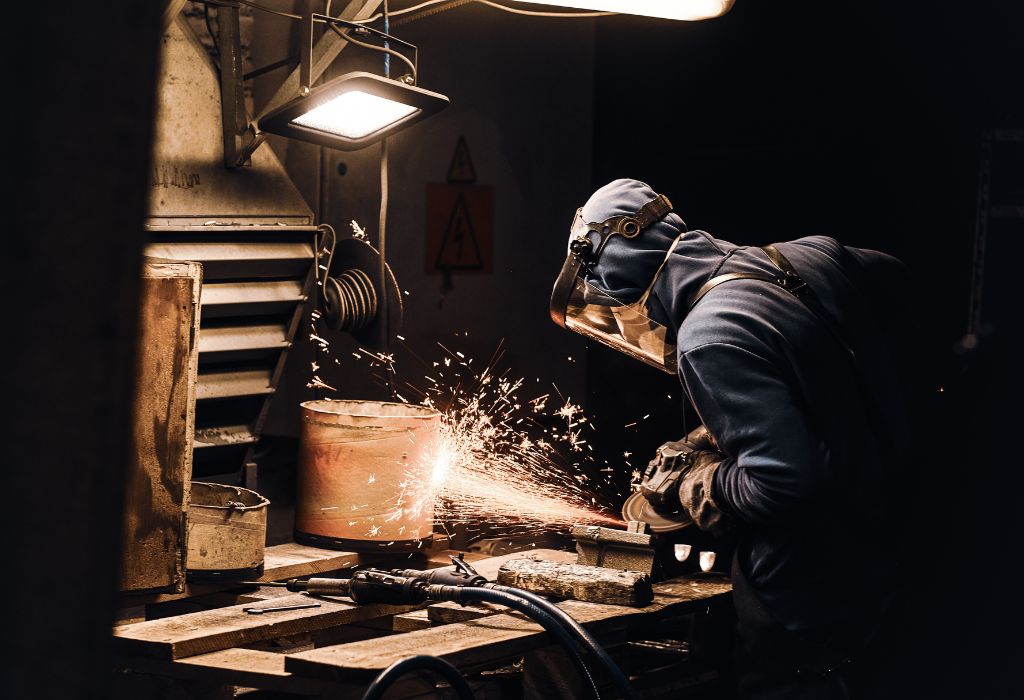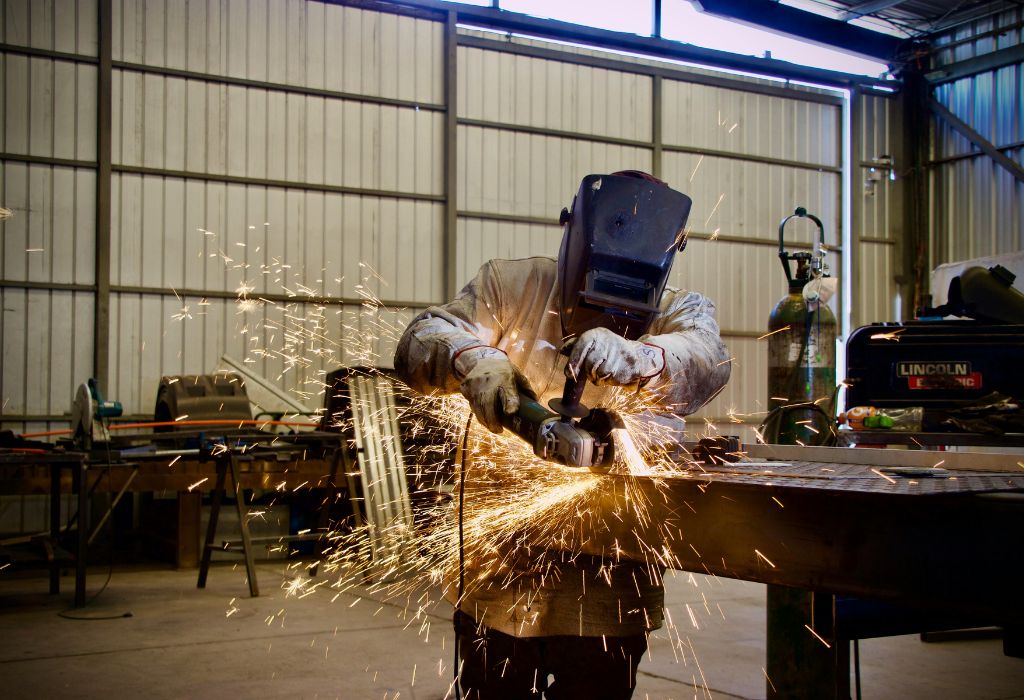
In every welding bay, sparks flash, metal glows, and light bursts with an intensity that can blind the unprotected eye. A welder’s helmet is more than a shield—it is precision optics wrapped in steel-shop durability.
Among its most overlooked features is color. The green, gold, or blue hue you see through the lens is not a style choice. It is a scientifically engineered filter that determines how clearly you see the weld and how safely your eyes withstand invisible radiation.
According to the CDC, more than 20,000 eye injuries related to welding occur annually in U.S. workplaces (CDC). Certified helmets have reduced those numbers by blocking over 99.9 percent of ultraviolet (UV) and infrared (IR) rays (ANSI Z87.1, EN 379).
Colored lenses do far more than dim the light—they alter specific wavelengths, reduce glare, control blue-light intensity, and improve contrast within the weld pool. Choosing the right tint can mean the difference between fatigue and precision.
This guide explains what colored lenses in welding helmets help protect against, how each tint works, and which color fits your process best.
Quick Answer: What Do Colored Lenses Protect Against
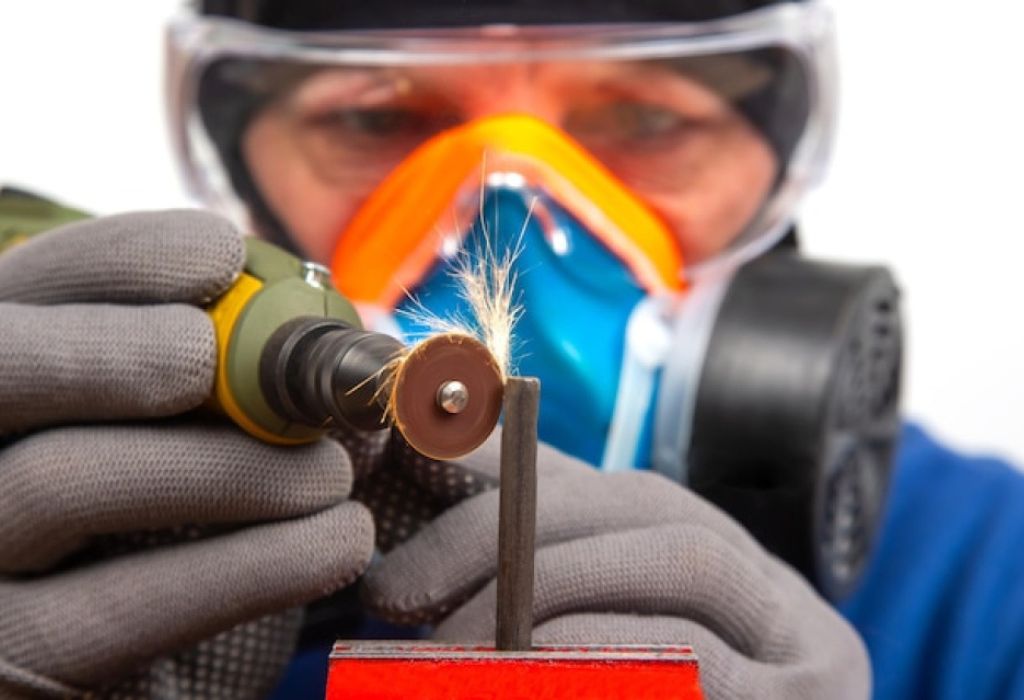
Colored lenses in welding helmets protect against glare, blue-light overload, and eye strain while the lens system blocks UV and IR radiation. They enhance contrast and weld-pool visibility, helping welders maintain focus during long shifts.
Do they block UV/IR?
Yes. Certified lenses filter UV/IR even in their lightest state.
Are colors cosmetic?
No. Each tint changes the visible spectrum that reaches your eye.
Does color equal shade?
No. Color defines wavelength balance; DIN shade defines darkness.
Can color replace correct shade?
Never. Shade is chosen by amperage; color only refines comfort and clarity.
How Colored Lenses Work
Every welding lens is a layered optical filter that decides which parts of light pass through. Coatings and dyes absorb or reflect harmful wavelengths, while polarizers reduce reflections that cause glare.
Auto-darkening filters add liquid-crystal (LCD) cells that realign when sensors detect an arc. The color you see results from the combination of the glass base, metallic coatings, and LCD stack.
What is spectral transmission?
It is the percentage of each wavelength the lens allows to pass.
Why is green common?
Green glass naturally blocks UV/IR while transmitting a manageable amount of visible green.
What is “True Color”?
A modern filter design that keeps natural color balance for clearer vision.
Does tint affect reaction speed?
No. The electronics—not the hue—control darkening speed.
Color by Color: What Each Lens Does
Green and Emerald
The traditional green lens has been standard for decades. It filters out IR and UV while offering consistent brightness across the weld area. Its familiar contrast helps read molten metal and slag separation.
It is excellent for stick and MIG welding, where arcs are bright and spatter frequent.
Gold-Mirrored (Reflective)
Gold lenses feature a thin metallic layer that reflects both visible and radiant heat. The reflective surface keeps the face cooler and reduces glare in brightly lit shops.
They protect against heat fatigue and provide comfort for high-amperage MIG or flux-core welding.
Blue and Blue-Purple
Blue lenses reduce the amber flare from certain alloys and improve puddle definition on stainless steel and aluminum. They heighten edge contrast and make arc outlines crisp at lower amperages.
They are ideal for TIG welding and finishing operations requiring precision.
Amber and Bronze
Amber lenses cut blue light and boost detail in shadows. They excel in oxy-fuel cutting and grinding applications where color recognition matters more than extreme light reduction.
They help prevent eye strain under fluorescent or natural light conditions.
True-Color Gray / Neutral
True-color lenses use advanced coatings to render realistic hues. They keep puddles, heat tints, and joint lines visible without the green distortion common in older lenses.
They are suited for mixed welding environments where visual accuracy and comfort are equally important.
Which color works best for TIG on aluminum?
Blue or true-color enhances puddle control and oxide visibility.
Which tint handles outdoor glare?
Gold-mirrored or green filters work best under strong light.
Are amber lenses safe for arc welding?
Only at correct DIN shades; they are mainly for grinding or low-amp cutting.
Does gold coating run hotter?
No. The mirror reflects heat away, reducing facial warmth.
Shade vs. Color
Shade number (DIN 5–13) determines darkness for a given welding process. Color determines how light within that shade is balanced.
Always set the correct shade first using the manufacturer’s amperage chart, then choose color to enhance visibility.
Can a blue DIN 9 replace a green DIN 11?
No. Incorrect shade risks flash burn.
Why does true-color DIN 10 feel brighter?
Its balanced spectrum gives a clearer, less muted view.
Does color change UV safety?
No. UV/IR blocking is constant across colors.
Can dark color fix a wrong shade?
No. Only shade depth determines total protection.
Process-Based Color Recommendations
TIG Welding
- Use DIN 9–12 depending on amperage.
- Choose blue or true-color lenses for puddle visibility and tungsten focus.
- Short delay settings help during tack and reposition work.
MIG / MAG Welding
- DIN 10–13 is typical.
- Green remains the reliable standard; gold-mirrored helps under overhead lights.
- Raise the shade when welding outdoors or above 200 amps.
Stick (SMAW)
- DIN 9–12 fits most rods.
- Green or true-color gives strong contrast and minimizes spatter glare.
Flux-Core and Heavy Fabrication
- DIN 11–13 required for bright arcs.
- Gold-mirrored or deep green lenses reduce eye fatigue during long production runs.
Plasma Cutting / Oxy-Fuel / Grinding
- DIN 5–9 for cutting.
- Amber or gray for grinding; they reveal metal tone and edge lines clearly.
Best color for aluminum TIG?
Blue or true-color for puddle reading.
Best for outdoor structural welds?
Green or gold-mirrored with higher DIN.
Universal choice?
True-color gray covers multiple processes effectively.
Should inner covers differ by process?
No, but keep them clean; clarity affects performance more than tint.
Standards and Optical Clarity
Safety certification is non-negotiable. Always check for ANSI Z87.1 (U.S.) or EN 379 (Europe). These standards verify UV/IR filtering, impact resistance, and switching reliability.
Optical clarity ratings range from 1/1/1/1 (best) to 3/3/3/3 (basic). Top ratings mean minimal distortion, uniform darkness, and a stable image.
Does certification test color?
It evaluates total light transmission, ensuring protection regardless of hue.
Are low-cost colored lenses safe?
Only if they bear genuine certification marks.
Is impact resistance part of the lens or helmet?
Both; the shell and cover lens must meet impact criteria.
Do ADF lenses protect when off?
Yes, certified filters always block UV/IR even without power.
Comfort, Eye Health, and Productivity
Eye fatigue reduces accuracy and increases rework. Proper tinting eases the transition between bright arcs and darker surroundings, keeping the eye’s iris stable.
Tests show that balanced lenses improve weld-pool recognition and reduce focus time between passes.
Can color reduce headache or glare-related fatigue?
Yes, especially blue or true-color filters under bright light.
Does color compensate for dirty lenses?
No. Clean covers first.
Does tint change depth perception?
True-color aims to restore natural depth cues.
Is blue light uniquely harmful?
Only in excessive intensity; certified filters keep it within safe levels.
Maintenance and Replacement
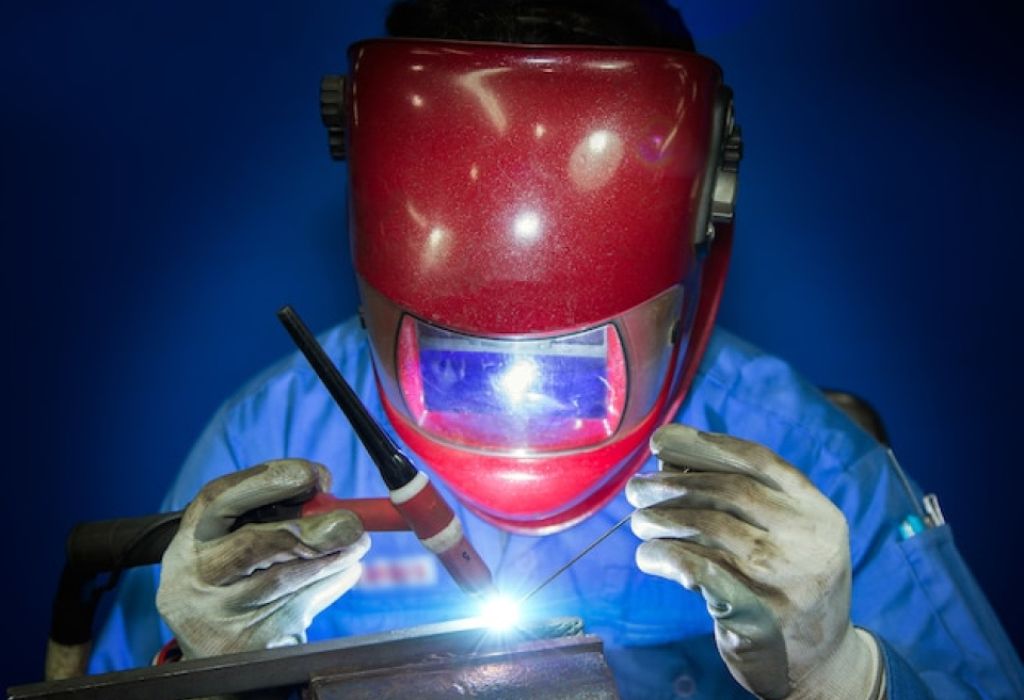
Clean lenses with a soft microfiber cloth. Avoid ammonia-based cleaners that damage coatings. Replace cover lenses once they show pits or haze.
Store helmets in cool, dry areas away from solvents or direct sunlight.
Do mirrored lenses scratch easily?
Yes. Handle them carefully and use protective sleeves.
How often should covers be replaced?
Whenever visibility drops—often weekly for heavy users.
Can aftermarket color gels be added?
Only manufacturer-approved lenses maintain certification.
Why does the view seem dull after months of use?
Dust, aged covers, or degraded coatings reduce clarity; replacements restore brightness.
FAQs
What do colored lenses in welding helmets help protect against?
Glare, blue-light intensity, and visual strain; UV/IR protection is constant.
Are uncertified colored lenses safe?
No. Always confirm ANSI Z87.1 or EN 379 marks.
Is green better than true-color?
Neither is universal; select the one that provides the clearest puddle view.
Do colored lenses reduce heat?
Gold-mirrored coatings reflect radiant heat, keeping the face cooler.
Can one helmet work for all processes?
Yes, with a variable-shade true-color ADF rated DIN 9–13.
Conclusion
Colored welding lenses are more than aesthetic options. They are engineered filters that manage glare, balance color perception, and shield against invisible radiation.
If you ask what do colored lenses in welding helmets help protect against, the answer covers both science and comfort—they defend against UV, IR, blue-light strain, and the fatigue that follows long days under an arc.
Choose shade by process and color by preference. Verify certification, maintain clear covers, and consider modern true-color technology for natural vision. With the right lens, safety and visibility become the same thing.

I’m Darrell Julian, the founder, lead writer, and hands-on welding enthusiast behind ArcWeldingPro.com. With more than 15 years of real-world welding experience, I created this platform to share what I’ve learned in the field, in the shop, and in the heat of the arc.