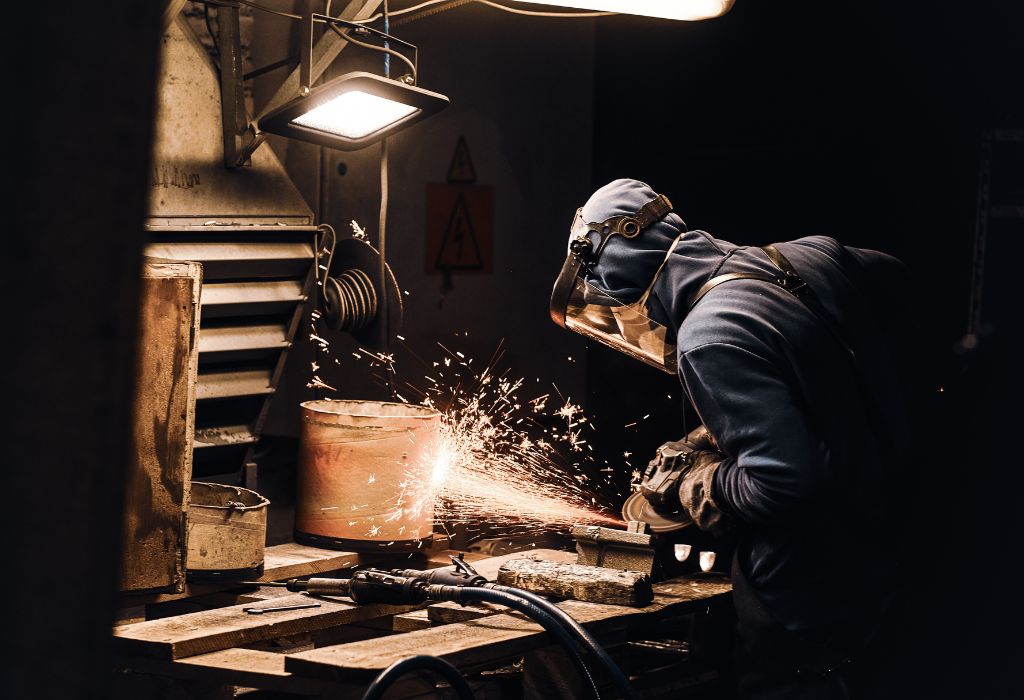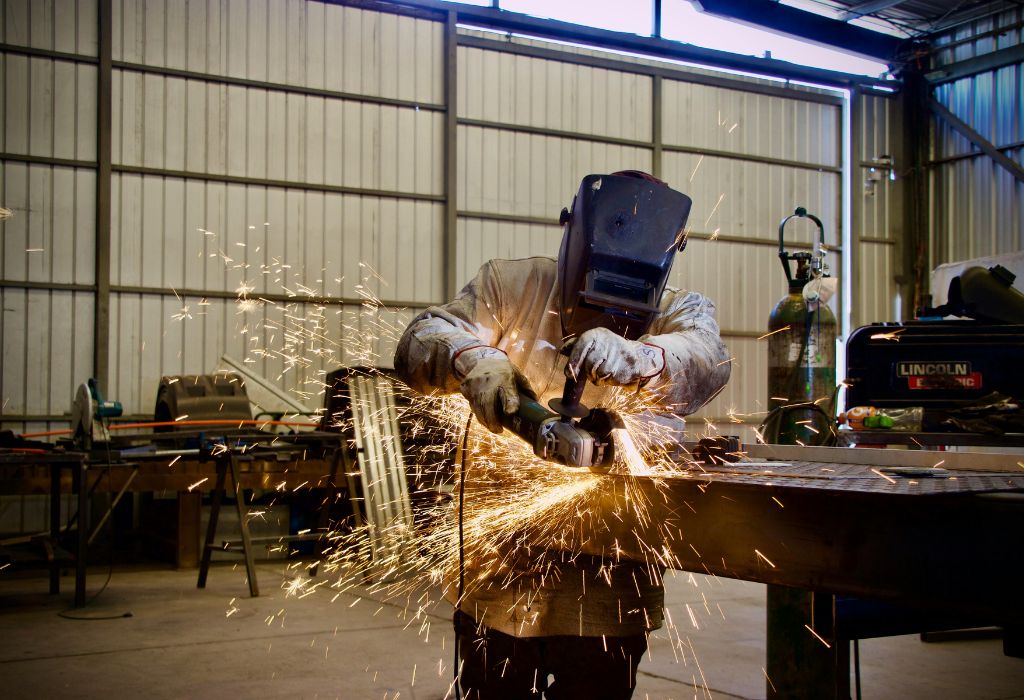
Walking into a bustling fabrication shop, the bright arc lights fly and welders instinctively slam down their helmets before every strike. Safety gear is more than just branding—it’s protection. That’s when the question creeps in: who makes Matco welding helmets? The answer lies behind logos, spec sheets, and supply-chain contracts.
More than 2 million welding helmets are sold annually in North America, and auto-darkening models now account for over 60 % of that volume. With the average weld-shop downtime from eye/head injury costing over US$10,000 per incident, choosing the right helmet matters.
Matco Tools has built a reputation among mobile tool-truck professionals since its founding in 1946. Wikipedia+2matcotools.com+2 Yet the manufacturing origin of its welding helmets remains murky. This article drills into the OEM manufacturing question, explores the key specifications and features of Matco helmets, evaluates their pros and cons, and offers guidance on how to choose a helmet that keeps both gear and welder safe.
By the end of this guide, you’ll understand exactly who makes Matco welding helmets, how they stack up against other brands, and what you should look for before your next purchase.
Brand Overview – Matco Tools and Its Welding Helmet Line

Matco Tools is a U.S.-based professional tool-distribution franchise that also offers specialty welding gear. Wikipedia+2matcotools.com+2 The company primarily serves mobile mechanics and automotive technicians via franchised truck-based distribution, and the welding helmet line falls under its “welding & soldering / helmets” catalog. matcotools.com+1
Who is Matco Tools and what markets do they serve?
Matco Tools serves automotive service professionals, fleet technicians, and mobile tool dealers via a franchised trigger-sales model across the U.S.
When did Matco introduce welding helmets into its product line?
While Matco’s core business has been hand tools and tool-boxes, the welding helmet line appears in its catalog alongside welding equipment as of its current online catalogue listings. matcotools.com+1
Are Matco welding helmets manufactured in-house or outsourced?
There is no publicly verified disclosure of full in-house manufacturing. Forum comments suggest outsourcing/contract-manufacture for Matco helmets. Reddit+1
What welding helmet series does Matco currently offer?
Examples include the “173 Series” auto-darkening helmet with variable shade 9–13, grind mode, 2 independent sensors. electronicexpress.com+1
How do Matco helmets compare in price and features to competitor brands?
Pricing (e.g., listed at ~$279 for the 173 Series model) places them in a mid-to-upper tier among mobile-service-focused helmets. Feature set appears competitive for the price. electronicexpress.com
Who Actually Manufactures Matco Welding Helmets? (OEM, Contracting & Private Label)
The welding-helmet industry often uses contract manufacturing or private-label OEM operations. Matco’s model appears consistent with this: no straightforward public statement on manufacturing origin. On forums, users ask directly “Who makes the welding helmets for Matco, Cornwell and Mac?” with suggestions of third-party mask makers. Reddit
Is there public disclosure of the original equipment manufacturer (OEM) for Matco welding helmets?
No verifiable official documentation found publicly that names a specific OEM behind Matco helmets.
What evidence exists about shared design/manufacture with other brands?
Forum posts note that Matco helmets share similarities with other budget brands (e.g., same shell shape, sensor layout). The Garage Journal
What are the typical manufacturing locations for welding helmets?
Welding helmet shells and electronics are commonly produced in low-cost locations (Asia: China, Taiwan) or contract plants in the U.S./Mexico depending on brand.
What implications does OEM manufacturing have for product quality, warranty and parts support?
If a helmet is private-label and manufactured by a generic OEM, quality control and parts support may depend heavily on the brand’s management—so verifying warranty and service becomes more important.
Does Matco offer unique or proprietary features in their welding helmets or simply re-branded models?
The Matco spec sheet lists standard features (auto-darkening 9–13 shade, 2 sensors, grind mode) but does not prominently advertise proprietary optics, large sensor counts or advanced features beyond standard. Walmart.com
Key Specifications & Features of Matco Welding Helmets
When selecting a welding helmet, professionals pay attention to viewing area size, shade range & speed, sensor count and heat/time limits. The Matco “173 Series” model is documented at shade 9–13 variable, 2 independent sensors and “grind mode”. electronicexpress.com+1
What is the shade range and switching speed of Matco helmet models?
The 173 Series offers variable shade 9–13. Switching speed is not prominently marketed—but given the price tier likely standard (~1/25,000 sec).
How many sensors and what viewing area do Matco helmets offer?
Documented with 2 independent sensors. Viewing-area dimensions are not clearly published in the spec sheet.
Is grind mode, TIG rating or magnetic lens compatibility included?
Yes—grind mode is included for the 173 Series. TIG rating (low amp) is not clearly listed in public spec.
What warranty or service provision does Matco provide for their helmet line?
Matco’s general tool catalog shows standard return/service policies, but helmet-specific warranty details are minimal in publicly accessible documents.
Are spare parts (lenses, headgear) readily available for Matco helmets?
Spare-lens listings exist via accessory pages; Matco offers accessories in its catalog. matcotools.com
Pros & Cons of Buying a Matco Welding Helmet from a Professional’s View
From the viewpoint of a professional welder or service-truck technician, here’s how Matco helmets stack up.
What are the primary advantages of choosing a Matco welding helmet?
– A trusted brand among mobile tool professionals;
– Good feature-set (auto-darkening, variable shade, grind mode) at reasonable price;
– Accessible via tool-truck network and distributors.
What concerns should professional welders be aware of?
– Lack of clear OEM transparency may raise questions about long-term parts/support;
– Sensor count and optics may not match premium helmet brands;
– Limited public data on switching speed, true viewing area, and low-amp TIG performance.
How does the durability of Matco helmets compare in heavy-use shop environments?
No widely published durability tests specific to Matco found; user forum comments imply similar build quality to generic helmets in mid-tier range.
Are replacement parts and accessories easily available for Matco?
Yes—Matco lists accessories (headbands, lenses) in their catalog. matcotools.com
How does user service and warranty support from Matco stack up?
Brand has distribution network via tool trucks; however, long-term service reliability (5-10 years) is less documented, especially compared to legacy helmet manufacturers.
How to Choose the Right Welding Helmet – What to Look Beyond the Brand
Choosing a helmet is about much more than the badge. Here’s what professionals look for.
What essential safety certifications should a welding helmet meet?
Look for ANSI Z87.1 certification (U.S.) or CSA Z94.3 (Canada), and CE EN379/175 (Europe).
How important is sensor count and viewing area for daily welders?
More sensors (3-4 vs 2) and larger viewing area (4”×3” or more) improve arc-detection reliability and foil less blind spots.
Why is lens switching speed critical for arc welding performance and eye protection?
Faster switching (<1/10,000 sec) reduces exposure to arc flash and ensures crisp visibility after start-up.
How do comfort and ergonomics (headgear, weight) affect long-term use?
Lighter helmets with well-adjusted headgear reduce neck/shoulder fatigue during long shifts — a key consideration for professionals.
Should you consider value (price) vs service/support when buying helmets?
Yes — paying a premium for brand + support may matter more in high-demand shops where downtime costs far exceed helmet cost.
Where to Buy, Price Range & Warranty Considerations for Matco Helmets
Knowing where to purchase and what to expect on warranty can make a big difference.
What is the typical price range for Matco welding helmets?
The 173 Series model lists around US$279 (or ~$309 MSRP). electronicexpress.com+1
Where can professional welders purchase genuine Matco helmets and accessories?
Via Matco tool-truck distributors, online Matco catalog, and selected industrial suppliers. matcotools.com+1
What warranty terms or service policies are in place for Matco helmets?
Specific helmet warranty data is limited publicly; general tool-line return policy applies. Always verify recent warranty info at point of purchase.
Are there regional or distributor-only offers for Matco welding helmet buyers?
Yes — tool-truck networks often offer promotions or bundle discounts for mobile service professionals.
How important is verifying authenticity and logic of parts support for Matco branded gear?
Very important. With private-label models, aftermarket parts or replacements may become limited—check availability of lenses, sensors and headgear clip-ins.
Final Thoughts & Recommendations for Welders
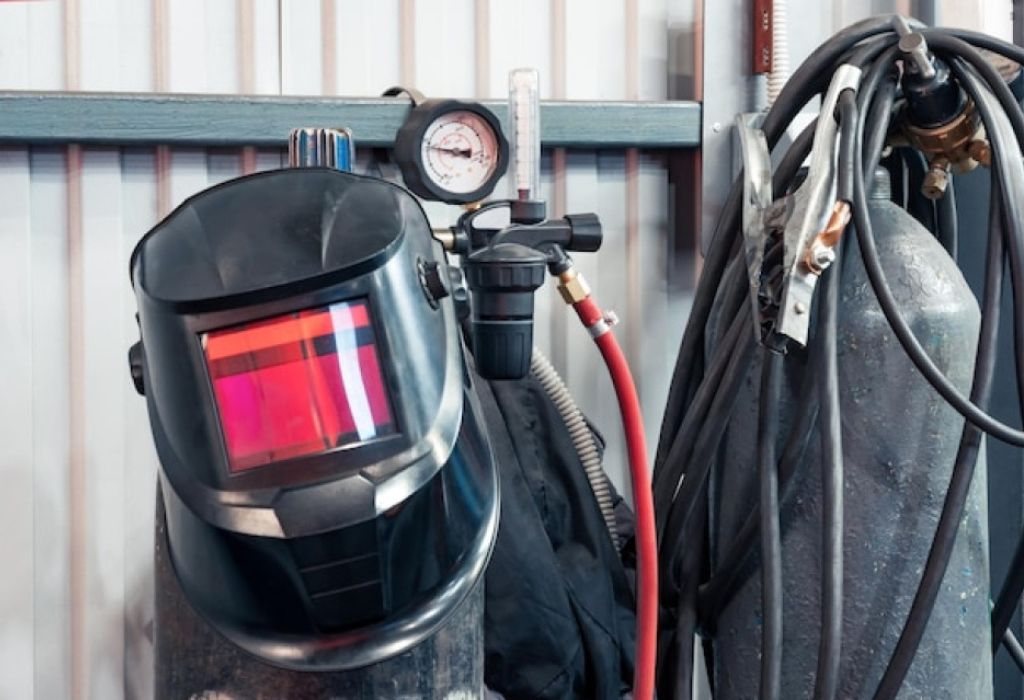
So, who makes the Matco welding helmets? While Matco Tools is the brand you see, the actual OEM manufacturer is not publicly disclosed. The helmets appear to be private-label models, which means the specs may align closely with other branded helmets in the same tier. Forums suggest this lack of transparency:
“Does anyone know who makes the welding helmets for Matco, Cornwell and Mac?” Reddit
For a professional welder focused on reliability and service-support, the takeaway is: Matco helmets offer good value and trusted brand-name access, but if top-tier optics, sensor counts, and premium service are critical, you may want to evaluate premium helmet brands (e.g., those with clear OEM/manufacturer specifications).
Before buying your next helmet, compare: certified specs (shade range, switching speed, sensor count), parts availability, warranty service, and overall ergonomics. Ensure the helmet you pick fits your daily workload.
As a recommendation: if you have a mobile truck service or industrial repair shop and you already use Matco tools, a Matco welding helmet can integrate easily into your tool ecosystem. If you’re doing intensive TIG or specialty arc work in heavy-use production, it may be worth investing a little more in higher-end optics and headgear support.
Conclusion
In summary, the question who makes Matco welding helmets? resolves to: Matco is the brand owner; the actual manufacturing is handled via contract/OEM models that are not publicly disclosed. You still get a well-specified helmet line (auto-darkening, shade 9–13, grind mode) at a competitive price, but you should evaluate specs, parts support and lifetime service just as you would for any helmet.
If you’re ready to equip your shop or mobile truck with a helmet that works, check the current Matco catalog, compare spec sheets from other brands, and don’t compromise on certifications, switching speed or support. The right helmet protects more than your vision—it preserves productivity, safety and your professional reputation.

I’m Darrell Julian, the founder, lead writer, and hands-on welding enthusiast behind ArcWeldingPro.com. With more than 15 years of real-world welding experience, I created this platform to share what I’ve learned in the field, in the shop, and in the heat of the arc.