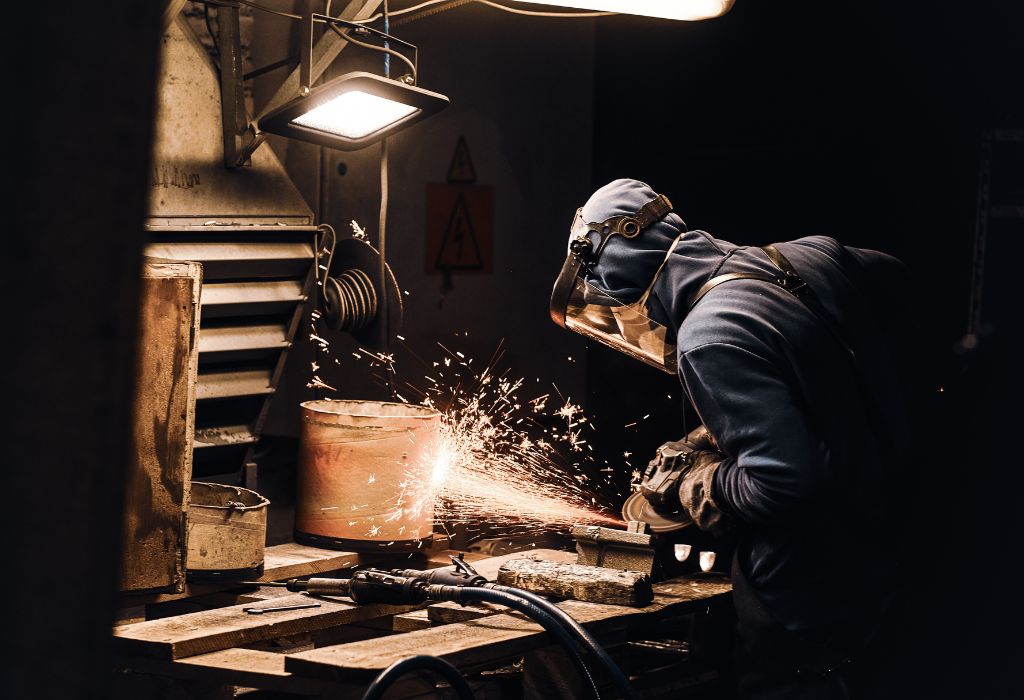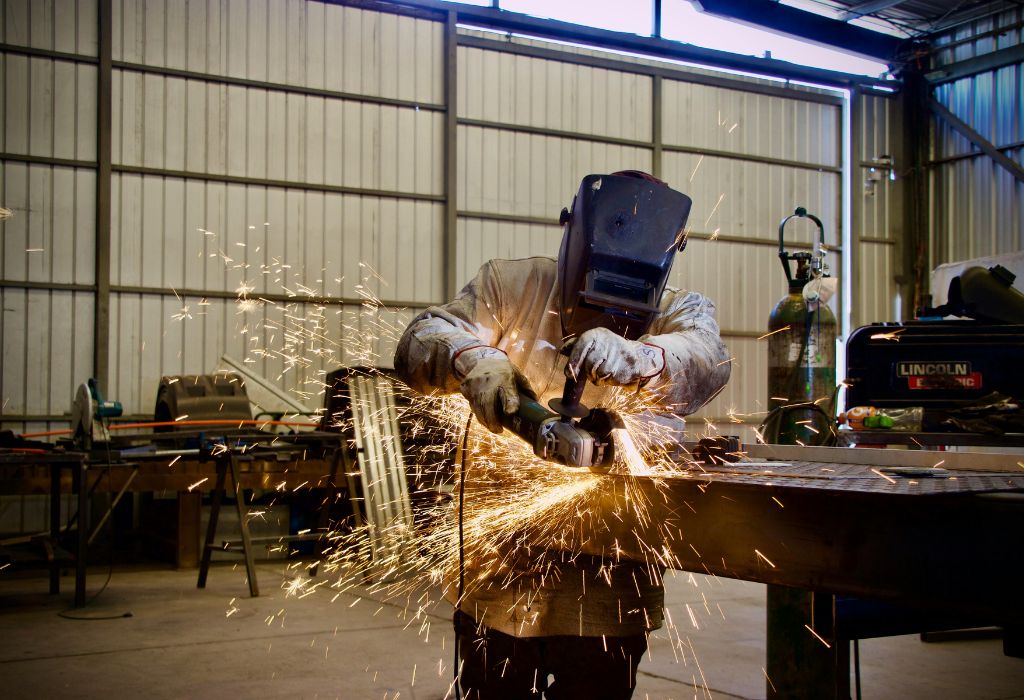
A bright blue flash fills the workshop. The sound of sizzling metal rings out as a welder bends closer, trusting that “just one quick tack” without a helmet won’t cause harm. Hours later, their eyes burn like fire, vision blurred, and sleep impossible.
This scenario isn’t rare. Many beginners think welding without a helmet for a second or two can’t do much damage. In reality, the intense UV and infrared radiation from an arc can harm the eyes and skin instantly.
According to the American Welding Society, more than 2,000 eye injuries occur daily in the U.S. because welders fail to wear proper protection (source). Even momentary exposure can cause severe pain known as welder’s flash or arc eye.
This guide explains why welding without a helmet is never safe, what happens to your eyes and skin during exposure, and how the right gear can save your sight—and your career.
What Happens If You Weld Without a Helmet?

Welding without a helmet exposes your eyes and face to dangerous radiation and sparks. The arc’s UV rays are thousands of times stronger than sunlight, and even brief exposure can burn your corneas.
The light and heat also affect skin, causing blistering and redness similar to severe sunburn. On top of that, flying debris and molten metal particles can strike the eyes or face directly.
What happens when you look at a welding arc without a helmet?
Your corneas absorb the UV radiation, leading to a painful condition called photokeratitis.
How long does it take for arc flash to damage your eyes?
Just a split second—less than one second of exposure can cause injury.
Can welding light cause permanent vision loss?
Yes, repeated or high-intensity exposure may lead to retinal damage and lasting vision problems.
What other parts of the body are at risk besides the eyes?
Skin on the face, neck, and arms can burn from direct UV exposure.
Is it ever safe to weld without a helmet for a few seconds?
No. Even “quick welds” can result in irreversible eye damage or burns.
Understanding Welding Light — Why It’s So Dangerous
A welding arc produces three forms of light: ultraviolet (UV), visible, and infrared (IR). Each type affects the human body differently but all can be dangerous.
UV radiation burns the outer layer of the eyes and skin, visible light causes glare and eye strain, while IR heat can damage deeper tissues.
What types of radiation are emitted during welding?
Ultraviolet, visible, and infrared radiation—all harmful in different ways.
How do UV rays from welding compare to sunlight exposure?
A single welding arc can emit UV levels hundreds of times stronger than midday sun.
Can infrared light cause deep tissue burns?
Yes, prolonged IR exposure can overheat and damage skin cells.
Does wearing sunglasses protect against welding light?
No, regular sunglasses lack the shade and filtering to block welding radiation.
Why do welders see spots after looking at arcs?
The retina becomes overstimulated by bright light, creating temporary blind spots.
Eye Injuries Caused by Welding Without a Helmet
The most common injury from unprotected welding is arc eye—also known as welder’s flash. It occurs when UV rays burn the cornea, causing inflammation and pain that appear hours later.
Symptoms include a gritty sensation, excessive tearing, light sensitivity, and severe discomfort that can last up to two days. Without treatment, repeated burns can lead to scarring or permanent vision loss.
What is “arc eye” or “welder’s flash”?
A painful burn of the cornea caused by UV radiation from welding arcs.
What symptoms appear after unprotected welding?
Redness, watery eyes, swelling, blurred vision, and a feeling of sand in the eyes.
Can arc eye heal on its own?
Mild cases recover within 24–48 hours, but repeated exposure may cause lasting damage.
How long do welding-related eye injuries last?
Between 1–3 days for minor burns; longer if corneal scarring develops.
When should you see a doctor for eye pain after welding?
Immediately—professional care prevents infection or long-term vision issues.
Skin and Respiratory Risks from Welding Without Protection
UV radiation doesn’t stop at the eyes. It also burns exposed skin, causing redness, peeling, and long-term damage similar to chronic sun exposure.
Welding also produces fumes from metal and flux that can irritate the lungs and cause headaches, nausea, or even metal fume fever.
Can welding without a helmet burn your skin?
Yes, unprotected skin can blister within minutes under an active arc.
What type of UV rays cause skin damage during welding?
Both UVA and UVB wavelengths emitted from the arc torch.
Are welding fumes dangerous to inhale without protection?
Yes, they contain metal oxides and gases that harm respiratory health.
How fast can sunburn-like damage appear on exposed skin?
Within 10–15 minutes of welding without proper protection.
Can long-term exposure increase cancer risk?
Yes, repeated UV exposure is linked to higher risks of skin cancer.
Why a Welding Helmet Is Non-Negotiable for Safety
A welding helmet is more than a face shield—it’s a life-saving device. It protects against UV and IR radiation, sparks, spatter, and debris.
Modern helmets feature auto-darkening lenses that adjust shade levels instantly, ensuring visibility without risking exposure.
How does a welding helmet block UV and IR radiation?
The lens filter absorbs and reflects harmful wavelengths before they reach your eyes.
What is the purpose of shade levels in helmets?
They match the lens darkness to the brightness of the welding arc for maximum protection.
Are auto-darkening helmets safer than fixed-shade ones?
Yes, because they react automatically to light changes and reduce eye strain.
Do helmets also protect against sparks and metal splatter?
Absolutely—most cover the full face and neck.
What certifications should a welding helmet have?
Look for ANSI Z87.1 or equivalent safety standards.
Alternatives to Welding Helmets — Are They Safe?
Some beginners try makeshift solutions like tinted goggles, sunglasses, or face shields. Unfortunately, none offer complete protection from UV and IR radiation.
These substitutes might reduce brightness but allow invisible rays to penetrate, leading to severe burns.
Can you use sunglasses or goggles for welding?
No, they lack adequate filtration for welding intensity.
Are face shields a good alternative to helmets?
Only if designed specifically for welding with the correct shade rating.
Why aren’t tinted safety glasses enough for welding?
They block glare but not the damaging radiation from the arc.
Can smartphone welding visors or DIY shields protect your eyes?
No, homemade gear fails to meet optical and safety standards.
What are the consequences of using inadequate protection?
Severe eye burns, vision loss, and possible long-term skin damage.
How to Choose the Right Welding Helmet for Safety
Selecting the correct helmet ensures both protection and comfort. Consider shade levels, reaction time, weight, and adjustability.
Auto-darkening helmets are ideal for frequent welders, while passive helmets work for beginners on tight budgets.
What shade number is best for MIG, TIG, and Stick welding?
Shade 10–13 is recommended, depending on arc brightness.
Why is auto-darkening better for frequent welders?
It allows continuous work without manually flipping the lens.
How fast should the lens react to arc light?
At least 1/20,000 of a second for instant protection.
What comfort features prevent fatigue during long work sessions?
Padded headbands, balanced weight, and adjustable straps.
Do all helmets protect against UV and IR even when inactive?
Yes, quality helmets provide full protection at all times.
Maintenance and Care Tips to Keep Helmets Effective
A dirty or scratched lens can reduce visibility and protection. Clean lenses with a microfiber cloth and mild soap after every session.
Replace cracked covers or worn batteries to maintain full performance. Always store the helmet in a cool, dry location away from direct sunlight.
How often should welding helmets be inspected?
Before each use to ensure lenses, sensors, and straps are intact.
Can dirty lenses increase fogging or glare?
Yes, residue scatters light and causes reflections.
What’s the best way to clean welding helmet lenses?
Use soft cloths and non-abrasive cleaners made for polycarbonate.
How often should you replace the protective lens cover?
Whenever it’s scratched or cloudy, typically every few weeks.
Do weak batteries affect auto-darkening performance?
Yes, slow reaction times can leave your eyes exposed momentarily.
Legal and Workplace Safety Requirements for Welding Gear
In most workplaces, welding without a helmet is not just unsafe—it’s illegal. OSHA mandates protective face and eye equipment for all welding operations.
Employers must provide certified gear and ensure proper training. Ignoring these rules can result in fines, injuries, or job termination.
Is it illegal to weld without a helmet at work?
Yes, OSHA requires eye and face protection under regulation 29 CFR 1910.252.
What are OSHA’s welding safety gear rules?
Welders must use helmets with approved filter lenses meeting ANSI Z87.1 standards.
Do employers have to provide helmets for workers?
Yes, employers must supply and maintain certified PPE.
What standards define certified welding helmets?
ANSI Z87.1 and CSA Z94.3 are recognized in North America.
Can welding without PPE void insurance coverage?
Yes, injuries due to negligence may not be covered.
What to Do If You Accidentally Weld Without a Helmet

If exposure occurs, take immediate action to reduce pain and prevent complications.
Move to a dark area and apply a cold compress to reduce inflammation. Avoid rubbing your eyes. Use lubricating eye drops if needed, but never apply ointment unless prescribed.
What immediate steps should you take after eye exposure?
Stop work, cool your eyes with a clean, damp cloth, and rest in a dark place.
Can you use home remedies for welder’s flash?
Only mild ones like artificial tears—avoid harsh chemicals or heat.
How long should symptoms last before seeing a doctor?
If pain or vision issues persist beyond 24 hours, seek medical care.
Can over-the-counter eye drops help?
Yes, preservative-free lubricating drops can relieve dryness and discomfort.
How can you prevent repeated injuries in the future?
Always wear certified helmets and check gear before every weld.
Conclusion
No matter the job size, you should never weld without a helmet. The risk of blindness, burns, and long-term skin damage far outweighs any convenience.
A proper helmet shields you from UV rays, sparks, and harmful fumes while maintaining clear visibility. Remember, even a brief unprotected glance at a welding arc can leave permanent scars—both on your eyes and your career.
Understanding can you weld without a helmet makes the answer clear: absolutely not. Always weld safely, responsibly, and with certified protective gear.

I’m Darrell Julian, the founder, lead writer, and hands-on welding enthusiast behind ArcWeldingPro.com. With more than 15 years of real-world welding experience, I created this platform to share what I’ve learned in the field, in the shop, and in the heat of the arc.