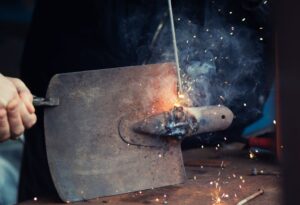
You are ready to weld. You set up your equipment. You strike the arc. But something is wrong. The arc wavers and dances. It does not stay where you aim it. Spatter flies everywhere. The weld puddle moves in strange ways. The result is a messy, weak weld full of holes. This is a common and frustrating problem. It happens when you try to weld steel that is magnetized.
This issue is called arc blow. It makes welding very difficult. It can ruin your work. It can waste your time and materials. But there is good news. You can fix this problem. This guide will show you how. We will explain why it happens. We will give you clear steps to solve it. You will learn simple tricks and professional methods. The best way is to remove the magnetism before you weld. Let us explore how to do that safely and effectively.
Your Action Plan: How to Weld Magnetized Steel
If you need a solution right now, here are the main methods. They are listed from easiest to most effective. Choose the one that fits your tools and situation.
Demagnetize with a Welding Machine (AC). Use an AC TIG or stick welder. Pass the current over the steel. This scrambles the magnetic fields. It is a very good method for most people.
Use a Dedicated Demagnetizing Tool. This is a special tool made for this job. It uses a changing magnetic field. It works very well on strongly magnetized steel. It is the choice for professionals.
Demagnetize with Heat. Heat the steel until it glows red hot. This makes it lose its magnetism. But be careful. This can change the metal’s strength and shape. Use this only if you have no other choice.
Welding Technique Adjustments. Sometimes, you cannot remove all the magnetism. In that case, change how you weld. Use a different angle or speed. Add extra pieces of metal to guide the arc. These tricks can help you finish the job.
For most situations, using an AC welder is the best balance. It works well and many welders have one. We will explain each method in detail below.
Understanding Arc Blow: The Science Behind the Problem
To fix the problem, you need to understand it. Arc blow is the arc being pushed away by magnetic fields. Think of the welding arc as a stream of electricity. It wants to go in a straight line. But magnetism acts like a strong wind. It blows the arc off course.
Steel can become magnetized in several ways. It might have been near other magnets. It could have been made in a way that left magnetism inside. Even the Earth’s own magnetic field can affect it. When you weld, the electric current from your welder creates its own magnetic field. If the steel is already magnetized, these fields fight each other. This causes the arc to waver and jump.
The result is a bad weld. The weld bead will be uneven. It might have holes called porosity. It will not be strong. This is dangerous if the weld needs to hold weight or pressure. Knowing why it happens helps you choose the right solution.
Method 1: Demagnetizing with an AC Welder
This method uses the welder you might already have. An AC welder sends current that changes direction very fast. This changing current can cancel out the magnetism in the steel. It is like shaking the magnetic fields until they let go.
Step-by-Step Guide to AC Demagnetization
Follow these steps carefully. They will help you remove the magnetism.
Step 1: Set your welder to AC mode. If you have a TIG welder, use the AC setting. For a stick welder, use AC electrodes. Make sure the machine is set up correctly.
Step 2: Attach the ground clamp to the steel. Place it on a clean, bare spot. This ensures a good connection. The current needs to flow through the metal properly.
Step 3: Turn on the welder. Do not strike an arc for welding. Instead, hold the electrode or torch about an inch above the magnetized area. Move it slowly back and forth over the area. Do this for about 30 seconds to a minute. You are not melting the metal. You are just passing the AC current through it.
Step 4: Check if the magnetism is gone. You can use a small magnet or a magnetic base from a tool. If it still sticks strongly, repeat the process. Try moving slower or increasing the amperage a little. Be patient. It might take a few tries.
A good tip is to start with lower amperage. If it does not work, increase it slowly. Too much heat can damage the metal, so be cautious. This method works well for mild to medium magnetism.
Method 2: Using a Commercial Demagnetizer
A commercial demagnetizer is a tool made just for this job. It is often used in factories and repair shops. It creates a powerful, controlled magnetic field that changes rapidly. This field neutralizes the magnetism in the steel.
These tools come in different shapes. Some are coils you pass the steel through. Others are handheld devices you move over the metal. They are very effective. They can handle strong magnetism that other methods cannot.
How to Operate a Demagnetizing Coil
If you have a demagnetizing coil, here is how to use it. Always read the manual for your specific tool.
Step 1: Place the steel piece inside the coil. Make sure it is centered. The coil should surround the magnetized area.
Step 2: Turn on the demagnetizer. It will produce a humming sound. This is normal. The tool sends a current through the coil, creating a magnetic field.
Step 3: Slowly move the steel out of the coil while it is on. Or, if it is a fixed coil, the tool might do this automatically. The key is to expose the metal to a fading magnetic field. This gradually reduces the magnetism to zero.
Step 4: Turn off the tool and check the steel. Use a magnet to test. If it still has magnetism, you may need to repeat the process. These tools are very reliable, so one pass is often enough.
This method is fast and precise. It does not heat the metal. It is ideal for critical jobs where you cannot risk damage.
Method 3: The Heat Treatment Method (Use With Caution)
Heating steel can make it lose its magnetism. Every metal has a temperature where this happens. For steel, it is about 1414 degrees Fahrenheit or 768 degrees Celsius. This is called the Curie point. Above this temperature, the metal is no longer magnetic.
But this method has big risks. Heating steel this much can change its properties. It can become softer or weaker. It can warp or bend. It might rust more easily. Only use this if the steel is not important for strength or if you have no other options.
Critical Warnings and Limitations
Do not use this method on tools or parts that need to be hard. Do not use it on springs or blades. The heat will ruin their temper. This means they will not work as intended.
If you must use heat, do it in a controlled way. Use a furnace or a large torch. Heat the entire piece evenly. Let it cool slowly. Do not quench it in water. That can make it brittle.
After cooling, check the magnetism. It should be gone. But also check the metal for cracks or changes in shape. This method is a last resort. It is better for scrap metal or non-critical items.
Advanced Welding Techniques for Residual Magnetism
Sometimes, you cannot remove all the magnetism. A little bit might remain. In that case, you need to change how you weld. These techniques help you work around the problem.
Adjusting Your Work Angle and Travel Speed
Change the angle of your torch or electrode. Do not point it straight on. Angle it slightly in the direction the arc is blowing. This can help you control the arc better.
Also, weld faster or slower. Experiment to see what works. A faster travel speed might reduce the effect. But do not go too fast, or the weld will be weak. Practice on a scrap piece first.
Using Run-On and Run-Off Tabs
Attach small pieces of metal to the start and end of your weld. These are called tabs. Weld onto the tab first, then onto the main piece, and end on another tab. This tricks the arc. The magnetism is stronger at the ends of the steel. The tabs give the arc a place to go without causing problems.
As noted in technical resources from welding expert Markus Wichitill, run-off tabs are very effective for arc blow at the ends of a weld. They are simple to make and can save a lot of trouble.
Switching to AC TIG or DCEN Polarity
If you are using DC welding, try switching to AC TIG. AC is less affected by magnetism. If you must use DC, try DCEN (direct current electrode negative). This can sometimes stabilize the arc. But demagnetizing first is still the best approach.
Troubleshooting: Why It Might Still Not Be Working
Even after trying these methods, you might have issues. Here are common problems and how to fix them.
Problem: I used the AC method, but the steel is still magnetized.
Solution: You may not have done enough passes. Try moving the electrode slower. Increase the amperage a bit. Check after each pass. Sometimes, the magnetism is very strong and needs more time.
Problem: The arc blow is worst at the end of the plate.
Solution: This is very common. Use a run-off tab as described earlier. Weld onto the tab to finish. This will draw the arc away from the edge.
Problem: I do not have an AC welder. What can I do?
Solution: You can try making a simple electromagnet with AC power. Wrap a coil of wire around a iron core and plug it into AC. Pass it over the steel. But this is not as reliable as a welder or commercial tool. It might work for light magnetism.
Problem: My weld still has holes and is weak.
Solution: This could be from residual magnetism or other issues. Make sure the steel is clean. Check your welding settings. If magnetism is the cause, go back and demagnetize more thoroughly. Consider using a commercial demagnetizer if possible.
Frequently Asked Questions About Welding Magnetized Steel
Here are answers to common questions. They cover more details and related topics.
What is how to weld magnetized steel?
It is a set of special steps and methods used to weld steel that has magnetism. The goal is to avoid arc blow, which causes bad welds. This involves demagnetizing the steel or using tricks to weld despite the magnetism.
Why is how to weld magnetized steel important?
It is important because welding on magnetized steel without the right methods makes weak, faulty welds. These welds can break under stress. This is dangerous and wastes time and money. Doing it right ensures safety and quality.
How does how to weld magnetized steel work?
It works in two ways. First, by removing the magnetism before welding. Second, by changing welding techniques to reduce the effect of any leftover magnetism. Both approaches help you make a strong, clean weld.
Can you weld magnetized steel with a MIG welder?
It is very hard. MIG welding uses DC current, which is easily affected by magnetism. The best way is to demagnetize the steel first. Then you can MIG weld. If you try without demagnetizing, you will likely have bad arc blow.
What is the best tool for welding magnetized steel?
A dedicated demagnetizer is the best tool for strong magnetism. But for most people, an AC TIG welder is the most useful tool. It can demagnetize and weld. It is versatile and often available in workshops.
Welding magnetized steel is a challenge, but it can be overcome. Use the methods in this guide to tame arc blow. Start with demagnetizing. Use the right tools and techniques. Always prioritize safety and quality. With practice, you will master this skill and produce excellent welds every time.

I’m Darrell Julian, the founder, lead writer, and hands-on welding enthusiast behind ArcWeldingPro.com. With more than 15 years of real-world welding experience, I created this platform to share what I’ve learned in the field, in the shop, and in the heat of the arc.