You’re deep in concentration, guiding your TIG torch across a perfect seam. The arc glows bright, the metal flows smoothly, and everything feels under control — until a sudden sting hits your finger.
You pause, glance down, and spot a dark speck on your glove — a tiny pinhole. It looks harmless, but that little opening just let high-frequency energy brush against your skin.
Most welders shrug off small holes in their gloves, assuming they’re too minor to matter. But in TIG welding, even a microscopic tear can become a serious safety risk.
TIG (Tungsten Inert Gas) welding relies on precision and control. It uses an electrical arc to fuse metals, often at temperatures exceeding 11,000°F. That’s not something to handle with damaged gloves.
The current, heat, and radiation from a TIG arc can pass through moisture or thin leather in an instant. And when that happens, the welder’s skin becomes part of the circuit.
This guide explores the hidden danger of pinholes in TIG gloves — why they form, how they endanger you, and what steps keep your hands safe.
By the end, you’ll understand that protecting your hands is not just about comfort — it’s about survival and skill. Let’s uncover the truth about pinholes and the risks they hide beneath the surface.
Understanding TIG Welding and Its Safety Challenges
TIG welding is one of the most precise forms of metal joining. It uses a non-consumable tungsten electrode to create an electric arc between the torch and the workpiece.
The process is clean and controlled, producing smooth welds with minimal spatter. But the high-frequency current and extreme temperatures introduce unique hazards.
The welder’s hands are closest to the heat source, guiding both torch and filler rod. That proximity increases the chance of burns and electrical exposure.
TIG welding operates with direct current (DC) or alternating current (AC), depending on the metal type. Both carry enough voltage to injure if insulation fails.
The TIG torch itself is shielded by inert gas, but the gloves remain your last line of defense. Any breach in that barrier exposes skin to live current.
Even though TIG is quieter and cleaner than MIG or stick welding, it’s still electrically intense. High-frequency ignition pulses through the torch before the main current stabilizes.
This frequency can jump small gaps — including microscopic holes in worn-out gloves. That’s what makes TIG different and more dangerous in terms of glove safety.
Understanding the power behind this process helps you respect the protective gear that keeps you safe. Every piece of equipment matters, especially gloves.
How TIG Welding Gloves Protect Your Hands
Welding gloves aren’t just for comfort — they’re engineered for survival. TIG gloves are designed for flexibility, heat resistance, and insulation against electrical current.
Unlike MIG or stick gloves, TIG gloves use thinner materials for better finger movement. That makes them more delicate but also more vulnerable to wear.
Most TIG gloves are made from goatskin or deerskin leather, chosen for softness and tactile sensitivity. These materials allow precise torch control while resisting moderate heat.
Underneath the surface, high-quality gloves may contain Kevlar stitching or dual layers for insulation. These layers act as shields against both heat and electricity.
When new, TIG gloves can block electrical arcs and radiant heat effectively. The leather fibers are dense and dry, creating natural insulation.
However, as gloves age, oil, sweat, and repeated bending weaken their structure. The fibers stretch, crack, and form tiny openings invisible to the eye.
Once that integrity breaks, electricity and heat find easy paths through the damaged zones.
Moisture also reduces insulation drastically, especially when sweat soaks the lining. Dry gloves are always safer and more protective.
A glove’s strength lies not in its brand name but in its condition. Proper maintenance ensures that every layer still does its job.
What Are Pinholes and How Do They Form?
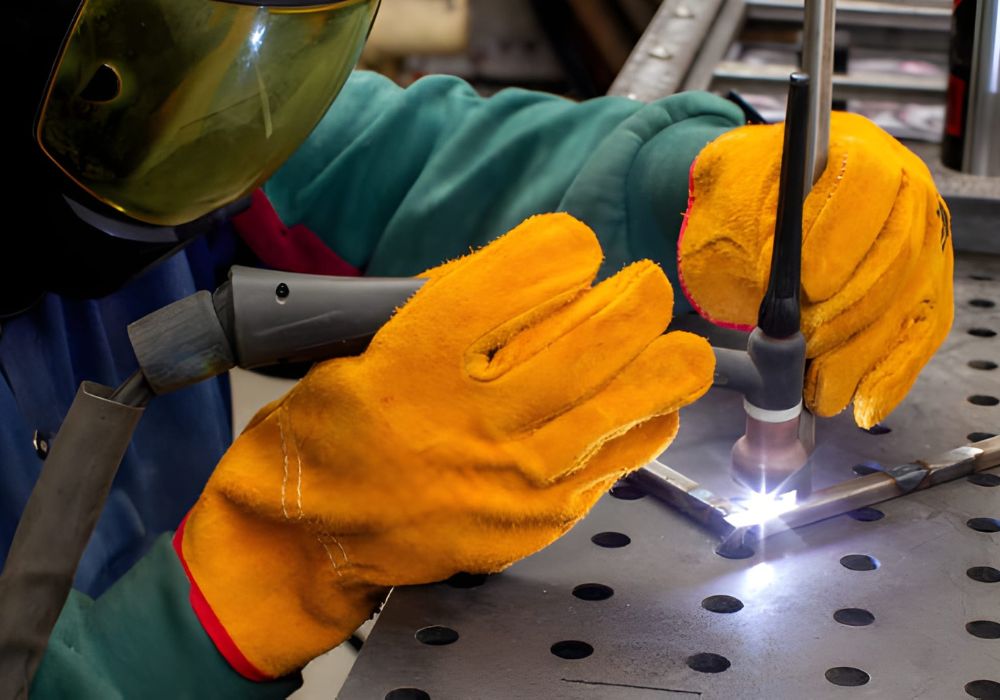
Pinholes are the small, round punctures or micro-tears that develop over time in welding gloves. They might look insignificant, but their effect is serious.
These holes usually form from constant friction between fingers, filler rods, and torch handles. Over time, repetitive movement wears down leather fibers.
Grinding sparks, sharp metal edges, or wire brushes can also pierce gloves without the welder noticing.
Heat exposure gradually stiffens leather, causing cracks that open into pinholes during flexing.
Even simple handling — like grabbing rough materials — accelerates this breakdown. Once the fibers separate, they rarely close again.
Moisture plays a role too. Sweat, oil, and metal dust degrade the glove lining, creating weak spots that expand into holes.
Low-quality gloves with thin leather or poor stitching are especially prone to early pinhole formation.
Improper storage, like leaving gloves near welding sparks or in damp toolboxes, makes them age faster.
Each pinhole might be only a millimeter wide, but to electricity or UV rays, it’s a gateway.
Recognizing how they form is the first step toward preventing dangerous exposure during TIG work.
Electrical Hazards from Pinholes in TIG Gloves
TIG welding uses high-frequency (HF) electrical energy to ignite the arc. That energy can jump through air, sweat, and even small fabric gaps.
When a pinhole appears, it breaks the glove’s insulation layer. The moment your hand sweats, it creates a path for current to travel.
You might feel a tingling sensation or mild zap at first, but continuous exposure can lead to electric burns or nerve damage.
In some cases, HF current can cause involuntary muscle spasms, making you drop the torch or lose control.
The risk increases in humid environments, where gloves naturally absorb moisture. Damp leather conducts electricity more easily than dry leather.
Worse, the electrode’s voltage can arc through damaged material even before physical contact.
Though rare, serious shocks have been reported from TIG welders with compromised gloves. That’s why “minor” damage should never be ignored.
Electricity doesn’t need a big hole — even a microscopic gap is enough under the right conditions.
Replacing gloves at the first sign of damage prevents these unpredictable electrical pathways.
In welding, prevention always outweighs reaction. Gloves are your first and last defense.
Heat and UV Exposure Risks
TIG welding produces intense radiant heat that can exceed thousands of degrees. Proper gloves absorb and deflect this energy before it reaches your skin.
When a glove has pinholes, heat passes directly through those tiny openings. The result can be small burns that develop into blisters within seconds.
The danger doesn’t stop there — UV radiation from the arc penetrates exposed spots through the holes.
That invisible radiation damages skin cells even faster than sunlight, leading to redness, dryness, and long-term irritation.
If the pinholes appear near fingertips or seams, the risk increases. Those areas are closest to the arc’s center.
Leather loses its reflective properties as it thins, allowing more heat transfer. Once damaged, it can’t regain its insulation ability.
Repeated exposure through those small holes can also dry and crack your skin, making future burns worse.
For welders who work daily, this constant irritation can turn into chronic skin sensitivity.
UV rays also reflect off polished metal, hitting the same area from multiple directions.
In short, every hole is an open door to heat and light your skin isn’t meant to handle.
Chemical and Metal Contamination
TIG welding often involves working with metal surfaces that have oil, grease, or cleaning residues. Gloves with pinholes lose their ability to block these substances.
Contaminants easily pass through and contact your skin, especially around the fingertips. Over time, this leads to irritation and rashes.
Worse, welding fumes settle into these microscopic tears, embedding harmful metallic particles inside the glove.
As your hand sweats, those contaminants mix with moisture, entering through open pores.
Long-term exposure can cause dermatitis or allergic reactions, particularly when welding stainless steel or aluminum.
Chemicals like acetone or degreasers used in prep work also weaken leather structure. That makes pinholes expand faster.
Even trace metals like chromium and nickel can trigger allergic dermatitis if they penetrate the skin.
Keeping gloves intact protects against more than heat and current — it guards you from toxic contact.
Always treat gloves as safety barriers, not cleaning cloths. Once contaminated or damaged, they’re no longer safe for use.
Replacing them regularly prevents invisible contamination from becoming a health hazard.
Moisture and Sweat: The Hidden Conductor
Sweat might seem harmless, but in welding, it’s a hidden danger. When gloves get damp, their insulation drops drastically.
Water conducts electricity, and sweat contains salts that increase conductivity. That means even small pinholes become potential shock points.
When high-frequency current travels through wet gloves, it can easily reach your skin. The result is a mild but dangerous jolt.
Over time, moisture also softens the leather, causing faster wear and more pinholes.
In humid climates, this effect multiplies — gloves rarely dry completely between sessions.
If you store gloves in closed toolboxes without ventilation, bacteria and mold grow inside. That weakens fibers and leads to small cracks.
Dry gloves act as strong insulators; damp gloves become conductors. The difference is massive in terms of safety.
Whenever possible, rotate between two pairs of gloves. Allow one set to dry fully while using the other.
Avoid spraying water or cleaning solutions directly on gloves before welding.
Remember — dryness is insulation. A dry glove is a safe glove.
How to Inspect Gloves for Pinholes
You don’t need special tools to check for pinholes. Simple inspection before every session can prevent serious injury.
Hold each glove up to a bright light or flashlight. If you see small dots of light passing through, that’s a pinhole.
Flex the leather gently — cracks often appear when you bend worn areas.
Run your fingers inside the glove to feel for rough spots or thin sections. Weak areas feel softer or uneven compared to the rest.
Examine seams and fingertips first; they’re the most common wear points.
Pay attention to shiny or smooth patches on old leather. That gloss means fibers are compressed and ready to split.
If you detect holes or thinning, replace the gloves immediately. Repairing leather doesn’t restore insulation.
Never tape over damaged areas; adhesive materials conduct heat and can melt onto your skin.
Frequent inspections take less than a minute and can prevent painful accidents.
Treat glove inspection as part of your welding routine — as essential as checking gas flow or tungsten condition.
Choosing the Right TIG Welding Gloves

Not all gloves are created equal. The right pair balances protection with dexterity.
Goatskin gloves are ideal for TIG welding because they’re soft, durable, and heat-resistant. They let you control the torch and filler rod precisely.
For added protection, choose models with Kevlar stitching or double-layer palms. These prevent tearing and resist sparks.
Look for gloves rated under EN 388 (mechanical protection) and EN 407 (thermal resistance) or ANSI/ISEA 105.
Some premium TIG gloves have long cuffs to protect wrists and forearms from UV rays.
Avoid gloves made of synthetic or thin imitation leather — they melt quickly and trap heat.
Inner linings made of cotton or Nomex improve comfort and absorb sweat.
If you weld for long sessions, pick lightweight gloves with ventilation panels. They help prevent moisture buildup inside.
A snug but flexible fit ensures better control and prevents bunching at the fingertips.
Spending a little more on high-quality gloves saves you from costly injuries later. Good gloves are an investment in your safety.
Maintenance and Care to Prevent Pinholes
Even the best gloves wear out without proper care. Maintenance extends their lifespan and safety performance.
Always clean gloves gently after each session. Wipe off dust, metal particles, and oil with a dry cloth.
Never soak gloves in water — it weakens fibers and causes shrinkage.
If gloves get wet, air-dry them naturally away from direct sunlight or heat sources.
Store gloves in a cool, dry area with ventilation. Avoid sealed boxes or damp toolbags.
Do not rest gloves on hot surfaces or near open flames after welding. The leather hardens and cracks easily.
Rotate between pairs if you weld daily. This gives each pair time to dry and recover shape.
Inspect stitching regularly — frayed threads are early signs of damage.
Use glove conditioners designed for leather to keep it supple and resistant to cracking.
Good care not only prevents pinholes but keeps gloves flexible for precision work. Safe gear is maintained gear.
Frequently Asked Questions
Can TIG current shock you through pinholes in gloves?
Yes, TIG’s high-frequency ignition can arc through small holes, especially when gloves are damp.
Are pinholes really that dangerous?
Absolutely. Even tiny holes reduce insulation and let current, heat, or UV pass through.
How often should I replace my TIG gloves?
Replace them every few months or immediately if you notice thinning, tears, or stiffness.
Can I repair pinholes with tape or patches?
No. Repairs compromise flexibility and can melt during welding. Always replace damaged gloves.
Why do my gloves wear out so fast?
Frequent bending, sweat, and handling filler rods cause friction that breaks down leather fibers.
Do leather gloves protect against electric shock?
Only when dry and undamaged. Wet or punctured gloves lose their insulating properties.
How can I prevent sweat from soaking my gloves?
Use lightweight inner liners or alternate between pairs to let one dry completely.
Can pinholes increase UV exposure?
Yes, UV rays easily pass through small holes, leading to burns or skin irritation.
What’s the safest material for TIG gloves?
Soft goatskin or deerskin leather with Kevlar stitching offers ideal protection and dexterity.
Are TIG gloves different from MIG gloves?
Yes. TIG gloves are thinner for precision, while MIG gloves are thicker for spatter protection.
Conclusion
A single pinhole may seem trivial, but in TIG welding, it’s a hidden hazard waiting to strike. That tiny gap can allow heat, electricity, and UV rays to reach your skin in seconds.
Your gloves aren’t just tools — they’re your armor against invisible dangers. A damaged glove defeats its purpose, exposing you to burns, shocks, and long-term skin damage.
Always inspect gloves before every session, keep them dry, and replace them at the first sign of wear. The cost of new gloves is nothing compared to the pain of injury.
Remember, TIG welding demands precision, patience, and respect for safety. The same care you give your welds should apply to your protective gear.
By understanding the risk of pinholes, you can weld confidently, safely, and professionally.
In the world of welding, your hands are your most valuable tools — protect them like your career depends on it, because it truly does.

I’m Darrell Julian, the founder, lead writer, and hands-on welding enthusiast behind ArcWeldingPro.com. With more than 15 years of real-world welding experience, I created this platform to share what I’ve learned in the field, in the shop, and in the heat of the arc.