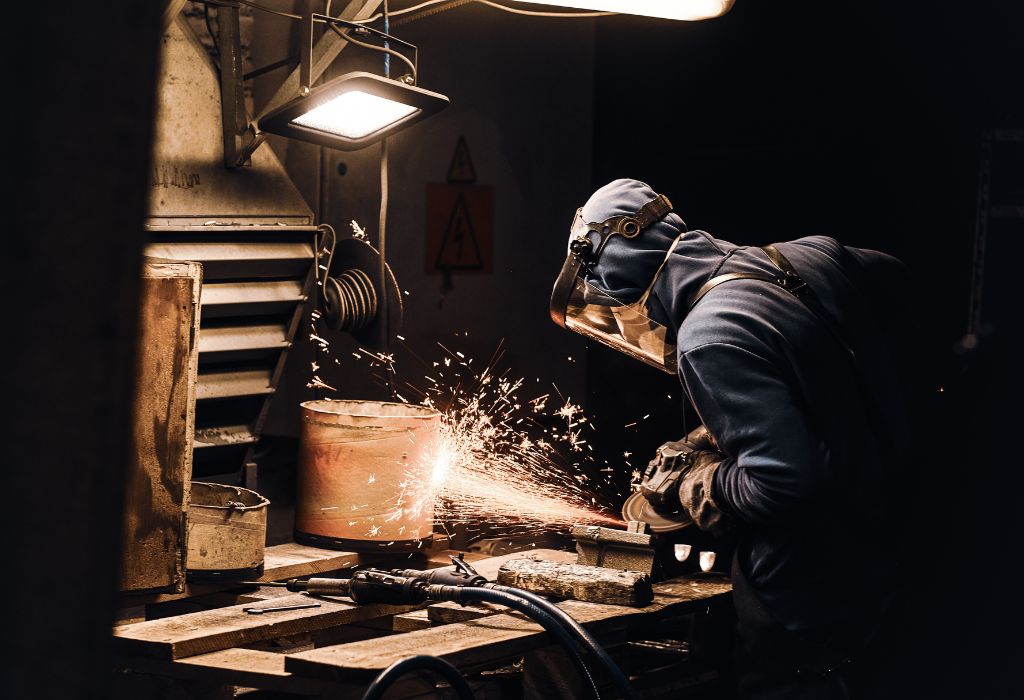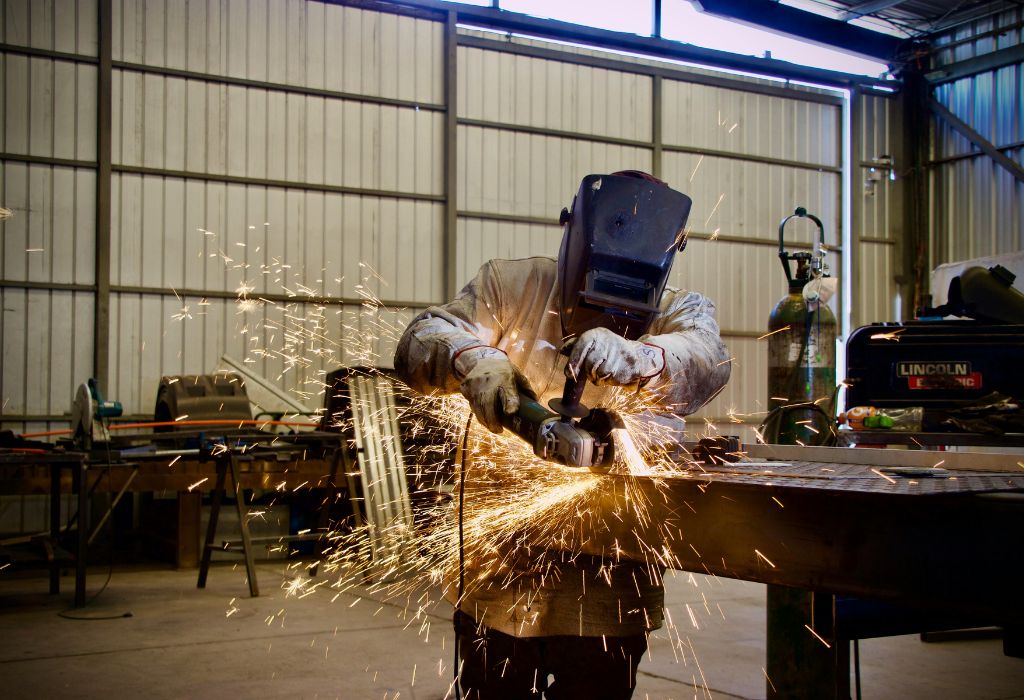
The workshop hums with energy as the welder lowers his helmet, sparks flying in brilliant orange bursts. His hands, wrapped in thick leather gloves, grip the torch confidently.
Every welder trusts those gloves as their first line of defense against heat, sparks, and electric current. But one lingering question remains — are welding gloves really shockproof?
The truth might surprise you. While welding gloves are designed for protection, they aren’t completely immune to electric current. Their insulation depends on condition, moisture, and material.
Many welders assume their gloves can stop any electrical hazard, but even professional-grade gloves have limitations. Misunderstanding this can lead to dangerous shocks or worse.
Imagine working in a humid shop with damp gloves — one accidental touch of the electrode could send a mild shock through your hands.
That’s why it’s critical to understand how welding gloves actually work, what they can resist, and where their limits lie.
This guide breaks down the science, materials, and standards behind welding gloves to reveal their true shock resistance. You’ll learn the difference between being “shockproof” and simply “shock-resistant.”
By the end, you’ll know how to stay safer at work and make smart gear choices. Because when it comes to electricity, assumptions are never enough.
What Makes Welding Gloves Different from Regular Gloves
Welding gloves look bulky compared to standard work gloves, but every layer serves a purpose. They’re built from strong, heat-resistant materials like split cowhide or goatskin leather.
Inside, there’s a combination of cotton or foam lining for insulation and comfort. These layers shield your skin from intense heat, sparks, and ultraviolet radiation.
Unlike garden or mechanic gloves, welding gloves are specifically treated to resist flame exposure and molten metal.
They also feature long cuffs that cover part of the forearm, protecting welders from stray sparks and hot slag.
However, these protective layers focus on thermal safety, not full electrical insulation. That’s where many users get confused.
The dense leather resists minor voltage if dry, but it isn’t engineered to stop a high-energy shock.
Manufacturers design welding gloves to withstand contact with the welding torch and conductive surfaces under controlled conditions.
But if gloves are worn, dirty, or wet, the insulation drops dramatically. The current can travel through moisture or sweat, reaching the skin.
So, while welding gloves outperform regular gloves in every other safety category, their electrical protection is conditional.
They’re built for heat resistance first and electrical resistance only as a secondary benefit.
Are Welding Gloves Truly Shockproof or Just Resistant
The term “shockproof” is often misunderstood in the world of welding. True shockproof gloves must completely block electric current — something welding gloves can’t always do.
What welding gloves offer instead is shock resistance, meaning they reduce but don’t eliminate electrical flow.
Their thick leather acts as a partial insulator, blocking low-voltage contact for brief moments. But when voltage rises or moisture enters, protection fades fast.
Even the best MIG or TIG gloves are only reliable for incidental contact, not live electrical work.
For example, touching a grounded workbench and an electrode simultaneously can still complete a circuit through the gloves.
That’s why welders should never rely solely on gloves for shock prevention. The real safety lies in proper grounding and dry working conditions.
If your gloves are soaked with sweat or have tiny burn holes, they can’t resist current effectively.
Electricity always finds the easiest path, and moisture makes that path much easier.
So while your gloves reduce risk during normal welding, they aren’t a substitute for true insulating equipment.
They’re protective — not invincible — and knowing that difference keeps you alive.
Electrical Insulation Materials Used in Welding Gloves
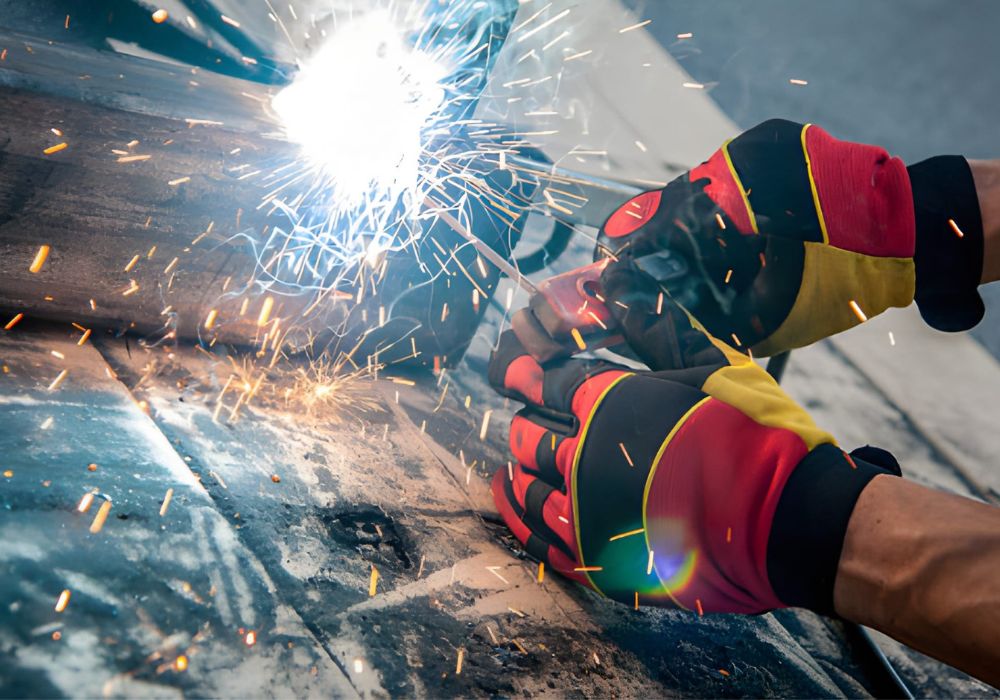
The materials used in welding gloves are chosen for durability, flexibility, and limited insulation. Cowhide and goatskin are the most common options.
Cowhide offers strong protection and toughness for heavy-duty welding. Goatskin provides dexterity for precise work like TIG welding.
Both leathers resist sparks and heat but only insulate electricity when dry. Once damp, they can conduct current quickly.
Inside the glove, manufacturers often use cotton, foam, or wool linings. These layers add comfort and thermal insulation but aren’t electrical barriers.
Some high-end gloves include Kevlar stitching to resist cuts and flame exposure. However, Kevlar is not a full electrical insulator.
Synthetic fibers like Nomex or aluminized fabrics improve heat resistance but don’t make gloves electrically safe.
In dry conditions, leather has a resistivity high enough to block low-voltage contact. But in the presence of moisture or oil, resistivity drops exponentially.
That’s why maintenance and dryness are crucial for safety. The glove’s insulation power depends more on condition than on material label.
Manufacturers balance comfort, flexibility, and resistance, but no glove provides absolute electrical isolation.
The key takeaway: welding glove materials delay electricity — they don’t fully stop it.
Testing and Standards for Welding Glove Safety
Welding gloves undergo specific tests before they reach professionals’ hands. These tests measure flame resistance, heat insulation, and mechanical strength.
In Europe, EN 12477 defines the safety standards for welding gloves. It categorizes gloves into Type A and Type B, based on dexterity and heat tolerance.
However, EN 12477 does not certify gloves for high-voltage electrical insulation. It focuses mainly on thermal and mechanical performance.
In the United States, ANSI/ISEA 105 outlines standards for cut, puncture, and heat resistance. Electrical tests are minimal for standard welding gloves.
For electrical insulation specifically, ASTM D120 governs rubber insulating gloves used by electricians.
Only those gloves are considered true shockproof gear capable of handling thousands of volts.
Some premium welding gloves may include light electrical resistance testing, typically around 100 V DC.
But manufacturers still warn users not to rely on them for electric work.
Safety labels often include disclaimers like “not intended for electrical protection.”
So, while your gloves pass numerous safety certifications, shockproofing isn’t one of them.
When Welding Gloves Can Fail to Protect
Even the toughest gloves have weak points. Wet, torn, or contaminated gloves lose insulation almost instantly.
Sweat or water on the leather surface forms a conductive path for electricity.
If your glove’s stitching burns or loosens, small metal parts inside may create contact points.
Carbonized areas from repeated heat exposure become semi-conductive and can channel current directly to the skin.
Resting one hand on a grounded metal surface while holding the electrode in the other increases shock risk.
Touching two conductive surfaces simultaneously can complete a circuit, even with gloves on.
Using the wrong glove type for your welding process also raises danger. TIG gloves are thinner and less insulated than MIG or stick welding gloves.
High humidity or rainy environments further increase conductivity. Electricity travels easier through moist air and damp material.
If your gloves smell burnt or feel stiff, replace them immediately — damaged insulation can’t be trusted.
Always inspect gloves before every use, because small cracks today can become serious hazards tomorrow.
How Much Voltage Welding Gloves Can Withstand
The typical welding circuit runs between 10 V and 100 V DC depending on process and amperage.
Under dry, clean conditions, quality leather gloves can resist this voltage for short contact periods.
However, once gloves become wet, even 30 V can pass current through to your hands.
There is no official “shockproof” rating for welding gloves because their performance changes constantly.
Some lab tests show that dry leather can resist up to 500 V DC briefly, but that’s under controlled conditions only.
In real workshops with sweat, metal dust, and humidity, that resistance drops by 80 percent or more.
That’s why welding gloves are never certified like electrician’s gloves.
The safe approach is to treat them as a thermal barrier, not an electrical one.
If your job involves potential contact with live circuits, wear rubber insulating gloves beneath your leather ones.
That combination provides both heat protection and genuine shock insulation.
Proper Usage to Prevent Electric Shock
Safety begins before the arc ever strikes. Always inspect your gloves for holes, burn marks, or stiff patches.
Keep gloves completely dry — store them away from damp areas or welding coolant splashes.
Avoid holding the electrode and the grounded metal simultaneously.
Never lean your arm or elbow on the workbench while the electrode is live.
If you feel warmth or vibration through your gloves during work, stop immediately and check for moisture.
Change gloves regularly if you sweat heavily or work in high-humidity environments.
Use inner cotton liners to absorb moisture and improve comfort.
For high-voltage TIG or plasma cutting, pair your gloves with electrical insulating liners.
Ensure your cables, connectors, and clamps are in perfect condition before each shift.
Proper practice reduces the risk far more than any single glove ever could.
Other Hazards Welding Gloves Protect Against

Welding gloves are champions of thermal and mechanical protection. Their main purpose is to defend against heat, spatter, and sparks.
During welding, temperatures can exceed 6,000 °F at the arc’s center. Gloves prevent skin burns and radiant heat exposure.
They also protect against ultraviolet and infrared radiation, which can cause serious skin damage.
The leather exterior deflects flying slag and prevents molten droplets from sticking.
Good gloves also resist abrasion and cuts from sharp metal edges.
MIG gloves are thicker to handle heavy spatter, while TIG gloves are thinner for precision.
Some gloves have aluminized backs to reflect heat during prolonged welding sessions.
All these features make them essential for welder safety — just not full electric safety.
While their shock resistance is a bonus, their primary job remains defending against extreme temperature.
Never confuse thermal protection with electrical immunity; they are entirely different defenses.
Best Practices for Maintaining Welding Gloves
Proper maintenance ensures maximum protection and longevity. Always let gloves dry naturally after work — never near open flames.
Avoid soaking them in water or cleaning solvents that can degrade leather fibers.
Wipe them with a dry cloth to remove metal dust and welding residue.
Apply leather conditioner occasionally to maintain flexibility and resistance.
Store gloves in a clean, cool, dry place away from oil and chemicals.
If gloves become hard, cracked, or brittle, replace them immediately.
Check the seams and cuffs regularly for signs of wear or discoloration.
Label your gloves according to type (MIG, TIG, stick) to avoid confusion in shared workshops.
Keep a spare pair available in case of unexpected moisture or burns.
Properly maintained gloves retain their insulation and last much longer in tough welding environments.
Frequently Asked Questions
Can you get electrocuted while wearing welding gloves?
Yes. Welding gloves reduce risk but do not eliminate it, especially if wet or damaged.
Are welding gloves completely shockproof?
No. They are shock-resistant only when dry and clean, not truly shockproof.
What gloves protect against electric shock fully?
Rubber insulating gloves rated under ASTM D120 or IEC 60903 standards.
Can leather gloves conduct electricity?
Dry leather resists current, but wet or oily leather can conduct electricity easily.
Do TIG gloves offer less protection?
Yes, TIG gloves are thinner for dexterity and have lower insulation than MIG gloves.
Can I touch a live electrode with welding gloves?
Never. Always disconnect current before handling electrodes or wires.
What causes welding gloves to lose insulation?
Moisture, sweat, oil contamination, or heat damage reduce insulation power.
Can welding gloves stop arc flash current?
No. Only specialized electrical PPE can handle arc flash or high voltage.
Why do some welders wear two layers of gloves?
They use rubber liners beneath leather gloves for extra insulation and sweat control.
Should welding gloves be replaced regularly?
Yes. Replace them as soon as they show cracks, burns, or stiffness.
Conclusion
Welding gloves are one of the most important safety tools for any welder. They protect hands from heat, sparks, and burns during intense work.
However, they are not completely shockproof. They only offer partial resistance against electricity under specific dry conditions.
Understanding this limitation keeps you safe and prevents overconfidence in risky environments.
Treat welding gloves as heat shields, not electrical armor. Always combine them with proper grounding and dry-hand precautions.
For high-voltage work, wear certified rubber insulating gloves underneath your leather pair.
Maintaining clean, dry, and intact gloves ensures consistent protection every time you weld.
Safety begins with awareness — knowing what your gear can and cannot do.
The next time you strike an arc, remember: your gloves can save your skin, but only your habits can save your life.
Stay cautious, stay dry, and let knowledge be your best shield.

I’m Darrell Julian, the founder, lead writer, and hands-on welding enthusiast behind ArcWeldingPro.com. With more than 15 years of real-world welding experience, I created this platform to share what I’ve learned in the field, in the shop, and in the heat of the arc.