When you’re tackling any sanding project, whether it’s smoothing rough lumber, refining metal, or even sharpening knives, the quality of your belt sander belts makes all the difference. The right sanding belt can cut down your working time, give you a superior finish, and last longer, saving you both effort and money. But with so many options out there, how do you choose the best belt sander belts for your needs? We’ve put together a comprehensive guide and reviewed some top picks to help you make an informed decision and get the most out of your belt sander.
Quick Product Comparison
Our Top 5 Best Belt Sander Belts Reviews – Expert Tested & Recommended
1. 3×21 Inch Belt Sander Sanding Belts: 21-Pack Assorted Grits for Wood, Metal, Knife Sharpening.
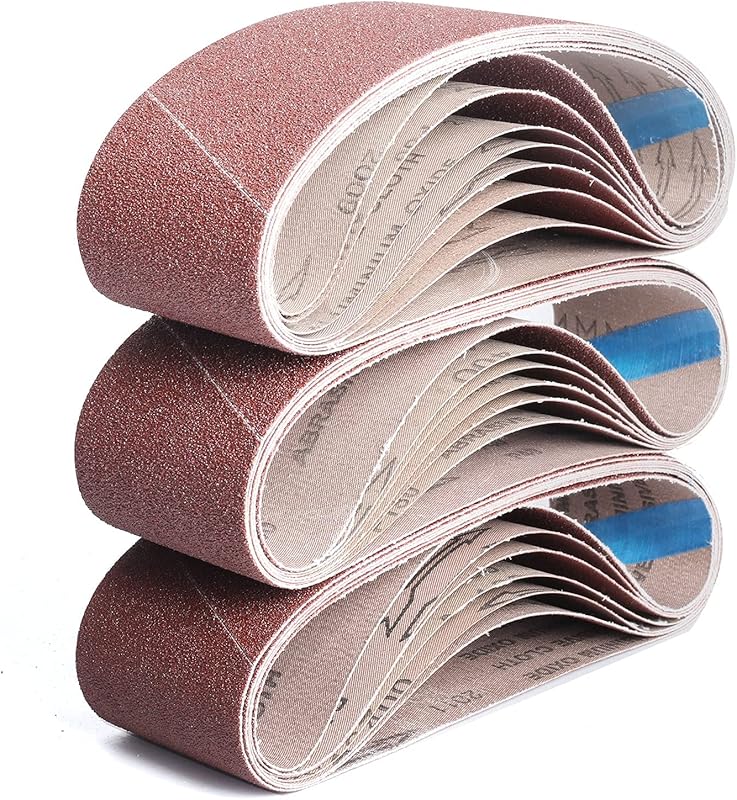
If you’re looking for a versatile pack of belt sander belts for a variety of tasks, this 21-pack from Boshcraft is an excellent choice. It includes a wide assortment of grits, perfect for everything from aggressive stock removal to fine finishing on wood, metal, and even for knife sharpening. These belts are designed with durability in mind, ensuring they stand up to rigorous use.
Key Features That Stand Out
- ✓ Assorted Grit Selection: Comes with 21 belts in 40, 60, 80, 120, 180, 240, and 400 grits.
- ✓ Premium Aluminum Oxide: Made with industrial-grade aluminum oxide for effective material removal.
- ✓ X-Weight Cloth Base: Provides flexibility and robustness, resisting tearing during use.
- ✓ Phenolic Resin Bond: Ensures abrasive grains stay attached for maximum longevity.
- ✓ Reinforced Belt Joint: Features a smooth, strong German joint tape to prevent premature breakage.
Why We Recommend It
We recommend these 3×21 inch sanding belts because they strike a fantastic balance between variety, performance, and durability. The broad range of grits means you won’t need to buy separate packs for different stages of your project. The robust construction with premium aluminum oxide and a strong backing ensures these belts work hard and last long, making them a reliable choice for any workshop.
Best For
These sanding belts are best for general-purpose sanding, suitable for both hobbyists and professionals working on diverse materials like wood, metal, plastics, and for detailed knife sharpening.
Pros and Cons
Pros:
- Extensive grit range covers most sanding needs.
- High-quality aluminum oxide for efficient material removal.
- Durable X-weight cloth backing prolongs belt life.
- Strong, smooth belt joints prevent snags and breaks.
Cons:
- May be overkill if you only need specific grits.
- Packaging might occasionally mislabel grit quantities.
Customer Reviews
Customer Review: The first package didn’t have the 3 each of 40 grit so Amazon sent me another package. I sanded an 8 foot by 5 foot table and the belt paper held up great. Really happy with the product. Would by again.
Customer Review: Good quality and gives great useage on each belt.
2. 1/2×18 Inch Aluminum Oxide Belt Sander Belts: 50-Pack Assorted Grits for Woodworking, Metal.
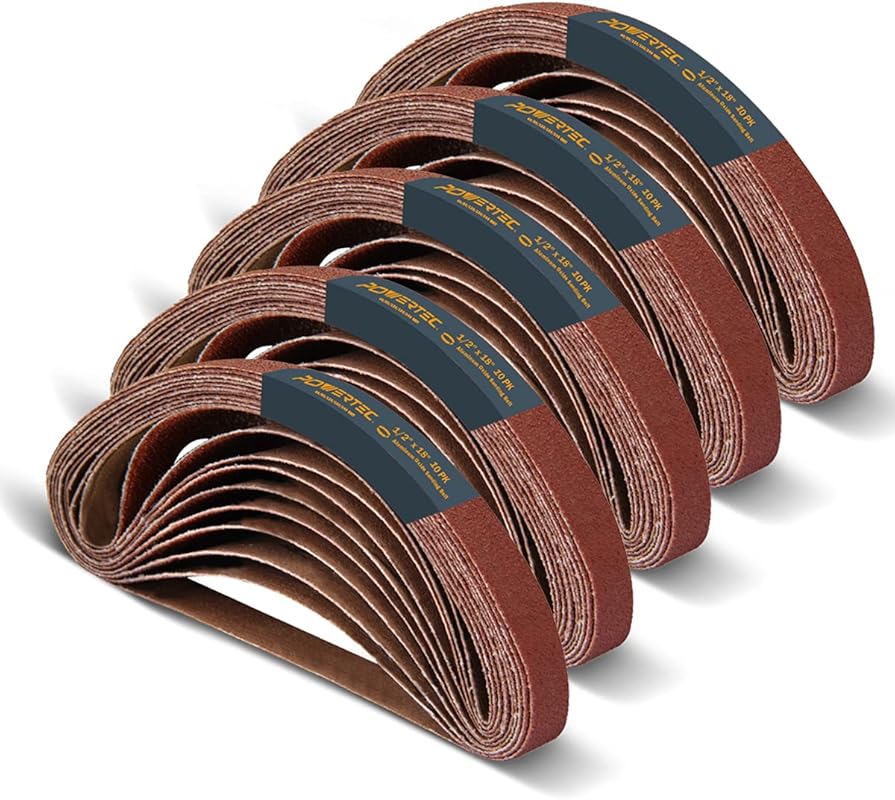
For those who use mini belt sanders or bandfile sanders, this 50-pack of 1/2×18 inch aluminum oxide belt sander belts is an absolute game-changer. It provides a huge quantity of assorted grits, ensuring you always have the right abrasive for detailed woodworking, metal finishing, or intricate shaping tasks. The premium construction ensures durability and consistent sanding results.
Key Features That Stand Out
- ✓ Massive 50-Pack Assortment: Contains 10 pieces each of 40, 80, 120, 180, and 240 grits.
- ✓ Perfect Fit for Mini Sanders: Specifically designed for 1/2″ x 18″ sanders like WEN 6307 and Milwaukee M12 bandfiles.
- ✓ Industrial-Grade Aluminum Oxide: Offers aggressive cutting action and extended lifespan.
- ✓ Strong X-Weight Cloth Backing: Provides stability and prevents stretching or tearing under pressure.
- ✓ Consistent Sanding Performance: Delivers uniform finishes across various materials.
Why We Recommend It
This 50-pack earns our Editor’s Choice because of its incredible value and specialized fit. If you own a mini belt sander, you know how quickly you can go through belts. This bulk pack means fewer reorders and more uninterrupted work. The consistent quality of the aluminum oxide ensures reliable performance on small, intricate projects.
Best For
Ideal for users of mini belt sanders and bandfile sanders, perfect for detailed woodworking, metal deburring, shaping, and precise finishing tasks where smaller belts are required.
Pros and Cons
Pros:
- Excellent quantity and grit variety for the price.
- Specifically sized for common mini belt sanders.
- Durable abrasive construction handles tough materials.
- Consistent cutting and finishing performance.
Cons:
- May feel slightly less tight on some rollers at lower speeds.
- Grit range focuses on mid-to-coarse, with fewer very fine options.
Customer Reviews
Customer Review: Very solid belts. For the price, you can’t beat the quantity and variety of grits. I have noticed there not as tight on the roller of my Milwaukee m12 band file, but at higher speed they work well enough to still make this a great deal! Perfect size, decent construction.
Customer Review: Very solid belts. For the price, you can’t beat the quantity and variety of grits. I have noticed there not as tight on the roller of my Milwaukee m12 band file, but at higher speed they work well enough to still make this a great deal! Perfect size, decent construction.
3. 3×21 Inch Aluminum Oxide Belt Sander Sanding Belts: 8-Pack Assorted Grits for Woodworking.
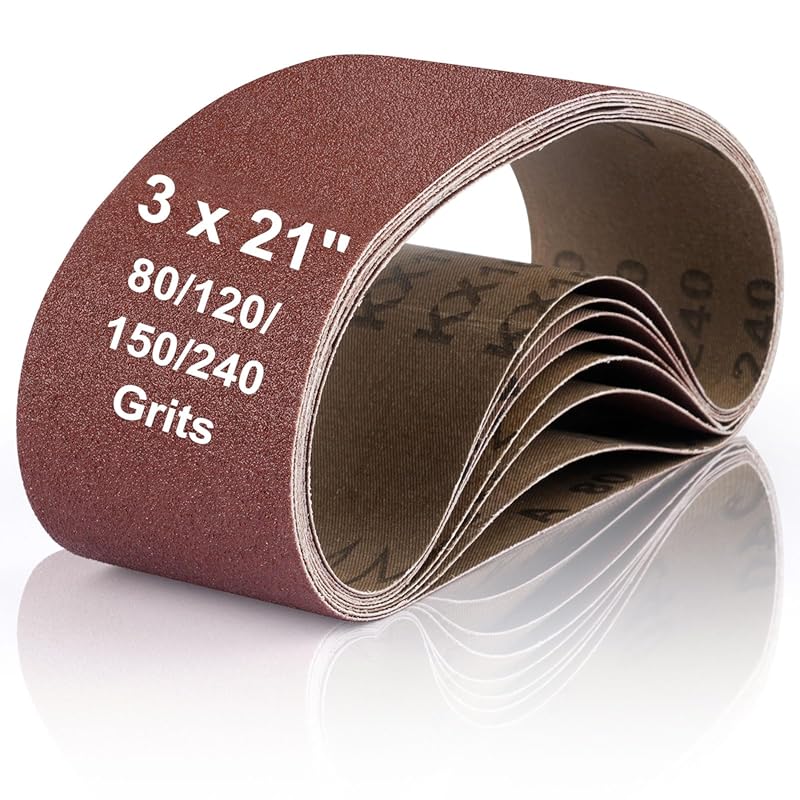
For those who need reliable 3×21 inch belt sander belts without breaking the bank, this 8-pack of aluminum oxide belts offers fantastic value. While it’s a smaller pack, it provides a well-rounded selection of grits suitable for most common woodworking and metal processing tasks. It’s a great option for light to medium-duty projects where cost-effectiveness is a key concern.
Key Features That Stand Out
- ✓ Cost-Effective 8-Pack: Includes 2 belts each of 80, 120, 150, and 240 grits.
- ✓ Precision Engineered for Durability: Designed for efficiency in various grinding needs.
- ✓ Aluminum Oxide Abrasive: A standard, effective abrasive for general sanding.
- ✓ Strong and Smooth Seams: High-strength joint technology reduces vibration and minimizes belt breakage.
- ✓ Versatile for Different Materials: Great for woodworking, metal finishing, and general purpose sanding.
Why We Recommend It
These sanding belts are our Best Budget pick because they deliver solid performance at a very accessible price point. You get the essential grits for most projects, and the belts are constructed well enough to handle regular use without immediate wear. It’s an excellent entry-level or backup set for any workshop.
Best For
Perfect for DIY enthusiasts, hobbyists, or anyone needing reliable belt sander belts for light to medium-duty woodworking and metal preparation, without a significant investment.
Pros and Cons
Pros:
- Very affordable price point for a useful assortment.
- Good range of popular grits for general tasks.
- Strong belt joints contribute to smooth operation.
- Adequate durability for typical home projects.
Cons:
- Smaller quantity means more frequent reordering for heavy users.
- May not be as aggressive or long-lasting as premium belts for heavy-duty work.
Customer Reviews
Customer Review: very resistent and good quality, loved the pack which brings several grains.
Customer Review: Outstanding value for the money. Could be more durable but the variety and number of belts for the price can’t be beat. Done well for me so far on somewhat green wood.
4. 3×21 Inch Heavy Duty Zirconia Belt Sander Belts: 21-Pack Assorted Grits for Wood, Metal.
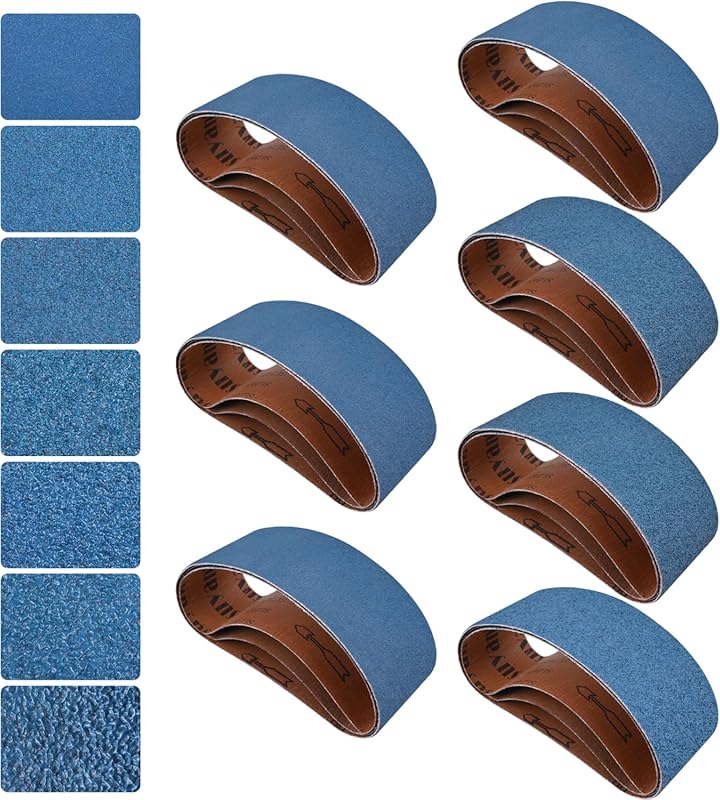
When your projects demand serious abrasive power and longevity, these 3×21 inch heavy-duty Zirconia belt sander belts are ready for the challenge. This 21-pack offers a wide array of grits, all featuring tough blue zirconia particles known for their exceptional sharpness and durability, particularly on metals and hardwoods. They’re built to last, making them a smart investment for demanding tasks.
Key Features That Stand Out
- ✓ Zirconia Alumina Abrasive: Provides superior sharpness and much longer life compared to standard aluminum oxide.
- ✓ Versatile Grit Selection: Includes 3 pieces each of 40, 60, 80, 120, 150, 240, and 400 grits for comprehensive use.
- ✓ Heavy-Duty Performance: Engineered for aggressive material removal and extended use on tough surfaces.
- ✓ Seamless and Long-Lasting Joints: Precision crafting ensures smooth operation without snags or bumps.
- ✓ Excellent Heat Dissipation: Zirconia performs well under heat, preventing premature clogging and wear.
Why We Recommend It
We highly recommend these belt sander belts for anyone dealing with tough materials or high-volume work. The zirconia abrasive is a significant upgrade, offering faster cutting and a dramatically longer lifespan. If you’re tired of frequently changing belts on demanding projects, these are a reliable, high-performance solution.
Best For
These heavy-duty sanding belts are ideal for professional contractors, serious woodworkers, metal fabricators, and anyone who needs to quickly and efficiently remove material from hardwoods, metals, or composites.
Pros and Cons
Pros:
- Exceptional durability and lifespan from zirconia grain.
- Aggressive cutting action makes quick work of tough materials.
- Wide grit variety suitable for many stages of work.
- High-quality construction with flawless seams.
Cons:
- Potentially a higher upfront cost than aluminum oxide belts.
- May be overkill for very light, occasional sanding tasks.
Customer Reviews
Customer Review: These zirconia belts are fantastic for metal work. I use them for knife making and they just eat through steel without bogging down. Definitely worth the investment for the performance boost.
Customer Review: I was skeptical at first, but these heavy-duty belts really hold up. I’ve used them on several reclaimed wood projects, and they lasted much longer than my previous aluminum oxide belts. Great value for the durability!
5. 3×18 Inch Aluminum Oxide Belt Sander Belts: 21-Pack Assorted Grits for Wood, Metal, Knife.
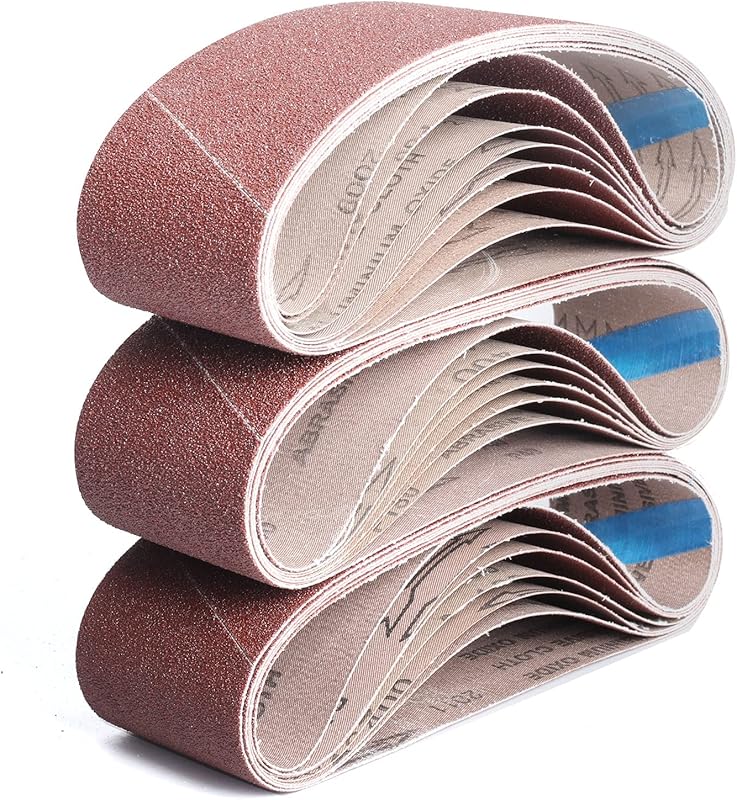
If your belt sander uses the slightly shorter 3×18 inch belts, this 21-pack of aluminum oxide sanding belts is a practical and efficient choice. It provides a comprehensive assortment of grits, covering everything from initial shaping to final smoothing. Crafted with premium materials, these belts are designed for consistent performance and a smooth sanding experience across various applications.
Key Features That Stand Out
- ✓ Standard 3×18 Inch Size: Perfectly fits common portable and benchtop 3×18 belt sanders.
- ✓ Generous 21-Pack: Includes 3 pieces each of 40, 60, 80, 120, 180, 240, and 400 grits.
- ✓ Premium Closed Coat Aluminum Oxide Grain: Ensures sharp cutting and a smooth finish.
- ✓ Anti-Static and Anti-Clogging Features: Helps to extend belt life and maintain sanding efficiency.
- ✓ Perfect Belt Interface: Strong, flat, and firm joints eliminate splice bumps for smoother operation.
Why We Recommend It
This 21-pack is a reliable option for anyone needing 3×18 inch belt sander belts. The good range of grits coupled with the premium aluminum oxide abrasive makes it suitable for a wide array of projects. The anti-static properties and strong interface are thoughtful features that contribute to a better, more efficient sanding experience, offering excellent value.
Best For
These sanding belts are ideal for users with 3×18 inch belt sanders, perfect for general woodworking, metal preparation, knife sharpening, and other household or workshop sanding tasks.
Pros and Cons
Pros:
- Excellent grit diversity for comprehensive sanding needs.
- High-quality aluminum oxide provides effective abrasive action.
- Anti-static properties reduce dust buildup and extend life.
- Seamless belt interfaces ensure smooth, vibration-free operation.
Cons:
- Limited to 3×18 inch sanders only.
- Durability might be less than zirconia for extremely heavy use.
Customer Reviews
Customer Review: The first package didn’t have the 3 each of 40 grit so Amazon sent me another package. I sanded an 8 foot by 5 foot table and the belt paper held up great. Really happy with the product. Would by again.
Customer Review: Good quality and gives great useage on each belt.
Complete Buying Guide for Belt Sander Belts
Choosing the right belt sander belts can significantly impact the success and efficiency of your projects. It’s not just about picking any belt; it’s about understanding the nuances of abrasive types, grit sizes, and belt construction. Let’s dive into the essential factors we considered when selecting our top picks, helping you make the best decision for your workshop.
Essential Factors We Consider
When you’re looking for the best belt sander belts, several crucial factors come into play. Thinking about these will guide you to a purchase that truly meets your needs:
- Abrasive Material: This is the heart of the sanding belt.
- Aluminum Oxide: The most common type, great for general-purpose sanding on wood, plastics, and some metals. It’s durable and cost-effective.
- Zirconia Alumina: A heavier-duty option, ideal for aggressive stock removal on hardwoods, metals, and composites. It lasts longer and cuts faster than aluminum oxide.
- Silicon Carbide: Best for sanding glass, stone, or non-ferrous metals. It’s very sharp but tends to fracture easily, making it less ideal for wood.
- Ceramic: The toughest and longest-lasting, perfect for extreme heavy-duty applications, especially on hard metals and exotic woods. It’s usually the most expensive.
- Grit Size: The coarseness of the abrasive determines how much material is removed and the finish achieved.
- Coarse (40-60 grit): For heavy stock removal, shaping, or removing old finishes.
- Medium (80-120 grit): Good for general sanding, smoothing rough surfaces, and preparing for finer grits.
- Fine (150-240 grit): For final smoothing before staining or painting, or for light material removal.
- Very Fine (320-400+ grit): For very fine finishing, polishing, or between coats of finish.
- Belt Size: Your belt sander has specific dimensions (e.g., 3×21 inches, 1/2×18 inches). Always check your tool’s manual to ensure you purchase the correct size. An incorrect size will not fit or could damage your sander.
- Backing Material: This is what holds the abrasive grains.
- Cloth (X-weight or Y-weight): More durable and flexible, suitable for power sanding and heavy-duty applications. X-weight is flexible, Y-weight is more rigid.
- Paper (A-weight to F-weight): Less durable, generally used for lighter sanding and hand sanding. Not common for power belt sander belts.
- Joint Quality: The seam where the belt is joined together is a critical point. A poor joint can break prematurely, cause vibrations, or leave marks on your workpiece. Look for smooth, strong, and reinforced joints.
- Coating: Some belts have an open-coat or closed-coat design.
- Open Coat: Abrasive grains are spaced further apart, reducing loading (clogging) when sanding softer materials like wood or paint.
- Closed Coat: Grains are packed densely, providing a finer finish and longer life on harder materials, but can clog faster on soft materials.
Budget Planning
When buying belt sander belts, it’s easy to think “cheaper is better” for consumables. However, investing a little more in higher-quality belts can often save you money and frustration in the long run. Premium belts last longer, cut more efficiently, and deliver better finishes, meaning you use fewer belts and spend less time resanding. Consider buying assorted multi-packs to get a range of grits for different stages of your projects, which often offers better value than individual belts. For heavy-duty use or specialized materials, upgrading to zirconia or ceramic belts, though more expensive upfront, will provide superior performance and durability that justifies the cost.
Final Thoughts
Choosing the right belt sander belts is more than just a chore; it’s an opportunity to enhance your projects and make your work easier. By paying attention to the abrasive type, grit, size, and overall construction, you can select belts that perform optimally for your specific tasks. Whether you’re a seasoned pro or just starting out, having the right sanding belts in your arsenal will ensure smoother, more efficient, and ultimately more satisfying results every time you power up your sander.
Frequently Asked Questions
Q: How do I know which grit to use for my project?
A: Generally, you start with a coarse grit (e.g., 40-80) for aggressive material removal or smoothing very rough surfaces. Then, progressively move to finer grits (e.g., 120, 180, 240, 400) to refine the surface and remove previous sanding marks. For most woodworking projects, ending around 180-220 grit is sufficient before staining or painting. For polishing metal or very fine finishes, you might go even higher.
Q: Can I use one type of abrasive belt for all materials?
A: While aluminum oxide is a good general-purpose abrasive that can handle many materials, specialized abrasives like zirconia or ceramic are much more effective and durable for tougher materials like hard metals or exotic hardwoods. Silicon carbide is best for non-ferrous metals, glass, or stone. Using the right abrasive for the job will give you better results and extend belt life.
Q: How often should I change my belt sander belt?
A: You should change your sanding belt when it no longer cuts effectively, starts to leave burn marks, or shows signs of wear such as torn edges or a dull, clogged surface. Continuing to use a worn belt can lead to poor finishes, longer working times, and unnecessary strain on your belt sander. The lifespan of a belt depends on the material being sanded, the abrasive type, and the grit.
Q: What does “X-weight cloth backing” mean?
A: “X-weight” refers to the thickness and flexibility of the cloth backing material on a sanding belt. X-weight cloth is a durable and somewhat flexible backing, making it suitable for a wide range of power sanding applications, including with belt sanders. Y-weight is typically heavier and more rigid, used for very aggressive, high-pressure tasks, while lighter weights are for hand sanding or lighter applications.
Q: How can I prevent my belt sander belts from clogging?
A: Clogging, or “loading,” happens when sanding dust and debris get embedded in the abrasive surface. To prevent this, consider using open-coat sanding belts when working with softer woods, paint, or gummy materials. Applying a sanding belt cleaning stick can also help remove buildup and extend the belt’s life. Additionally, ensuring your dust collection system is working efficiently can significantly reduce clogging.
Choosing the right belt sander belts for your projects can genuinely transform your results, making sanding less of a chore and more of a precision task. We hope our guide and reviews for the best belt sander belts have equipped you with the knowledge to make informed decisions. Remember, investing in quality abrasives is an investment in the quality of your work. So, go ahead, pick out the perfect belts for your needs, and get ready to achieve that smooth, professional finish! Click here to explore our top recommended belts on Amazon and elevate your sanding game today!

I’m Darrell Julian, the founder, lead writer, and hands-on welding enthusiast behind ArcWeldingPro.com. With more than 15 years of real-world welding experience, I created this platform to share what I’ve learned in the field, in the shop, and in the heat of the arc.