Welcome to our comprehensive guide on finding the best belt sander for wood! If you’re tackling serious woodworking projects, from smoothing rough lumber to stripping old finishes, a powerful belt sander is an indispensable tool in your workshop. These heavy-duty sanders excel at rapid material removal, making quick work of large surfaces. We’ve put together a list of top-performing belt sanders, reviewing each one to help you make an informed decision for your specific needs. Get ready to elevate your woodworking game!
Quick Product Comparison
Our Top 5 Best Belt Sander For Wood Reviews – Expert Tested & Recommended
1. SKIL 6 Amp 3×18 Inch Belt Sander for Wood with Pressure Control
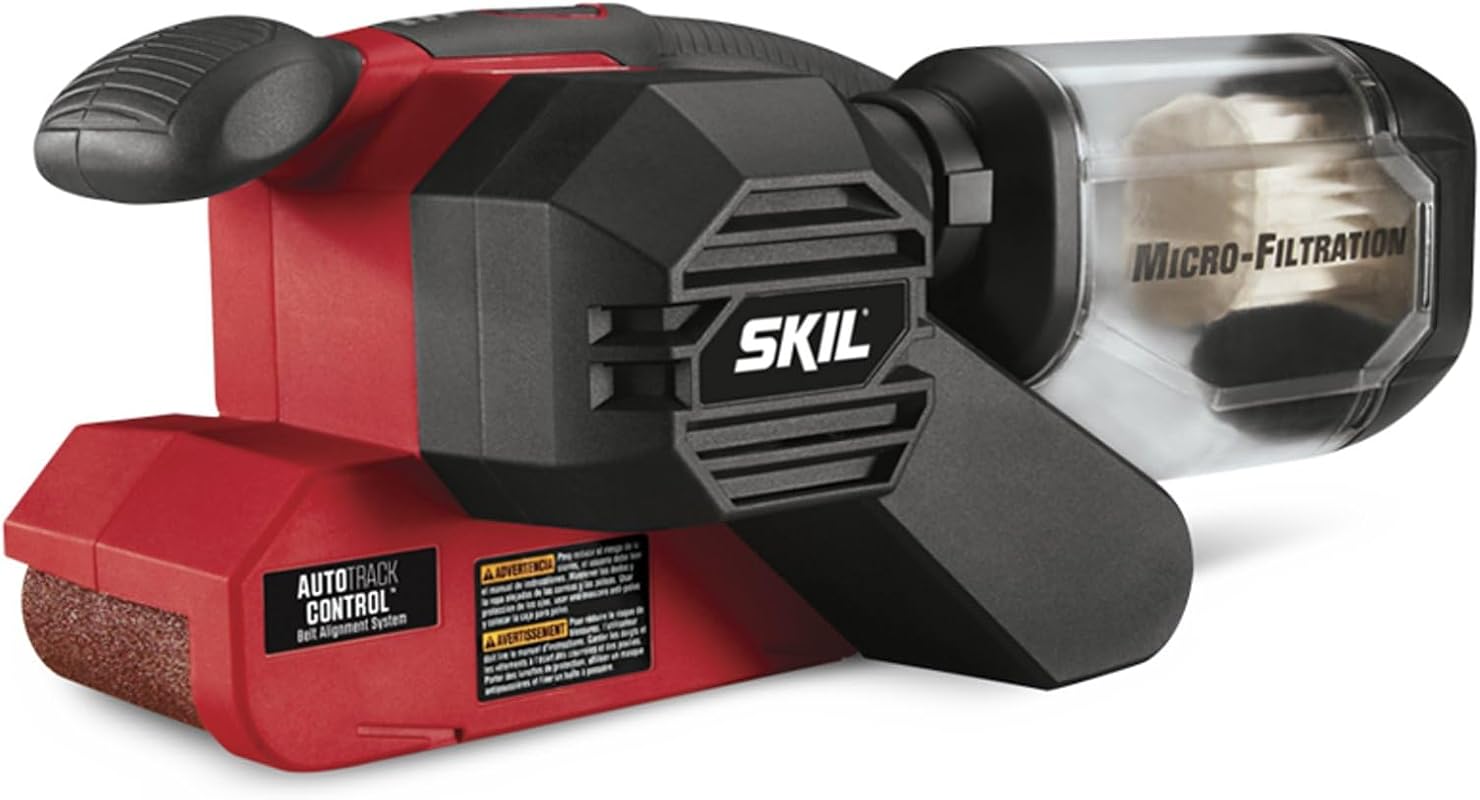
The SKIL 6 Amp 3×18 Inch Belt Sander stands out for its intelligent Pressure Control Technology. This innovative feature helps prevent gouging and uneven sanding, a common issue for both beginners and experienced woodworkers. With 6.0 Amps of power, it’s well-equipped to handle various wood surfaces efficiently. Its micro-filtration system also ensures a cleaner workspace by effectively capturing fine dust particles.
Key Features That Stand Out
- ✓ Pressure Control Technology for optimal material removal without damage.
- ✓ Robust 6.0 Amp motor suitable for different wood types.
- ✓ Micro-filtration system for superior dust collection.
- ✓ Auto Track belt alignment keeps the belt centered.
Why We Recommend It
We recommend the SKIL belt sander for wood because it perfectly balances power with user-friendly features. The pressure control is a game-changer, ensuring consistent results even for those less familiar with belt sanders. It’s a reliable choice for achieving smooth finishes on your projects without the guesswork.
Best For
This sander is ideal for DIY enthusiasts and hobbyists who need a powerful yet forgiving tool for finishing projects, removing paint, or smoothing rough lumber.
Pros and Cons
Pros:
- Excellent pressure control prevents over-sanding.
- Effective dust collection keeps the workspace clean.
- Good power for its compact size.
- Easy belt changes with tool-less design.
Cons:
- The 3×18 inch belt size might be smaller for very large projects.
- Can be a bit loud during extended use.
Customer Reviews
Customer Review: “I’ve always struggled with belt sanders leaving divots, but the pressure control on this SKIL is fantastic. It literally lights up if you press too hard, making it almost impossible to mess up. Great for my furniture restoration.” – John D.
Customer Review: “This sander is surprisingly powerful for its price point. The dust collection works better than expected, and the auto-tracking keeps the belt perfectly aligned. A solid tool for any home workshop.” – Sarah K.
2. Jellas 7 Amp 3×21 Inch Belt Sander for Woodworking with Variable Speed and Dust Bag
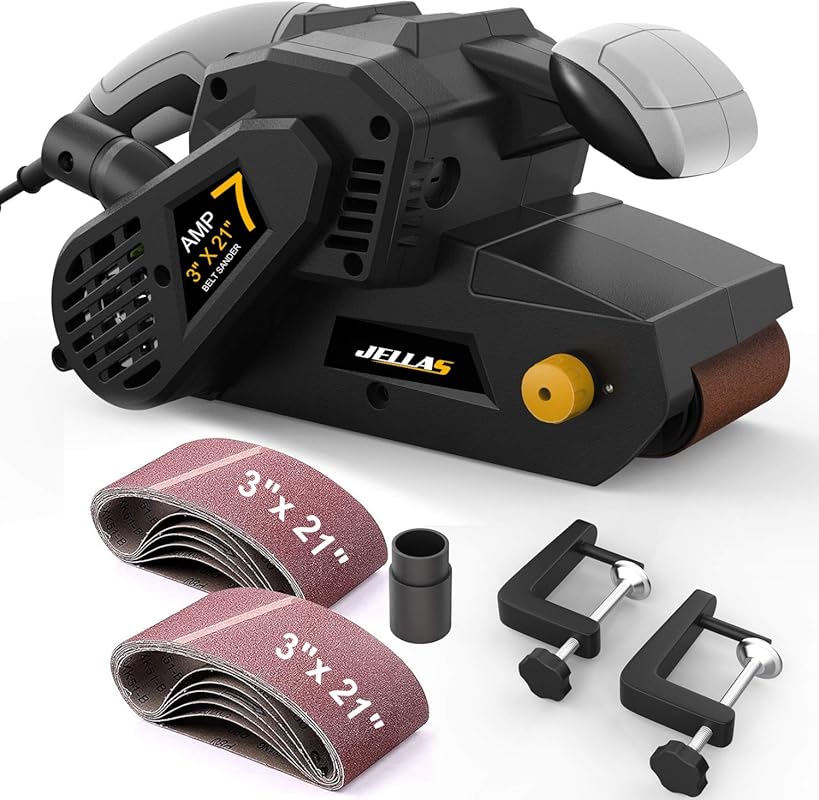
The Jellas 7 Amp 3×21 Inch Belt Sander offers impressive versatility for various woodworking tasks. Its 7-amp motor provides ample power, while the variable speed control allows you to match the belt speed to the specific material and desired finish. A unique feature is its 2-in-1 capability, allowing it to function as both a handheld belt sander for wood and a bench sander when inverted and clamped to a table. Plus, it comes with a generous supply of 10 sanding belts.
Key Features That Stand Out
- ✓ Powerful 7-Amp motor for efficient material removal.
- ✓ Variable speed dial with 6 settings for precise control.
- ✓ 2-in-1 functionality transforms it into a bench sander.
- ✓ Includes 10 sanding belts (various grits) as a bonus.
Why We Recommend It
We highly recommend the Jellas belt sander for its exceptional value and adaptability. The ability to use it as a bench sander adds incredible utility for smaller pieces or detailed work. Combined with variable speed, it’s a very versatile tool for any woodworker looking for flexibility.
Best For
This sander is excellent for woodworkers who need a versatile tool capable of both handheld and stationary sanding, especially those working on diverse projects that require variable control.
Pros and Cons
Pros:
- Excellent value with included sanding belts.
- Versatile 2-in-1 design (handheld and bench).
- Variable speed offers greater control over sanding.
- Decent power for a range of tasks.
Cons:
- Dust collection bag could be improved.
- The clamping mechanism for bench mode might feel less robust than dedicated bench sanders.
Customer Reviews
Customer Review: “Works well, and came with a nice assortment of sanding belts”
Customer Review: “Really good product especially for the price. I used it to strip the old stain off my deck and it worked really well. Only thing that could use some improvement is the dust collecting bag, but otherwise an excellent product.”
3. WEN 7 Amp 3×21 Inch Corded Belt Sander for Wood with Dust Bag
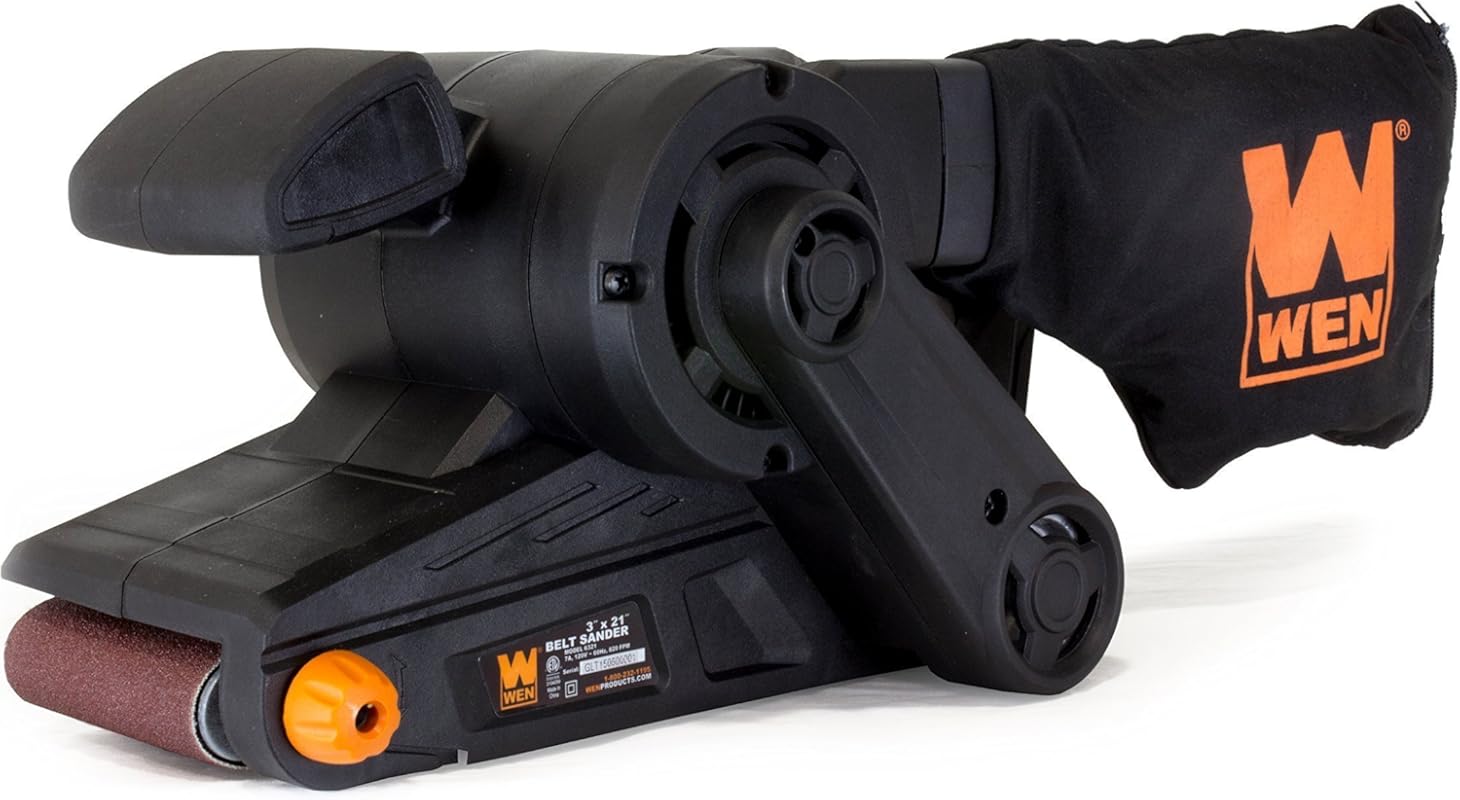
The WEN 7 Amp 3×21 Inch Corded Belt Sander is a powerful yet affordable option that doesn’t skimp on performance. Its 7-amp motor drives the sanding belt at an impressive 13 feet per second, making quick work of large areas. Weighing only six pounds, it’s designed to minimize user fatigue during prolonged use, a huge plus for big projects. The detachable dust bag also helps keep your workspace tidier.
Key Features That Stand Out
- ✓ Powerful 7-Amp motor for rapid material removal.
- ✓ Lightweight design (six pounds) reduces user fatigue.
- ✓ Fast belt speed of over 13 feet per second.
- ✓ Detachable dust bag for convenient cleanup.
Why We Recommend It
For those looking for a capable belt sander for wood without breaking the bank, the WEN is an excellent choice. It delivers strong performance and thoughtful design features like its light weight, making it a comfortable tool to use for extended periods. It’s a solid workhorse for general sanding tasks.
Best For
This sander is best for budget-conscious homeowners and DIYers who need a reliable and powerful tool for large surface sanding tasks like deck restoration or floor refinishing.
Pros and Cons
Pros:
- Very affordable for its power and features.
- Lightweight and easy to maneuver.
- Aggressive material removal for quick results.
- Effective dust collection with detachable bag.
Cons:
- Lacks variable speed control.
- Can be loud in operation.
Customer Reviews
Customer Review: “Great sander. Sanded a 20×40 deck several times with no problems.Debated about getting a more expensive variable speed unit. Glad I didn’t. I see no need for variable speed.My deck was painted. I tried sanding the paint off but that would have taken forever so I used Behr paint / stain stripper firs”
Customer Review: “I am not a pro, but I needed this to sand down about 7 – 3ft boards for a wedding. I flipped this over and set it outside on a flat surface and moved the boards around on top of it. It worked really well. It has an adjustment to move the belt left and right. It was worth the price. I thought is”
4. Makita 9403 4″ x 24″ Belt Sander, Teal
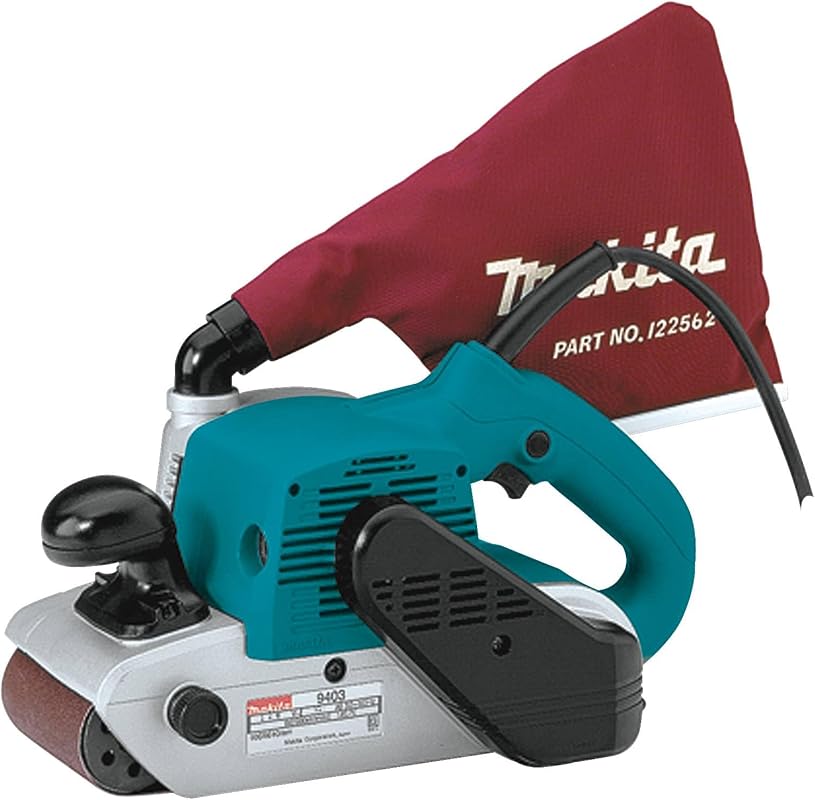
The Makita 9403 4″ x 24″ Belt Sander is a professional-grade tool known for its exceptional power and quiet operation. With a 4-inch wide belt and a speed of 1,640 ft./min, it offers rapid material removal for even the most demanding woodworking tasks. Its labyrinth construction is a key feature, sealing and protecting the motor and bearings from dust and debris, which significantly extends tool life. This belt sander for wood is built for durability and comfort.
Key Features That Stand Out
- ✓ Low noise level (84dB) for improved operator comfort.
- ✓ Wide 4″ x 24″ belt for extensive material removal.
- ✓ Impressive belt speed of 1,640 ft./min for fast sanding.
- ✓ Labyrinth construction protects internal components from dust.
Why We Recommend It
For serious woodworkers and professionals, the Makita 9403 is a top-tier choice. Its combination of powerful performance, low noise, and robust dust protection sets it apart. While it’s a significant investment, its durability and efficiency make it a worthwhile addition to any high-volume workshop where a reliable belt sander for wood is essential.
Best For
This sander is ideal for professional carpenters, cabinet makers, and serious hobbyists who require powerful, fast, and continuous sanding on large surfaces, prioritizing durability and comfort.
Pros and Cons
Pros:
- Extremely quiet for a powerful belt sander.
- Superior dust collection system.
- Excellent durability and long tool life due to robust construction.
- Efficient and fast material removal.
Cons:
- Higher price point than many other models.
- Can be heavy for some users during overhead work.
Customer Reviews
Customer Review: “Heavy duty belt sander. Powerful and does a good job. Easy to operate and changing belts is a breeze, as is adjusting the tracking. 80 grit paper is the heaviest I’ve used and it sands with that grit like a charm. The dust vacuum system works much better than I expected, however with that heavy gri”
Customer Review: “Quality powerful belt sander, a bit on the heavy side with unbelievable dust collection, obviously it wont collect 100% of the dust but it’s not just an after thought to say it has dust collection either, in fact it blows saw dust into the bag with enough force to inflate the bag to the point it bec”
5. Metabo HPT 3×21 Inch Belt Sander for Woodworking with 9 Amp Variable Speed Motor
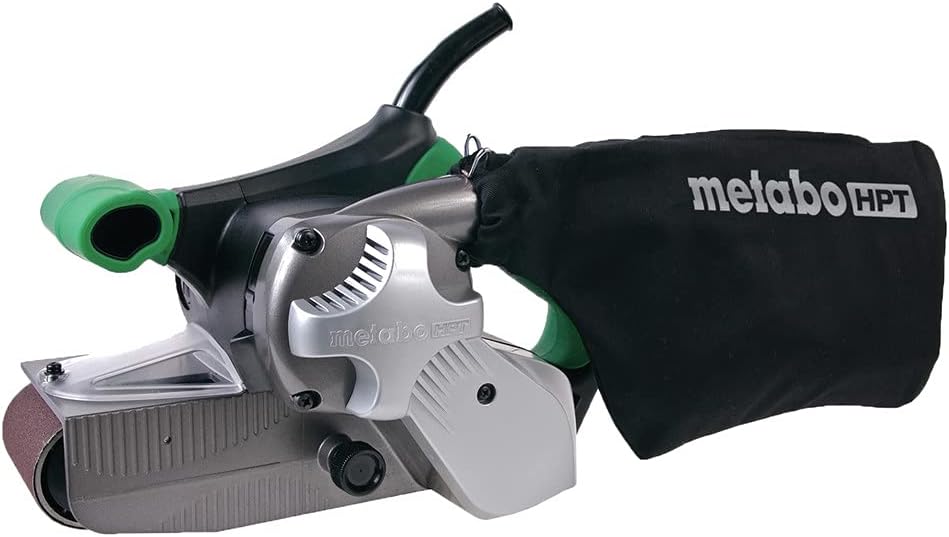
The Metabo HPT 3×21 Inch Belt Sander boasts a formidable 9-Amp, 1,020-watt motor, making it one of the most powerful options in its class. This translates to forcible power for even the toughest sanding jobs, ensuring efficient removal of material from any wood surface. The inclusion of a variable speed dial at the base of the handle allows for precise control, adapting the belt speed to various applications and improving overall manageability. It’s a robust and reliable belt sander for wood.
Key Features That Stand Out
- ✓ Powerful 9-Amp, 1,020-watt motor for demanding tasks.
- ✓ Variable speed dial for optimal control across different materials.
- ✓ Ergonomic design for comfortable handling and reduced fatigue.
- ✓ Durable construction for long-term reliability.
Why We Recommend It
We recommend the Metabo HPT belt sander for wood for users who need maximum power and precision. The sheer strength of its motor combined with variable speed makes it suitable for a wide array of tasks, from aggressive stock removal to finer finishing work. It’s a workhorse that consistently delivers.
Best For
This sander is best for experienced woodworkers and contractors who require a high-powered machine for heavy-duty sanding, quick material removal, and versatile applications with precise speed control.
Pros and Cons
Pros:
- Extremely powerful 9-Amp motor.
- Excellent variable speed control for versatility.
- Durable and robust construction.
- Comfortable to use despite its power.
Cons:
- Can be a bit heavy for extended overhead use.
- Dust collection could be more efficient compared to premium models.
Customer Reviews
Customer Review: “If you want a quality, high-performance belt sander, buy the Hitachi. I was contemplating buying another cheap, no-name belt sander and I’m glad I didn’t. I’ve used many cheap belt sanders before and am familiar with the performance. So I was curious to see how good the Hitachi would be and if spend”
Customer Review: “This is a great value compared with other sanders spec for spec. I was going to buy another brand and settled on this sander because of the name reputation and overall feature benefit versus price. Hitachi has always been a good brand and the marriage of Metabo makes it that much better. This san”
Complete Buying Guide for Best Belt Sander For Wood
Choosing the best belt sander for wood can seem daunting, but understanding a few key factors will simplify your decision. A good belt sander makes a significant difference in efficiency and finish quality for any woodworking project. Let’s explore what to look for.
Essential Factors We Consider
When picking out a belt sander for wood, think about these crucial elements:
- Power (Amperage): A higher amperage (typically 6-10 Amps) means more power, allowing for faster material removal and better performance on tough woods. For serious work, aim for 7 Amps or more.
- Belt Size: Common sizes are 3×18, 3×21, and 4×24 inches. Larger belts (like 4×24) cover more surface area quickly, ideal for big projects like floors or large tabletops. Smaller belts offer more maneuverability for tighter spaces.
- Variable Speed Control: This feature is incredibly useful as it allows you to adjust the belt speed. Slower speeds are better for delicate work, sanding softwoods, or avoiding scorching, while faster speeds are for aggressive stock removal on hardwoods.
- Dust Collection: Sanding creates a lot of dust. A good dust collection system, either via an integrated bag or a port for a shop vac, is vital for a cleaner workspace and healthier breathing.
- Ergonomics and Weight: A comfortable grip and balanced weight distribution reduce fatigue, especially during long sanding sessions. Lighter models (around 6-8 lbs) are easier to handle, while heavier ones (10+ lbs) can provide more downward pressure for aggressive sanding.
- Belt Tracking Adjustment: This mechanism ensures the sanding belt stays centered on the rollers. Automatic tracking is a fantastic feature that saves you from constant manual adjustments.
- Durability and Build Quality: Look for sturdy construction and quality materials. Brands known for their tools often offer better longevity.
Budget Planning
Belt sanders come in a wide price range. Entry-level models (under $70-$100) are typically good for occasional home use and lighter tasks. Mid-range options ($100-$200) offer a better balance of power, features like variable speed, and improved durability, making them suitable for serious DIYers and hobbyists. Professional-grade belt sanders (over $200) boast superior power, build quality, advanced dust collection, and often come with extended warranties, perfect for daily use in demanding environments. Consider how often you’ll use the tool and the types of projects you’ll undertake to determine your budget.
Final Thoughts
Investing in the best belt sander for wood is a step towards achieving professional-quality finishes on your woodworking projects. By considering power, belt size, variable speed, dust collection, and ergonomics, you can find a tool that perfectly matches your needs and budget. Don’t rush your decision; a well-chosen belt sander will be a valuable asset in your workshop for years to come.
Frequently Asked Questions
Q: What’s the main difference between a belt sander and an orbital sander?
A: A belt sander is designed for aggressive material removal and smoothing large, flat surfaces quickly. It uses a continuous loop of abrasive material. An orbital sander (or random orbital sander) is for finer finishing work, operating with a circular pad that moves in small orbits, reducing swirl marks and providing a smoother finish.
Q: Can I use a belt sander for delicate sanding tasks?
A: Generally, belt sanders are too aggressive for delicate tasks. However, models with variable speed control can be set to a lower speed for slightly finer work. For truly delicate or fine finishing, an orbital sander or detail sander would be more appropriate.
Q: How do I change the belt on a belt sander?
A: Most modern belt sanders feature a quick-release lever or button that loosens the tension on the belt, allowing you to easily slide the old belt off and replace it with a new one. After installing a new belt, you might need to use a tracking adjustment knob to ensure the belt runs true and doesn’t drift off the rollers.
Q: Is a dust bag sufficient, or do I need a shop vac?
A: A dust bag is convenient for light use, collecting a decent amount of sawdust. However, for prolonged sanding or when working on large projects, connecting your belt sander to a shop vac (if it has a compatible port) is highly recommended. A shop vac offers superior dust extraction, keeping your workspace much cleaner and improving air quality.
Q: What grit sandpaper should I start with for rough wood?
A: For very rough wood or removing old finishes, start with a coarse grit sandpaper, typically 40 or 60 grit. Then, gradually work your way up to finer grits (e.g., 80, 100, 120, 150) to achieve the desired smoothness. Avoid skipping too many grits at once, as this can leave deeper scratches that are hard to remove.
There you have it – our top picks for the best belt sander for wood, along with a comprehensive guide to help you choose the right tool. Whether you’re a weekend warrior tackling DIY projects or a seasoned woodworker, a good belt sander is a game-changer for preparing wood surfaces. We hope this guide has equipped you with the knowledge to make an informed decision and find the perfect partner for your next woodworking endeavor. Happy sanding!

I’m Darrell Julian, the founder, lead writer, and hands-on welding enthusiast behind ArcWeldingPro.com. With more than 15 years of real-world welding experience, I created this platform to share what I’ve learned in the field, in the shop, and in the heat of the arc.