Choosing the best circular saw blade for metal roofing is crucial for achieving clean cuts, ensuring safety, and extending the life of your tools. Metal roofing demands a specialized blade designed to handle its unique properties, preventing burrs, excessive heat, and premature wear. A high-quality blade not only makes the job easier but also contributes significantly to the professional finish and integrity of your roofing project. Dive into our expert-tested selection to find the perfect blade that will make light work of your metal roofing tasks.
Quick Product Comparison
Our Top 5 Best Circular Saw Blade For Metal Roofing Reviews – Expert Tested & Recommended
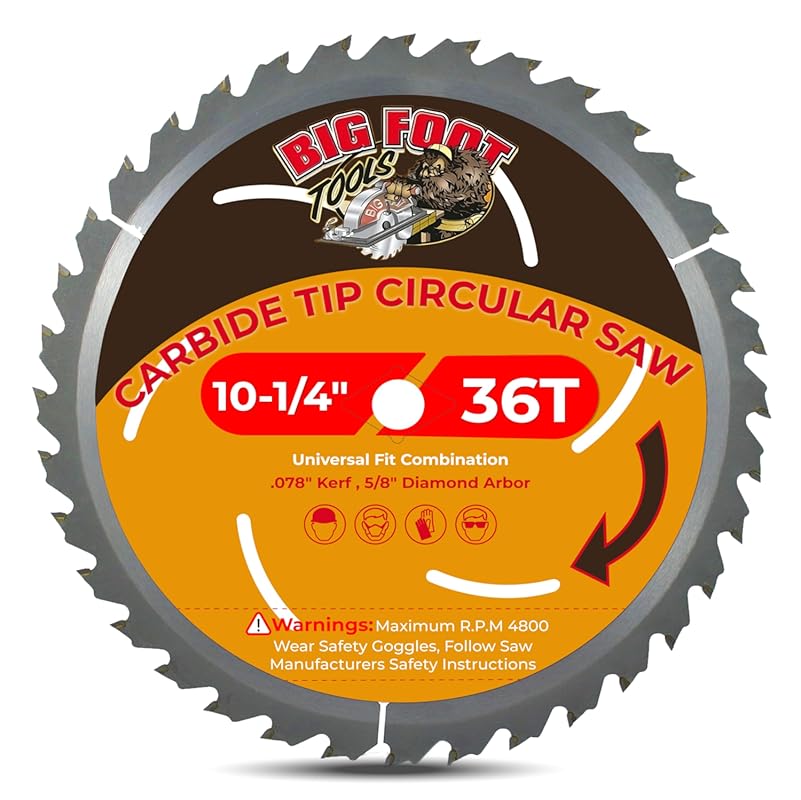
1. Big Foot 10-1/4 inch 36 Tooth Carbide Tipped Circular Saw Blade for Metal Roofing
The Big Foot 10-1/4 inch 36 Tooth Carbide Tipped Circular Saw Blade is a powerhouse for anyone serious about cutting metal roofing. Its larger diameter and robust design are specifically engineered for precision and durability on demanding projects. If you’re tackling substantial metal roofing tasks, this blade offers the superior performance you need for clean, efficient cuts.
Key Features That Stand Out
- ✓ Thin kerf 36 carbide-tipped teeth for exceptional cutting precision.
- ✓ Specifically designed for 10-1/4 inch circular saws, optimizing performance.
- ✓ Constructed from high carbon steel with carbide tips for enhanced durability and longevity.
- ✓ Delivers smooth, burr-free cuts on various metal roofing materials.
- ✓ Engineered for heavy-duty, consistent use in professional settings.
Why We Recommend It
We highly recommend the Big Foot 10-1/4 inch blade for its unwavering precision and strength when dealing with metal roofing. The combination of a thin kerf and carefully spaced carbide teeth ensures that you get incredibly clean cuts with minimal material waste. Its construction speaks volumes about its ability to endure tough job site conditions, making it a reliable partner for any roofing contractor or dedicated DIYer.
Best For
This blade is ideally suited for professional roofers and serious DIY enthusiasts working with larger metal roofing panels who prioritize precision, speed, and blade life. It excels in applications where clean, smooth edges are critical for aesthetic and functional integrity.
Pros and Cons
Pros:
- Exceptional cutting precision with thin kerf design.
- Highly durable due to carbide-tipped teeth and high carbon steel.
- Suitable for both professional and DIY heavy-duty projects.
- Delivers smooth, clean cuts on various metal roofing materials.
Cons:
- Larger 10-1/4 inch size may not fit all standard circular saws.
- Higher tooth count (36T) might be slower on thicker metals compared to lower TPI.
- Potentially a higher price point due to specialized size and quality.
Customer Reviews
Customer Review: worth the money , we have purchased back ups ,,,, money in the bank ;
Customer Review: worth the money , we have purchased back ups ,,,, money in the bank ;Read more
2. 6-1/2 Inch 48 Teeth Carbide Tipped Thin Kerf Metal Cutting Circular Saw Blade, 5/8″ Arbor
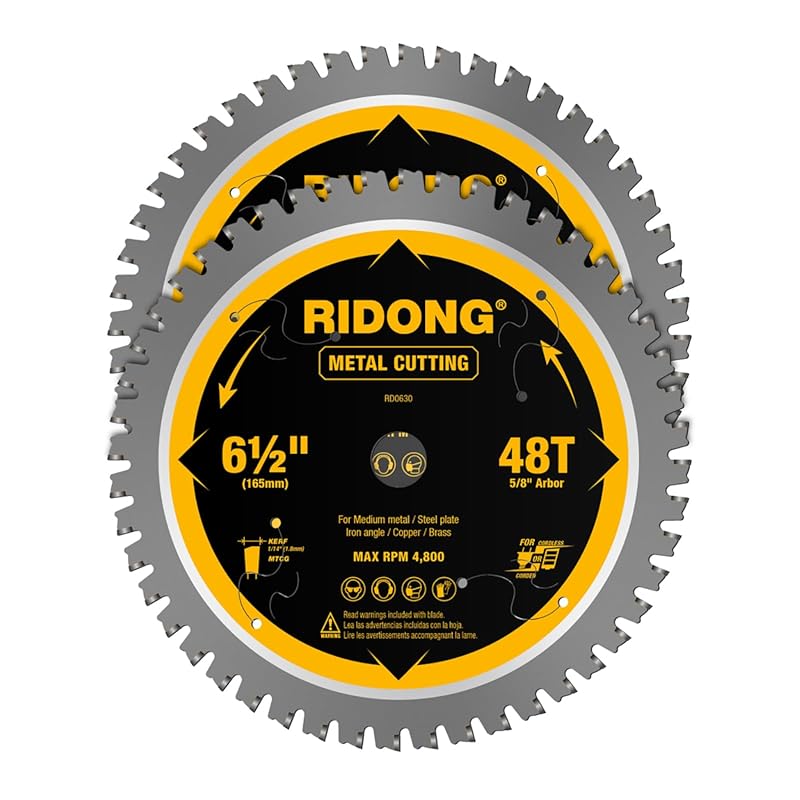
The 6-1/2 Inch 48 Teeth Carbide Tipped Thin Kerf Metal Cutting Circular Saw Blade is an excellent choice for a wide range of metal cutting tasks, including metal roofing. Its thoughtful design prioritizes both efficiency and durability, making it a go-to for those seeking a balance of performance and versatility. The thin kerf reduces strain on your saw and material waste, delivering cleaner results on various metals.
Key Features That Stand Out
- ✓ 6-1/2 inch diameter with a common 5/8 inch arbor size.
- ✓ Features 48 MATB carbide-tipped teeth for efficient and clean cuts.
- ✓ Thin 1.8mm kerf minimizes material loss and reduces cutting resistance.
- ✓ Suitable for a diverse range of metals, including angle iron, steel plate, copper, and EMT conduit.
- ✓ High-density tungsten carbide construction ensures extended blade life and cooler operation.
Why We Recommend It
This blade earns our Editor’s Choice for its outstanding versatility and consistent performance when cutting various metals, including certain types of metal roofing. The thin kerf design is a game-changer, resulting in smoother cuts and less strain on your tools. Its durable carbide tips promise a longer lifespan, offering excellent value for both professionals and dedicated home users.
Best For
This blade is ideal for DIYers and contractors needing a reliable, all-around metal cutting blade for various light to medium gauge metal roofing projects and general metal fabrication where precise, clean cuts are essential.
Pros and Cons
Pros:
- Versatile for a wide range of metal materials.
- Thin kerf reduces friction, heat, and material loss.
- High-density tungsten carbide tips ensure extended durability.
- Provides cooler and more efficient cutting.
Cons:
- Smaller diameter might require more passes for larger cuts.
- 48 teeth are good, but higher TCG might offer even cleaner finishes on very thin sheets.
- Arbor size (5/8″) is common but always needs checking.
Customer Reviews
Customer Review: Use with GreenWorks circular saw.Perfect for metal cut.Arrived quickly
Customer Review: These blades were used on OSB for a particular project. They cut like a new saw blade should, fast and true, cutting straight lines without any issues. Not much else to say other than I would definitely recommend these.
3. Benchmark Abrasives 5-3/8 Inch 50 Teeth Tungsten Carbide Tipped Metal Cutting Circular Saw Blade
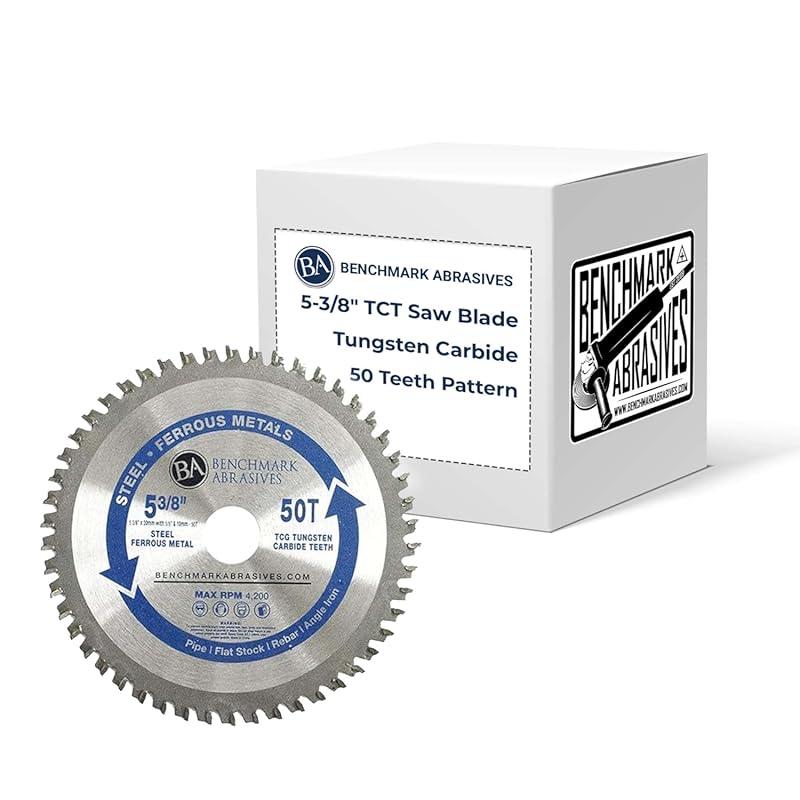
The Benchmark Abrasives 5-3/8 Inch 50 Teeth Tungsten Carbide Tipped Metal Cutting Circular Saw Blade proves that quality doesn’t always have to break the bank. This blade is a fantastic budget-friendly option for tackling various metal cutting tasks, including specific metal roofing applications. Its robust tungsten carbide tips and industrial-grade construction ensure impressive performance and durability without the premium price tag.
Key Features That Stand Out
- ✓ 5-3/8 inch diameter with 50 tungsten carbide-tipped teeth for clean cuts.
- ✓ Highly versatile, capable of cutting cast iron, steel, stainless steel, aluminum, and more.
- ✓ Industrial-grade construction ensures reliable performance and longevity.
- ✓ Designed for precision, delivering smooth and seamless cutting experiences.
- ✓ Compatible with various miter saws, enhancing its utility.
Why We Recommend It
For those mindful of their budget but unwilling to compromise on performance, the Benchmark Abrasives blade is an outstanding choice. It offers surprising durability and precision across a broad spectrum of metals, making it a smart investment for general fabrication and metal roofing work. The industrial-grade quality means it can handle demanding tasks without flinching.
Best For
This blade is perfect for homeowners and small workshops seeking an affordable yet high-performing blade for diverse metal cutting, including lighter gauge metal roofing, general fabrication, and occasional heavy-duty tasks.
Pros and Cons
Pros:
- Highly versatile for cutting many different metals, including ferrous and non-ferrous.
- Industrial-grade construction ensures reliable performance and longevity.
- Tungsten carbide tips provide superior durability and precision.
- Offers excellent performance for its budget-friendly price.
Cons:
- Smaller 5-3/8 inch size may limit cutting depth on some materials.
- May require more care when cutting very hard or thick metals compared to specialized blades.
- The “best budget” aspect might imply a slight trade-off in ultimate lifespan compared to premium options.
Customer Reviews
Customer Review: I needed a spacer for an engine output shaft and had a length of old metal water pipe that was the perfect OD/ID.I put this blade on my compound power miter saw and was able to cleanly cut off the length needed.I made a test cut, and two more final cuts and the blade worked well.A nice option to hav
Customer Review: I have cut aluminum, brass, steel, stainless, and plastics with little effort or noticeable wear on the teeth of the blade. While it is listed only for ferrous materials, don’t let that stop you from having a good time. Just make sure you put WD40 on the blade when cutting sticky materials.
4. CRALY 7-1/4 Inch 56 Teeth Thin Kerf Carbide Tipped Non-Ferrous Metal Circular Saw Blade
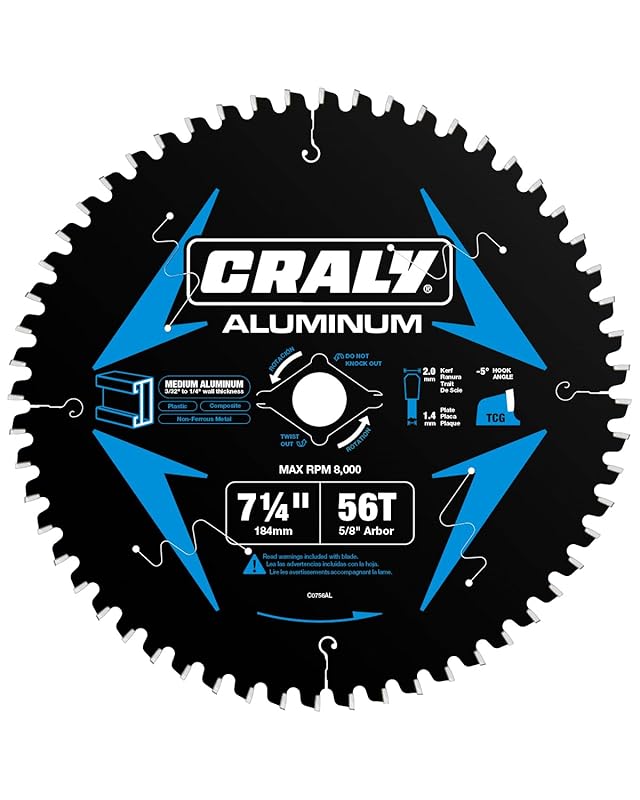
The CRALY 7-1/4 Inch 56 Teeth Thin Kerf Carbide Tipped Non-Ferrous Metal Circular Saw Blade is specifically engineered for precise and clean cuts on softer metals, which are frequently encountered in metal roofing. Its advanced features, including a non-stick coating and stabilizer vents, ensure that your cuts are not only accurate but also smooth and cool. This blade minimizes burring and reduces the risk of material damage, making it a reliable choice for delicate work.
Key Features That Stand Out
- ✓ 7-1/4 inch diameter with a standard 5/8 inch arbor.
- ✓ Equipped with 56 TCG (Triple Chip Grind) carbide-tipped teeth for ultra-clean finishes.
- ✓ Thin 2.0mm kerf design minimizes friction and material waste.
- ✓ Features a non-stick coating, laser-cut expansion slots, and stabilizer vents for optimal performance.
- ✓ Specifically designed for cutting non-ferrous metals, ensuring superior results.
Why We Recommend It
For those working with aluminum, copper, or other non-ferrous metal roofing materials, the CRALY blade is a standout. Its TCG tooth configuration delivers exceptionally smooth, burr-free cuts, which are critical for both aesthetics and durability in roofing applications. The heat management features ensure the blade stays cooler, extending its lifespan and maintaining consistent performance through prolonged use.
Best For
This blade is best for specialists working primarily with non-ferrous metal roofing materials like aluminum or copper, or those requiring exceptionally clean and precise finishes on thin gauge metals where traditional steel blades might cause damage or excessive burring.
Pros and Cons
Pros:
- Provides ultra-clean cutting surfaces, minimizing burrs.
- Thin kerf design reduces friction and material loss.
- Non-stick coating prevents gumming and reduces heat.
- Stabilizer vents and laser-cut slots ensure stability and reduce vibration.
Cons:
- Primarily designed for non-ferrous metals, less suitable for steel roofing.
- 56 TCG (Triple Chip Grind) is great but might wear faster if used on ferrous metals repeatedly.
- May be overkill for very rough cutting tasks.
Customer Reviews
Customer Review: I don’t do a lot of work with aluminum and didn’t want to commit a large sum of money to a more expensive household named brand that would simply sit on a rack for an extended period of time so I decided to give this CRALY a try. Did you know the name Craly has the root based in Anglo-Saxon culture
Customer Review: Gets the job done on G10, micarta, and various acrylics with no chipping or burning
5. Diablo Steel Demon 7-1/4 Inch 70 Teeth Carbide Circular Saw Blade for Thin Metal
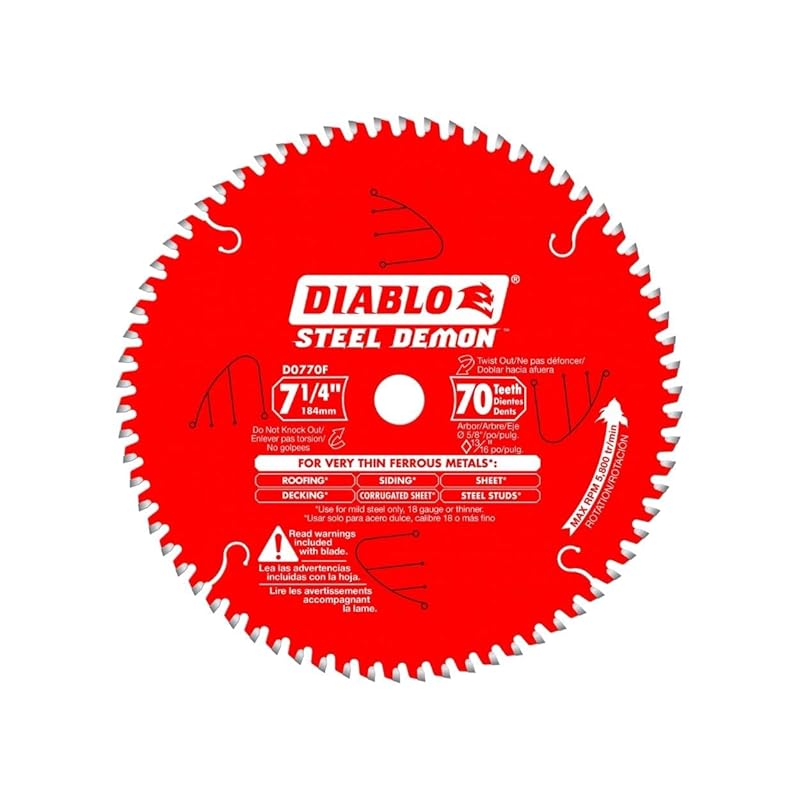
The Diablo Steel Demon 7-1/4 Inch 70 Teeth Carbide Circular Saw Blade lives up to its name, offering demon-like performance on thin metal, including various forms of metal roofing. Engineered with TiCo Hi-Density carbide and Triple Chip Grind (TCG) technology, this blade delivers incredibly fast, burr-free cuts while significantly reducing sparks and heat. It’s a top-tier choice for professionals who demand precision and efficiency on every cut.
Key Features That Stand Out
- ✓ 7-1/4 inch diameter with 70 TiCo Hi-Density carbide teeth for superior hardness.
- ✓ Features Triple Chip Grind (TCG) technology for highly precise and clean cuts.
- ✓ Designed for fast, burr-free cutting in thin metals like mild steel, common in roofing.
- ✓ Advanced laser-cut stabilizer vents reduce noise, vibration, and heat buildup.
- ✓ Ensures straight, accurate cuts with extended durability and reduced re-work.
Why We Recommend It
If you’re looking for a blade that combines speed with surgical precision on thin metal roofing, the Diablo Steel Demon is an undisputed champion. The 70-tooth TCG design ensures a polished, burr-free edge that reduces the need for secondary finishing. Its ability to manage heat and vibration means safer, more comfortable operation and a longer lasting blade, saving you time and money in the long run.
Best For
This blade is ideal for professionals and serious DIYers specifically tackling thin mild steel metal roofing or other thin gauge ferrous metals where speed and a burr-free, clean finish are paramount.
Pros and Cons
Pros:
- Excellent for fast, burr-free cuts in thin metal.
- High tooth count (70T) and TCG provide superior finish quality.
- Significantly reduces sparks and heat build-up during cutting.
- Advanced design features enhance stability and blade longevity.
Cons:
- Primarily optimized for thin metals; may not be ideal for very thick gauge steel.
- Higher tooth count can sometimes mean a slightly slower feed rate on some materials.
- Could be considered a premium blade with a corresponding price.
Customer Reviews
Customer Review: These blade are fantastic for cutting steel. Just don’t cat as fast and it will last very well. Highly recommended! I use it on steel, aluminum and PVC. It is also a great value.
Customer Review: wow – cant believe how well this blade cuts steel up to 14 AWG. Be sure to have a saw with lower RPM option. Most miter saws spin too fast 5000RPM or more. Did not expect this to work so well. take your time and dont overheat the work piece or blade. I usually take a couple of cooling pauses whi
Complete Buying Guide for Best Circular Saw Blade For Metal Roofing
Essential Factors We Consider
When selecting the best circular saw blade for metal roofing, several critical factors come into play. Firstly, the **blade material** is paramount; carbide-tipped or cermet-tipped blades are highly recommended for their durability and ability to withstand the abrasive nature of metal. Secondly, consider the **tooth count and grind type**. For metal, you’ll generally want a higher tooth count (48-80 teeth) with a Triple Chip Grind (TCG) or Modified Triple Chip Grind (M-TCG) for cleaner, burr-free cuts and reduced heat buildup. The **kerf (thickness)** of the blade also matters; thinner kerf blades cut faster, generate less heat, and conserve battery life on cordless saws, but might be more prone to deflection on very thick materials. Lastly, ensure the **blade diameter and arbor size** match your circular saw perfectly for safe and efficient operation. A proper fit is non-negotiable for both safety and performance.
Budget Planning
Investing in a quality circular saw blade for metal roofing is an investment in your project’s quality and your tool’s longevity. While budget-friendly options exist, prioritize performance and durability to avoid frequent blade replacements or subpar cuts. Think of it this way: a slightly more expensive, high-quality blade that lasts longer and performs better often saves money and frustration in the long run. Mid-range blades typically offer an excellent balance of cost and performance, suitable for most DIYers and many professionals. Premium blades, while a larger upfront cost, provide unmatched precision and lifespan for heavy, continuous use. Always compare the features and expected lifespan against the price to find the best value for your specific roofing needs.
Final Thoughts
Choosing the right circular saw blade for metal roofing isn’t just about making a cut; it’s about making the right cut. The ideal blade will minimize sparks, reduce heat, leave clean edges, and endure the demands of metal. By carefully considering blade material, tooth configuration, kerf, and ensuring compatibility with your saw, you can dramatically improve the efficiency and quality of your roofing work. Don’t underestimate the impact a specialized blade can have on the overall success and finish of your metal roofing project.
Frequently Asked Questions
Q: Can I use a standard wood-cutting circular saw blade for metal roofing?
A: No, it is highly recommended NOT to use a standard wood-cutting blade for metal roofing. Wood blades are designed for softer materials and will quickly dull, generate excessive heat, create dangerous sparks, and can cause kickback when used on metal. Always use a blade specifically designed for metal cutting.
Q: What is a “thin kerf” blade, and why is it good for metal roofing?
A: A thin kerf blade has a narrower cutting width, meaning it removes less material during a cut. For metal roofing, this is beneficial because it reduces friction, generates less heat, requires less power from your saw, and can lead to cleaner cuts. This also helps prolong battery life on cordless saws and minimizes material waste.
Q: What is TCG (Triple Chip Grind) on a saw blade, and why is it important for metal?
A: TCG (Triple Chip Grind) is a tooth configuration where alternating teeth have a chamfered corner and a flat top. This grind is crucial for cutting hard materials like metal because it allows the chamfered tooth to cut the center of the kerf, while the flat-top tooth cleans out the sides. This process creates a cleaner cut, reduces heat buildup, and significantly extends the blade’s life when cutting metal roofing and other metals.
Q: How can I extend the life of my metal cutting circular saw blade?
A: To extend the life of your metal cutting circular saw blade, always use the correct blade for the material, maintain a consistent and appropriate feed rate (don’t force the cut), allow the blade to cool between cuts if possible, and store blades properly to prevent damage or corrosion. Using cutting fluid or lubricant can also significantly reduce heat and wear, especially on thicker metals.
Q: Is blade diameter important when cutting metal roofing?
A: Yes, blade diameter is very important. It must match the maximum capacity of your circular saw for both safety and proper function. Using a blade that is too large or too small can lead to dangerous operating conditions and inefficient cuts. Always check your saw’s manual for recommended blade sizes when choosing a circular saw blade for metal roofing.
Selecting the optimal circular saw blade for metal roofing is a game-changer for any project, big or small. From achieving those super clean lines to ensuring your tools last longer, the right blade makes all the difference. We’ve explored some fantastic options, each bringing unique strengths to the table, whether you need heavy-duty precision or versatile performance. Don’t settle for less than the best; choose a blade from our expert-recommended list that aligns with your specific needs and budget. Ready to make your metal roofing project shine? Click on the “Check Price on Amazon” buttons to secure your ideal blade and elevate your craftsmanship today!

I’m Darrell Julian, the founder, lead writer, and hands-on welding enthusiast behind ArcWeldingPro.com. With more than 15 years of real-world welding experience, I created this platform to share what I’ve learned in the field, in the shop, and in the heat of the arc.