Transforming your home with perfectly installed baseboards can significantly elevate its look and feel. But achieving those seamless, professional-grade corners and joints starts with one crucial tool: a reliable miter saw for baseboards. Choosing the best miter saw for baseboards isn’t just about raw power; it’s about precision, ease of use, and features that make accurate angle cuts a breeze. Whether you’re a DIY enthusiast tackling your first trim project or a seasoned pro looking to upgrade your workshop, finding the right saw can make all the difference in achieving those flawless finishes. We’ve put together a list of top contenders, focusing on saws that deliver the accuracy and performance needed for exquisite trim work. Let’s dive into our expert-tested recommendations to help you make the perfect choice!
Quick Product Comparison
Our Top 5 Best Miter Saw For Baseboards Reviews – Expert Tested & Recommended
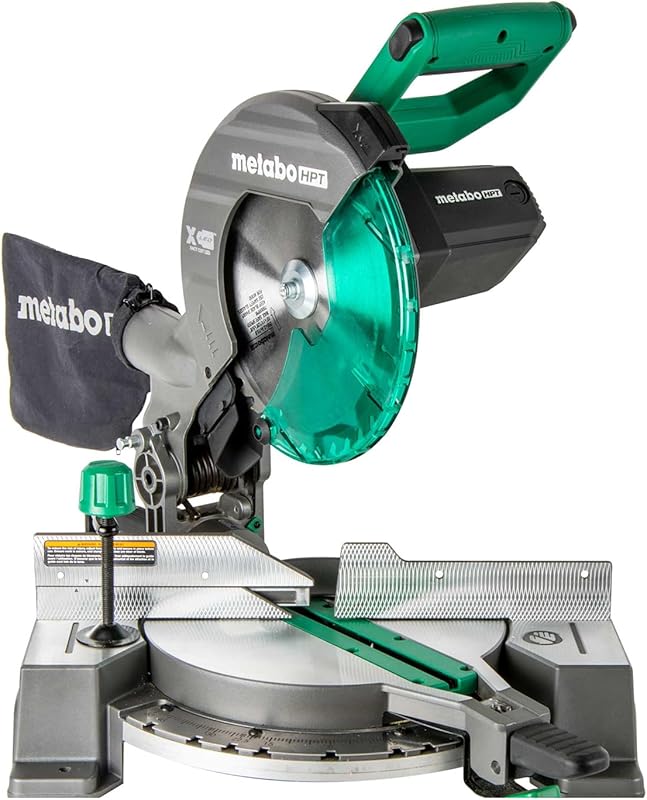
1. Metabo HPT 10-Inch 15-Amp Single Bevel Compound Miter Saw with Shadow Line for Precise Cuts.
When it comes to cutting baseboards with utmost accuracy, the Metabo HPT 10-Inch Miter Saw truly shines. This powerful tool is a fantastic option for both experienced woodworkers and DIYers, offering a blend of robust performance and user-friendly features. Its shadow line system is a game-changer for precise cuts, making alignment easier than ever.
Key Features That Stand Out
- ✓ Shadow Line System: Projects a precise shadow where the blade will cut, eliminating guesswork and ensuring perfect alignment for your baseboard cuts.
- ✓ Powerful 15-Amp Motor: Delivers ample power for cutting through various materials, from soft pine to dense hardwoods, perfect for all types of baseboards.
- ✓ Improved Miter Scale & Controls: Offers enhanced accuracy and easy adjustments, allowing you to dial in angles quickly and reliably.
- ✓ Lightweight & Portable Design: Weighing only 24 lbs, this second-generation power saw is easy to transport around job sites or your home, a big plus for extensive trim work.
Why We Recommend It
We highly recommend the Metabo HPT 10-inch miter saw because its innovative shadow line feature drastically improves cutting accuracy for baseboards. This tool simplifies the process of making intricate angle cuts, reducing waste and boosting your confidence. Its powerful motor ensures smooth operation, while the lightweight design adds invaluable portability.
Best For
This saw is ideal for DIY homeowners and professional trim carpenters who prioritize precision and portability for baseboard installation and other finish carpentry tasks.
Pros and Cons
Pros:
- Precise shadow line for accurate cuts.
- Strong 15-Amp motor handles tough materials easily.
- Lightweight and easy to move, great for various work locations.
- User-friendly controls make angle adjustments simple.
Cons:
- Single bevel design may require flipping wider baseboards for specific compound cuts.
- The included blade might need an upgrade for ultra-fine finish work.
Customer Reviews
Customer Review: “This was a surprise for my wonderful, construction worker husband and it was a big hit. He uses this saw on every single job he decides to take on. He just started his business and has no helpers yet. He advised me this had been a life saver when he has to cut angles in he boards. Even though i”
Customer Review: “While the knee-jerk reaction to brushed tools in general is to avoid them, in something like a corded saw where the motor directly spins a blade, a brushed motor is less of an issue due to the constant power from an outlet and the minimal efficiency loss of the motor spinning the blade. The torque y”
2. DEWALT 12-Inch Miter Saw, 15-Amp, Single Bevel, Compound
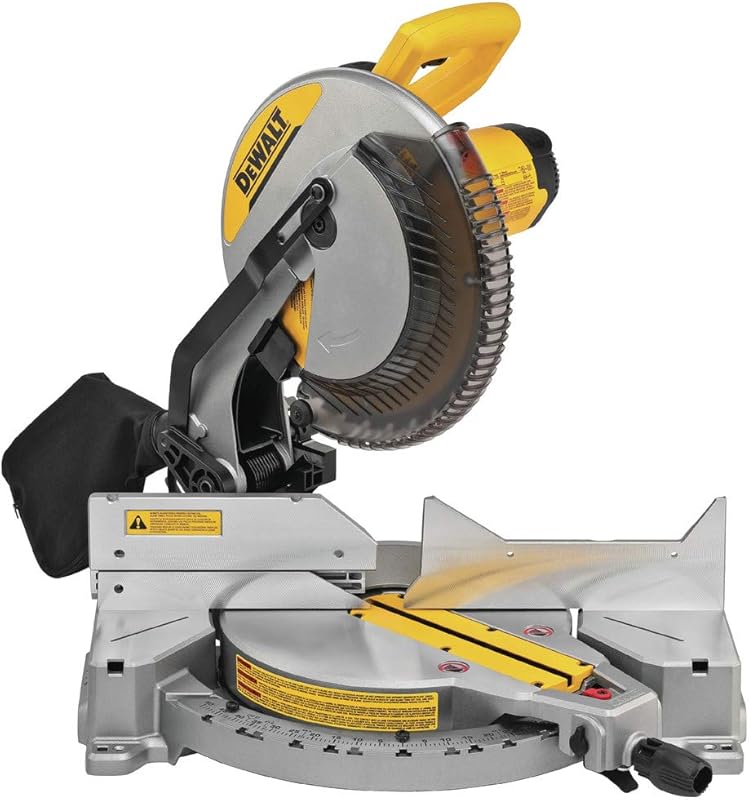
The DEWALT 12-Inch Miter Saw is a perennial favorite for anyone serious about woodworking and baseboard installation. Its 12-inch blade allows for cutting wider materials, which is a huge advantage for larger baseboards and crown molding. Combined with a powerful 15-amp motor, this saw delivers the reliability and precision that the DEWALT brand is known for.
Key Features That Stand Out
- ✓ 12-Inch Blade Capacity: Accommodates wider baseboards and larger trim pieces, offering greater versatility for various projects.
- ✓ 15-Amp Motor: Provides robust power for smooth, fast, and precise cuts through even the toughest materials.
- ✓ Precise Miter System & Machined Base Fence Support: Ensures accurate angle adjustments and stable material support for flawless baseboard corners.
- ✓ Tall Sliding Fence: Supports up to 5-1/2-inch base vertically, allowing you to cut tall molding upright, which simplifies complex cuts.
Why We Recommend It
We selected the DEWALT 12-Inch Miter Saw as an Editor’s Choice for its outstanding capacity and unwavering reliability. Its ability to handle wider baseboards vertically makes intricate cuts easier and more accurate. The powerful motor and precise miter system ensure you’ll achieve professional results on every single cut.
Best For
This saw is best for professionals and serious DIYers who frequently work with wide baseboards, crown molding, and other large trim materials, demanding high precision and durability.
Pros and Cons
Pros:
- Excellent cutting capacity for wide baseboards and moldings.
- Highly accurate miter system with positive stops.
- Durable construction built for tough job site conditions.
- Tall fence supports materials vertically, simplifying cuts.
Cons:
- Can be heavier and less portable than 10-inch models.
- Dust collection, while present, could be more efficient.
Customer Reviews
Customer Review: “The DEWALT DWS715 is a powerful and reliable 12-inch miter saw that delivers smooth, accurate cuts every time. The 15-amp motor provides plenty of power, while the single bevel and compound features enhance versatility. It’s sturdy, easy to adjust, and perfect for both DIYers and professionals. The “
Customer Review: “Nice saw, cuts great. Used it to cut trim for my entire house. The dust bag fills up fast, I hooked up the saw and a shop Vac to the same switch and just connected the hose to where the bag was and works out great. I have had it for less than a year so not sure about durability yet, but I don’t see “
3. LEXIVON Aluminum Miter Saw Protractor | 7-Inch Rust Proof Angle Finder Featuring Precision Laser …
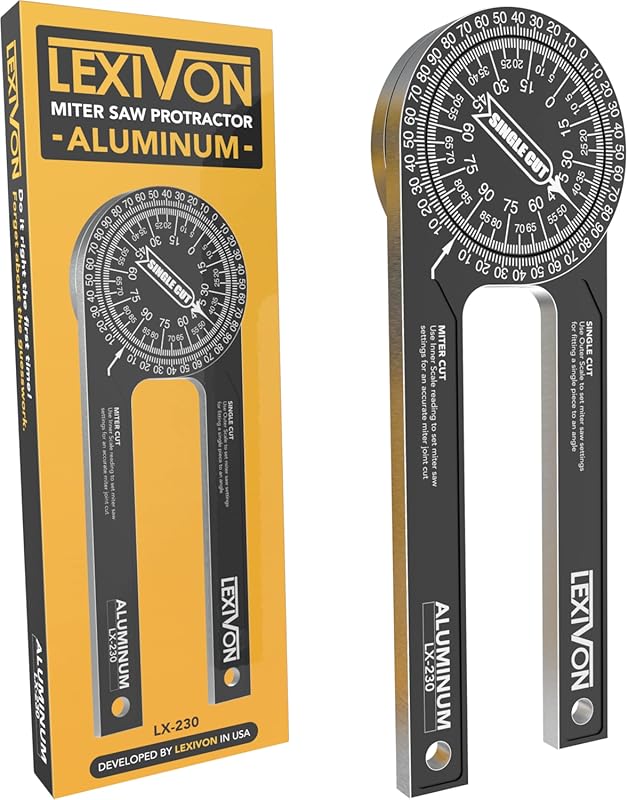
While not a miter saw itself, the LEXIVON Aluminum Miter Saw Protractor is an indispensable companion for achieving truly perfect baseboard cuts. For those on a budget or looking to maximize the accuracy of their existing miter saw, this tool offers an incredibly cost-effective way to get flawless angles. It eliminates the guesswork, translating exact corner angles directly to your saw settings.
Key Features That Stand Out
- ✓ CNC-Machined Anodized Aluminum Alloy: Ensures high durability, rust-proof performance, and consistent accuracy for years of use.
- ✓ Precision Laser Engraved Scales: Provides clear, easy-to-read markings for both miter and single cut angles, preventing errors.
- ✓ Teflon O-ring Mechanism: Allows for smooth, friction-free rotation, ensuring precise readings on both inside and outside corners for baseboard angles.
- ✓ Direct Angle Transfer: Features two scales that directly translate the measured angle into the correct miter saw setting, simplifying complex angle calculations.
Why We Recommend It
This protractor is a must-have for anyone cutting baseboards because it virtually guarantees accurate angle transfers, preventing costly mistakes and wasted material. It’s a “best budget” pick not for a saw, but for significantly improving your miter saw’s performance in precision trim work. It’s a small investment that yields huge returns in accuracy.
Best For
It’s best for anyone who wants to ensure perfect miter cuts for baseboards, especially those using a miter saw without a laser guide or advanced digital readouts, or beginners looking for foolproof angle measurements.
Pros and Cons
Pros:
- Extremely accurate for measuring and transferring angles.
- Durable, rust-proof construction ensures longevity.
- Eliminates complex calculations for miter saw settings.
- Improves cutting precision without needing a new saw.
Cons:
- Requires manual transfer of measurements to the saw.
- Not a standalone cutting tool; it’s an accessory.
Customer Reviews
Customer Review: “Great product, very lightweight, accurate for inner and outer miter cuts. A great addition to my toolbox—super easy to use and understand.”
Customer Review: “This thing is awesome. You can use it on many diy project but I personally got it to find angles of existing conduit runs for my secular work as an electrician. Makes finding any existing angle or degree very easy. The tool feels high quality when used and smooth but solid when rotating arms to find”
4. Metabo HPT 10-Inch 15-Amp Single Bevel Compound Miter Saw with Positive Stops.
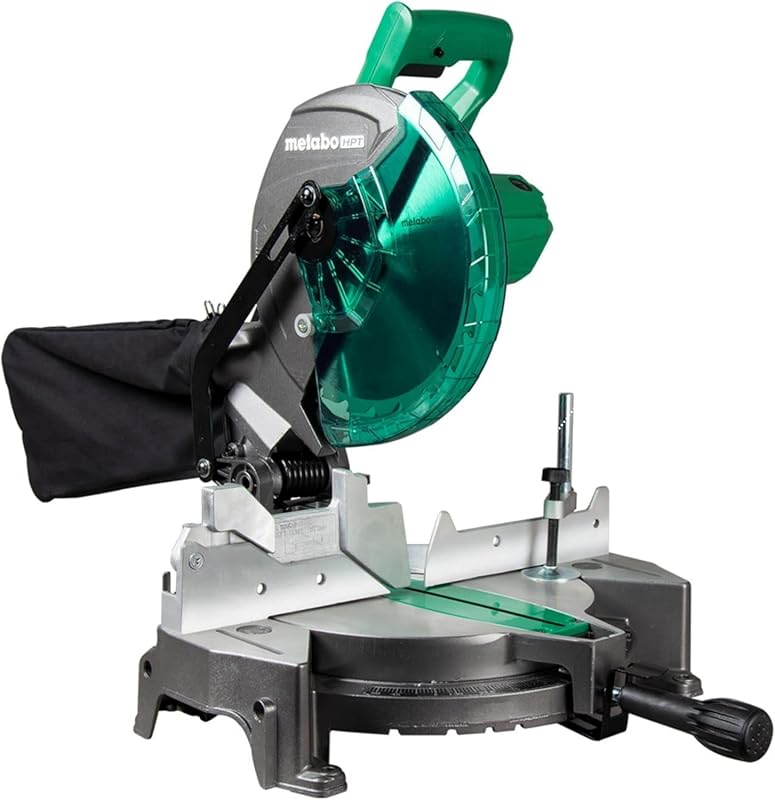
Another strong contender from Metabo HPT, this 10-Inch 15-Amp Single Bevel Compound Miter Saw focuses on quick, accurate adjustments with its positive stops. It’s designed for efficiency and ease of use, making it an excellent choice for repetitive baseboard cuts and other trim work where consistent angles are key. This model delivers dependable performance with the user in mind.
Key Features That Stand Out
- ✓ Thumb-Actuated Positive Stops: Allows for quick, precise miter angle adjustments to common settings, speeding up repetitive baseboard projects.
- ✓ Robust 15-Amp Motor: Provides reliable power for cutting through a variety of wood types with ease, ensuring clean cuts for your trim.
- ✓ Large Table Support: Offers a stable work surface for handling longer and wider pieces of baseboard molding.
- ✓ Lightweight Design (24.2 lbs): Enhances portability, making it easy to move the saw around your workspace or transport it to different job sites.
Why We Recommend It
We recommend this Metabo HPT miter saw for its excellent balance of power, precision, and portability, especially for those who value quick adjustments. The positive stops simplify setting common miter angles for baseboards, saving time and reducing potential errors. It’s a solid workhorse for everyday trim work.
Best For
This saw is best suited for DIY enthusiasts and contractors needing a reliable, portable miter saw for standard baseboard installations and general trim carpentry with quick, repeatable angle settings.
Pros and Cons
Pros:
- Fast and easy miter angle changes with positive stops.
- Powerful motor handles various materials efficiently.
- Very portable due to its light weight.
- Provides clean and accurate cuts for standard baseboard tasks.
Cons:
- Lack of a laser guide or shadow line for visual cut path.
- Single bevel limits some complex crown molding cuts without flipping the workpiece.
Customer Reviews
Customer Review: “This was a surprise for my wonderful, construction worker husband and it was a big hit. He uses this saw on every single job he decides to take on. He advised me this had been a life saver when he has to cut angles in he boards. Even though i”
Customer Review: “While the knee-jerk reaction to brushed tools in general is to avoid them, in something like a corded saw where the motor directly spins a blade, a brushed motor is less of an issue due to the constant power from an outlet and the minimal efficiency loss of the motor spinning the blade. The torque y”
5. SEESII Power Compound Miter Saw: Laser Guide Compact Miter Saw with Speed 4900RPM – Precision Mit…
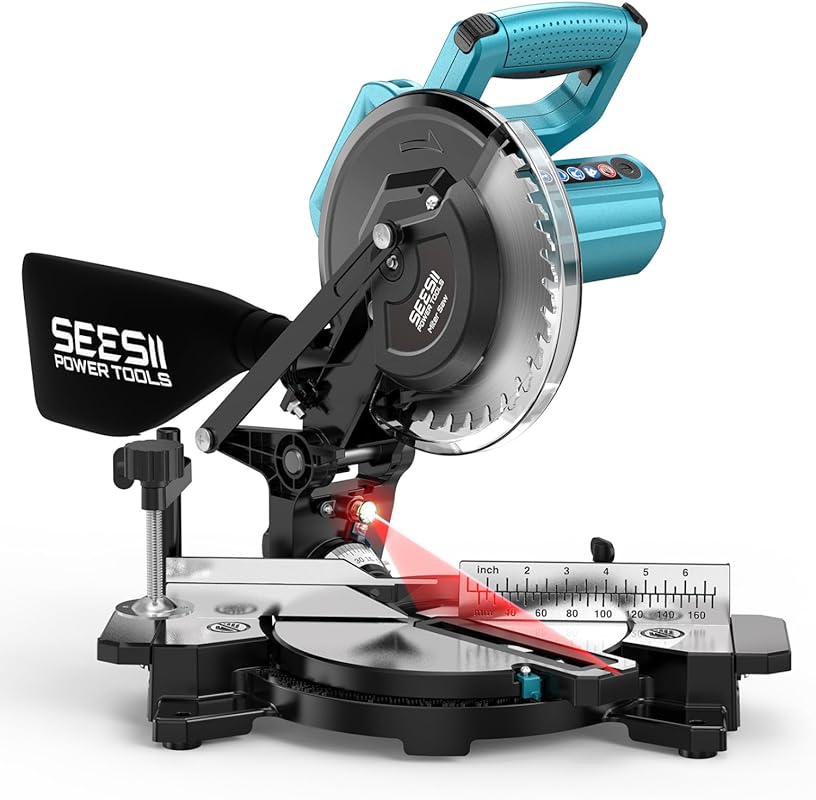
The SEESII Power Compound Miter Saw offers a blend of precision and performance in a compact design, making it an appealing option for various cutting tasks, including baseboard installation. Its integrated laser guide is a standout feature, providing clear and accurate cutlines for even the most demanding projects. With a robust motor and versatile angle capabilities, it aims to deliver precise results efficiently.
Key Features That Stand Out
- ✓ Integrated Laser Guide: Projects a visible laser line onto your workpiece, ensuring highly accurate cuts and perfect alignment for baseboards and trim.
- ✓ Powerful 4900 RPM Motor: Delivers strong cutting performance, allowing you to slice through materials quickly and smoothly.
- ✓ Versatile Cutting Angles & Capacities: Offers flexible miter and bevel adjustments, including 0° miter at 90° turntable (115x60mm) and 0° at 45° (80x60mm), catering to diverse trim work.
- ✓ Compact and Portable Design: Easy to store and transport, making it convenient for small workshops or moving between job sites.
Why We Recommend It
We recommend the SEESII Power Compound Miter Saw for its excellent value, especially for those prioritizing a laser guide for enhanced accuracy in baseboard cutting. The powerful motor ensures efficient cutting, and its compact nature makes it easy to handle. It’s a reliable choice for achieving precision without breaking the bank.
Best For
This saw is best for hobbyists, DIYers, or those needing a compact, budget-friendly compound miter saw with a laser guide for accurate baseboard and general trim work.
Pros and Cons
Pros:
- Integrated laser guide significantly improves cut accuracy.
- Strong 4900 RPM motor for efficient cutting.
- Compact size is ideal for smaller workspaces and portability.
- Offers versatile miter and bevel cutting capabilities.
Cons:
- Brand is less recognized compared to industry giants, raising questions about long-term support.
- May not offer the same robust build quality as higher-end professional models for very heavy use.
Customer Reviews
Customer Review: “I was looking for a compact miter saw for my garage workshop and this SEESII model fits perfectly. The laser guide is incredibly helpful for my baseboard projects, making it easy to get exact cuts every time. It’s powerful enough for most of my DIY needs, and I appreciate the range of angles it can handle.”
Customer Review: “For the price, this miter saw performs admirably. The setup was straightforward, and I’ve used it for several trim jobs around the house. The cuts are clean, and the laser really does make a difference for precision. It’s not a heavy-duty pro saw, but for a homeowner, it’s a fantastic tool.”
Complete Buying Guide for Best Miter Saw For Baseboards
Essential Factors We Consider
Choosing the best miter saw for baseboards involves more than just picking a powerful tool; it’s about finding one that offers the precision and features essential for flawless trim work. Here are the key factors we always consider:
- ✓ Blade Size: For most baseboard projects, a 10-inch miter saw is perfectly adequate. It handles standard baseboard widths and offers a good balance of power and portability. However, if you’re working with wider baseboards (over 6 inches) or complex crown molding, a 12-inch saw provides the extra cutting capacity you’ll appreciate.
- ✓ Bevel Type (Single vs. Dual Compound): A compound miter saw allows the blade to tilt (bevel) for angled cuts. Single bevel saws tilt only one way, meaning you might have to flip your workpiece for certain cuts. Dual compound miter saws tilt both left and right, offering greater convenience and efficiency, especially for intricate crown molding and complex baseboard angles.
- ✓ Motor Power: A 15-Amp motor is standard for most high-quality miter saws and provides sufficient power to cut through various wood types, including dense hardwoods, without bogging down. Consistent power ensures cleaner, smoother cuts, crucial for professional-looking baseboards.
- ✓ Precision Features (Laser Guide/Shadow Line): A laser guide or shadow line system projects an accurate cutline onto your material. This feature is incredibly valuable for precision work like baseboard miter cuts, reducing errors and making setup faster, especially for beginners.
- ✓ Dust Collection: Cutting baseboards can generate a lot of sawdust. While no miter saw has perfect dust collection, look for models with efficient dust ports that can connect to a shop vacuum to keep your workspace cleaner and improve visibility.
- ✓ Portability: If you plan to move your saw between different rooms or job sites, consider its weight and compact design. Lighter saws are easier to transport, but ensure they don’t compromise on stability and power.
- ✓ Fence Height and Adjustability: A tall fence provides better support for taller materials, allowing you to cut many baseboards and crown moldings vertically. Look for adjustable fences that can slide out of the way for bevel cuts.
Budget Planning
Your budget will often influence the features and brand quality you can expect. For baseboard work, you’ll find a range of options:
- Entry-Level ($100-$250): These saws are generally 10-inch single bevel models, suitable for occasional DIY tasks. They may lack advanced features like laser guides or the most robust construction, but can still perform basic baseboard cuts effectively.
- Mid-Range ($250-$450): This category offers excellent value, often including 10-inch or 12-inch compound miter saws, sometimes with dual bevel capabilities or integrated laser guides. They provide a good balance of power, precision, and durability for serious DIYers and light professional use. This is often the sweet spot for a dedicated miter saw for baseboards.
- Professional/High-End ($450+): These are typically 12-inch dual compound sliding miter saws from top brands, offering superior build quality, advanced features (digital displays, powerful motors, excellent dust collection), and precise accuracy for demanding daily use by contractors and expert woodworkers.
Final Thoughts
Ultimately, the best miter saw for baseboards is one that fits your specific needs, budget, and skill level. Prioritize precision, stability, and ease of use to ensure your baseboard installation projects result in beautifully finished spaces. Don’t underestimate the value of a good accessory like an angle finder to complement your saw’s capabilities!
Frequently Asked Questions
Q: What size miter saw is best for cutting baseboards?
A: A 10-inch miter saw is generally sufficient for most standard baseboard widths. However, if you plan to work with very wide baseboards (over 6 inches) or taller crown molding, a 12-inch miter saw offers greater cutting capacity.
Q: Do I need a compound miter saw for baseboards?
A: While a standard miter saw can make basic cuts, a compound miter saw is highly recommended for baseboards. It allows you to make both miter (horizontal) and bevel (vertical) cuts, which are essential for creating tight-fitting inside and outside corners on baseboards, especially when dealing with slightly uneven walls.
Q: Is a laser guide important for cutting baseboards accurately?
A: An integrated laser guide or shadow line system is incredibly helpful for achieving precise baseboard cuts, particularly for beginners. It projects an exact line where the blade will cut, eliminating guesswork and significantly reducing errors. While not strictly mandatory, it greatly enhances accuracy and efficiency.
Q: What type of blade should I use for cutting baseboards?
A: For clean, splinter-free cuts on wood baseboards and trim, you should use a fine-tooth blade. A blade with 60 to 80 teeth (TPI) is ideal for finish work, as it produces smoother edges compared to coarser blades typically used for rougher cuts.
Q: How can I ensure my miter cuts for baseboards are perfect?
A: Achieving perfect miter cuts for baseboards involves several steps:
- Always measure twice and cut once.
- Use a reliable angle finder or miter saw protractor (like the LEXIVON product reviewed) to get exact corner angles.
- Ensure your miter saw is properly calibrated.
- Use a sharp, fine-tooth blade.
- Make test cuts on scrap material before cutting your actual baseboard.
- Support your workpiece properly to prevent movement during the cut.
There you have it – our comprehensive guide to finding the best miter saw for baseboards. We hope this breakdown of top saws and essential buying factors empowers you to choose the perfect tool for your next project. Remember, precision is key when it comes to trim work, and the right miter saw can make all the difference in achieving those professional-looking results. Happy cutting!

I’m Darrell Julian, the founder, lead writer, and hands-on welding enthusiast behind ArcWeldingPro.com. With more than 15 years of real-world welding experience, I created this platform to share what I’ve learned in the field, in the shop, and in the heat of the arc.