
Imagine you’re handling a nervous cat at the vet clinic or trying to rescue a frightened raccoon. The animal’s teeth flash, and your only protection is a pair of thick leather welding gloves from your garage. They look strong, they feel tough — surely they’ll hold up, right?
Unfortunately, that assumption can be dangerous. Welding gloves are built to resist heat, sparks, and abrasion, not the sharp, piercing pressure of teeth or claws. Many people try using welding gloves as bite gloves, only to discover they rip or puncture easily when bitten by animals.
In this guide, we’ll explore whether welding gloves can truly work as bite gloves, what the major differences are, and what you should use instead for safe animal handling.
What Are Welding Gloves Actually Designed For?
Welding gloves are made to protect welders from heat, molten metal, sparks, and UV radiation during welding.
They are typically constructed from thick leather materials like cowhide, pigskin, or goatskin, often with reinforced stitching and inner insulation. The glove cuff (called the gauntlet) protects the forearm from sparks and hot debris.
There are different types based on welding style:
- MIG welding gloves: heavy-duty, heat-resistant, thick padding.
- TIG welding gloves: thinner and flexible for precision.
- Stick welding gloves: thickest and most heat-protective.
All of them are excellent against heat and abrasion, but they are not designed or tested for puncture resistance against teeth or claws.
What Are Bite-Resistant Gloves?
Bite gloves, or animal-handling gloves, are specifically engineered to protect against bites, scratches, and punctures.
They are commonly used by veterinarians, animal control officers, wildlife rescuers, zookeepers, and dog trainers.
Unlike welding gloves, bite gloves are made from multi-layer materials such as:
- Kevlar® – strong and puncture-resistant.
- Spectra® or Dyneema® fibers – lightweight, high cut resistance.
- Reinforced leather – for comfort and flexibility.
- Foam or steel mesh layers – for deeper protection.
These gloves are tested under EN 388 or ANSI/ISEA 105 standards, which measure resistance to cuts, punctures, and tears — something welding gloves rarely offer.
Can Welding Gloves Be Used as Bite Gloves?
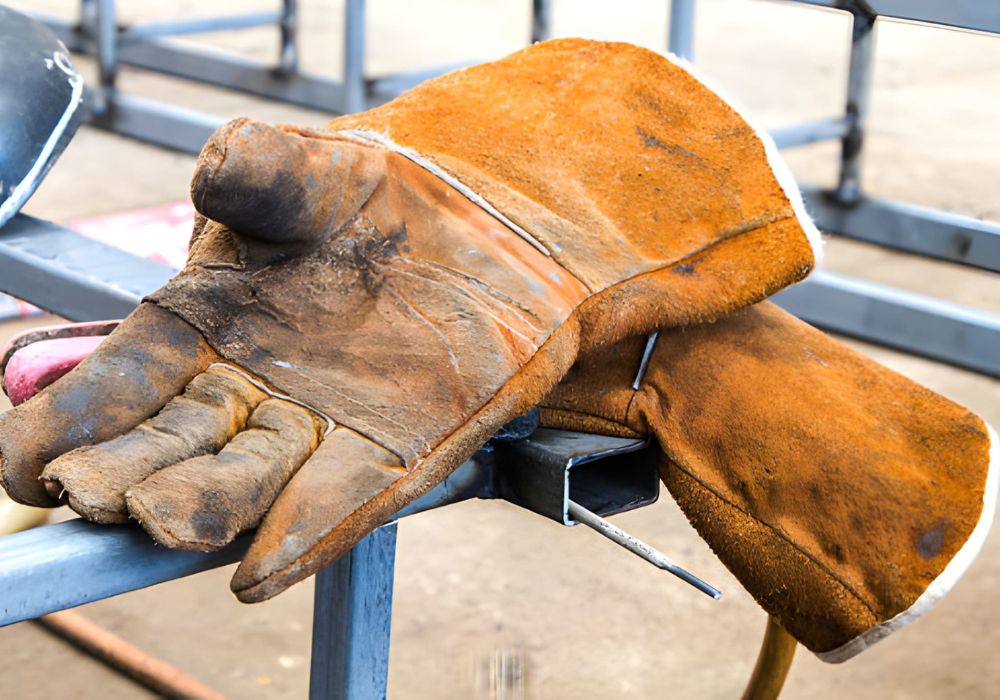
Let’s answer this directly — technically yes, but practically no.
If you’re dealing with a small, calm animal, welding gloves might provide minimal protection. But if you’re handling a cat, dog, bird, or wildlife that bites with force, welding gloves are not enough.
Here’s why:
1. Welding Gloves Resist Heat, Not Teeth
They’re made for thermal protection, not for puncture strength. Animal teeth are sharp and can pierce even thick leather within seconds.
2. Lack of Bite Testing or Certification
Bite gloves go through puncture resistance testing; welding gloves do not. You have no guarantee of protection against strong jaws.
3. Weak Seams and Stitching
Many welding gloves use cotton stitching that can tear easily under biting or clawing pressure.
4. Poor Dexterity
Welding gloves are bulky, limiting finger movement. When handling an aggressive animal, this can make control harder — and increase injury risk.
5. Incomplete Coverage
Some welding gloves cover only part of the forearm. Animal bites often target the wrist and lower arm, which remain exposed.
Real-World Experience: When Welding Gloves Fail
Many animal care workers have tried using welding gloves in emergencies. Unfortunately, the results aren’t great.
A vet tech once wrote on Reddit:
“Our clinic used welding gloves to handle aggressive cats. Within a week, there were holes in every finger. Totally useless for real bites.”
This highlights the core issue — while welding gloves appear tough, they are not puncture-proof. Animal teeth and claws are simply sharper than the hazards welding gloves were designed to resist.
Material Comparison: Welding vs. Bite Gloves
| Feature | Welding Gloves | Bite Gloves |
| Primary Purpose | Heat & spark protection | Bite & puncture protection |
| Material | Leather (cowhide, goatskin) | Kevlar®, Spectra®, layered leather |
| Protection Type | Thermal & abrasion | Bite, puncture, scratch |
| Coverage | Hands + partial forearm | Hands + full forearm or elbow |
| Flexibility | Moderate to low | High, for animal control |
| Test Standards | EN 12477 / ANSI welding | EN 388 / ANSI puncture |
| Comfort for Handling Animals | Bulky | Designed for grip and control |
| Recommended For | Welding, metalwork | Veterinary, animal rescue, wildlife handling |
When Might Welding Gloves Be Acceptable?
In some low-risk scenarios, welding gloves might offer temporary protection. For example:
- Handling a docile animal that might lightly scratch or nip.
- Moving an animal carrier or cage with potential minor risk.
- Emergency situations where bite gloves aren’t available.
However, this should be a last resort, not a routine choice. If you regularly handle animals, especially cats, birds, raccoons, or dogs, invest in professional bite gloves.
Best Alternatives: True Bite-Resistant Gloves
If safety matters — and it always should — use gloves built for the job.
Here are some of the top-rated bite gloves trusted by professionals:
- BitePRO® Bite Resistant Gloves
– Made from Cut-Tex PRO fabric (Kevlar-based)
– Lightweight yet extremely strong - HexArmor Hercules 400R6E Gloves
– SuperFabric® puncture layers
– EN 388 Level 5 cut protection - Humaniac Animal Handling Gloves
– Designed for vets and wildlife handlers
– Reinforced palm and full forearm protection - Tirotechs Animal Handling Gloves
– Heat + puncture resistant
– Great balance between flexibility and safety - RAPICCA Animal Handling Gloves
– Double Kevlar layers and reinforced fingertips
– Affordable, available on Amazon
These gloves are tested for bite resistance and specifically rated for puncture and tear protection, giving you reliable security during animal handling.
Safety Tips for Handling Biting Animals

Even with the right gloves, technique matters. Follow these safety guidelines:
- Stay calm; animals sense tension.
- Avoid sudden movements or loud noises.
- Always support the animal’s body weight properly.
- Keep your wrists and arms behind the glove’s coverage zone.
- Never rely on gloves alone — use proper restraining tools if needed.
Frequently Asked Questions
Can welding gloves stop a cat bite?
No. Cat teeth are sharp and can easily puncture welding leather. Use Kevlar-reinforced bite gloves instead.
Are bite gloves expensive?
Not really — many durable bite gloves cost between $40 and $80, far cheaper than a medical bill from a bite wound.
Can I modify welding gloves for bite protection?
Adding layers might help slightly, but it still won’t match certified bite gloves in protection or comfort.
What’s the best glove for dog handling?
Look for EN 388-certified bite gloves with reinforced palms and full arm coverage.
Can bite gloves also handle heat?
Some hybrid gloves offer moderate heat resistance, but welding-level heat protection is rare in bite gloves.
Conclusion
Welding gloves may look tough, but they’re built for fire — not fangs.
While they can provide minimal protection in emergencies, they’re no substitute for certified bite-resistant gloves made from Kevlar or other high-strength materials.
If you handle animals — whether you’re a vet tech, rescuer, or pet owner — invest in proper gear. It’s not just about comfort; it’s about safety and confidence.
In short: Welding gloves protect you from sparks. Bite gloves protect you from bites. Always choose the right glove for the right job.

I’m Darrell Julian, the founder, lead writer, and hands-on welding enthusiast behind ArcWeldingPro.com. With more than 15 years of real-world welding experience, I created this platform to share what I’ve learned in the field, in the shop, and in the heat of the arc.