Personalizing a welding helmet with stickers is a long-standing tradition in workshops and job sites. For many welders, these decals represent pride, identity, or humor. But the real question remains — can you put stickers on a welding helmet safely without compromising protection?
What seems like a harmless design choice can actually affect how well the helmet performs. Stickers can cover cracks, weaken heat resistance, or interfere with sensors if placed carelessly. According to OSHA, modifying personal protective equipment (PPE) — including welding helmets — may void its certification if the modification impacts safety or visibility (OSHA).
Still, not all stickers are risky. When applied correctly using safe materials and placed on non-critical areas, they can be perfectly acceptable. This guide explains exactly when and how to apply stickers without violating safety standards, what risks to avoid, and which alternatives might be better. By the end, you’ll know how to make your helmet unique — and safe.
Why the Question “Can You Put Stickers on a Welding Helmet?” Matters
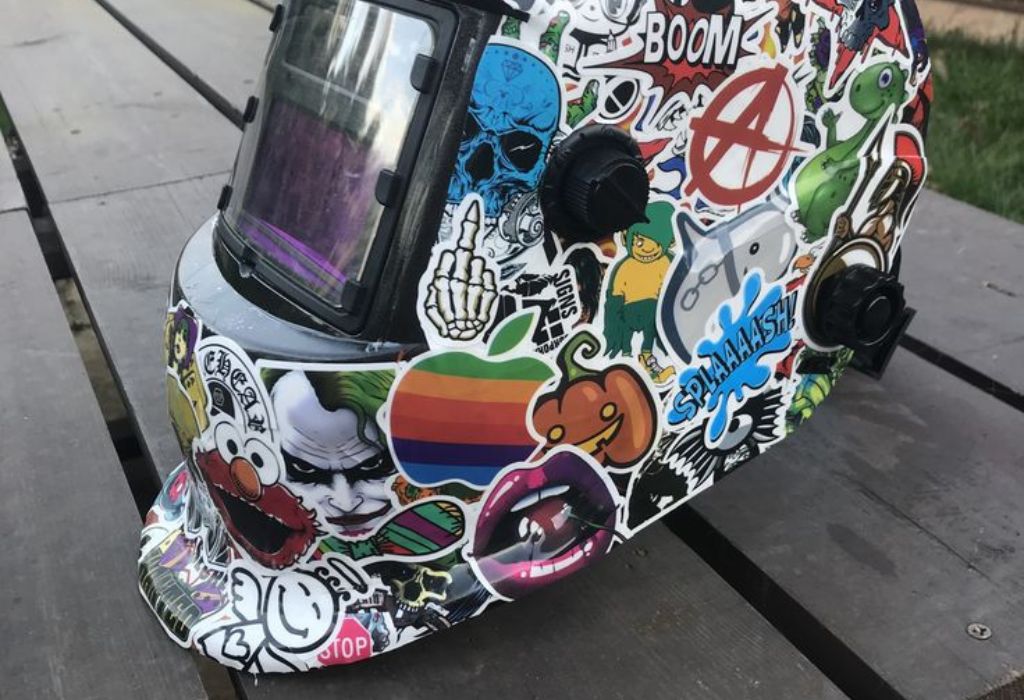
Stickers might look simple, but they interact with PPE safety, inspection visibility, and heat exposure. A poor sticker choice could reduce protection or make the helmet fail compliance checks.
Why could stickers affect helmet safety?
Some adhesives contain solvents that react with helmet materials, softening the shell or causing surface cracks.
Does applying stickers void helmet certification?
It can. If stickers interfere with structural integrity or safety labeling, it may void ANSI Z87.1 or EN 379 certification.
Can adhesives damage the helmet shell?
Yes. Over time, chemical adhesives can eat into polycarbonate or nylon, especially under high heat.
Are there PPE rules about stickers?
Yes. OSHA advises that helmet markings or stickers should not obscure damage, manufacturer info, or impact zones.
Can stickers block damage detection?
Absolutely. Stickers can hide fine cracks or discoloration that indicate heat fatigue or impact stress.
Materials, Standards & Safety Considerations for Stickers on Helmets
Before adding stickers, it’s essential to understand the helmet’s materials and certification standards. Most welding helmets are built for extreme heat and UV protection, but adhesives can interfere if they’re not compatible.
What materials are used in welding helmets?
Usually polycarbonate, fiberglass composites, or thermoset plastics — all chosen for heat resistance and electrical insulation.
Which standards ensure helmet safety?
Helmets must meet ANSI Z87.1 in North America or EN 379 in Europe. These standards cover impact resistance, UV/IR filtering, and optical clarity.
Can sticker adhesives react with the helmet shell?
Yes. Solvent-based adhesives may dissolve or soften plastic shells, reducing impact strength.
How does sticker placement affect safety checks?
If stickers cover inspection areas or safety labels, inspectors can’t verify the helmet’s condition.
What type of sticker adhesive is safe?
Choose acrylic or silicone-based adhesives that are non-reactive and rated for heat resistance up to 150°C (302°F).
Best Practices & Steps for Applying Stickers Safely on Welding Helmets
Putting stickers safely on a welding helmet requires more than just pressing them on. Following a few careful steps ensures the helmet remains compliant and durable.
Step 1: Clean the Surface
Remove dirt, grease, or oil using mild soap and warm water. Avoid using acetone or strong solvents.
Step 2: Choose the Right Stickers
Pick high-temperature, flame-resistant decals designed for industrial or PPE use.
Step 3: Avoid Critical Areas
Do not place stickers near lenses, auto-darkening sensors, vents, or hinge joints.
Step 4: Apply on Cool, Dry Surface
Ensure the helmet is at room temperature to help adhesives bond properly.
Step 5: Inspect Regularly
After application, monitor the area for peeling or bubbling, which can indicate chemical reactions.
How should the helmet be prepared before applying stickers?
It should be cleaned thoroughly and dried to avoid trapping moisture.
What type of stickers are best?
Heat-resistant vinyl or laminated decals made for industrial equipment.
Where should stickers never be placed?
Avoid the viewing lens, sensor area, or any surface marked with safety certification.
How long should adhesives set before welding?
Wait at least 24 hours to ensure full bonding before exposing the helmet to heat.
Can you remove stickers later safely?
Yes, use gentle heat or isopropyl alcohol, but never scrape with metal tools.
Risks, Pitfalls & When You Should Reconsider Using Stickers
Even though many welders decorate their helmets, it’s not always safe to do so in every environment.
What are the most common mistakes?
Using decorative stickers made for cars or laptops that melt or emit fumes when heated.
Could shiny or reflective stickers cause glare?
Yes. Reflective materials may bounce arc light, causing eye strain or distraction during welding.
When is it better to avoid stickers entirely?
If you work in environments with high temperatures, frequent inspection requirements, or near flammable materials.
Can stickers hide dangerous wear or cracks?
Yes, especially dark or thick decals that conceal small fractures in the shell.
Can adhesives release toxic fumes?
At high temperatures, non-PPE adhesives can emit fumes that irritate the respiratory system.
Alternatives to Stickers & Customization Options

If you want to customize your welding helmet safely, there are alternatives to standard stickers.
Are custom-painted helmets safer?
Yes. Factory-painted or certified custom designs use heat-resistant coatings tested under PPE standards.
What about PPE-grade decals?
Special decals made for safety helmets can resist heat, chemicals, and sparks without degrading.
Do clear protective films work?
Yes. Transparent films let you place regular stickers underneath without direct contact with the shell.
Is interior customization safer?
Some welders decorate inside the helmet using non-contact markings that avoid heat exposure.
What are wraps?
Vinyl wraps designed for helmets provide full-body coverage and can be applied or removed easily without damaging the shell.
(Accio)
Maintenance, Inspection & Long-Term Safety with Stickers
After stickers are applied, continuous inspection ensures they don’t affect protection or comfort.
How often should inspection occur?
Check before every use for cracks, peeling, or discoloration around stickered areas.
What signs mean stickers are unsafe?
Softening plastic, bubbling adhesive, or foul odor under heat exposure.
Can stickers hide shell deterioration?
Yes, so regularly remove and reapply stickers to inspect the underlying surface.
Should the helmet be recertified after modification?
If used in industrial or regulated environments, yes — always verify compliance.
What to do if adhesive residue remains?
Use warm water and mild detergent, never aggressive solvents, to clean the shell.
Conclusion
So, can you put stickers on a welding helmet?
Yes — but only with care. Stickers should be heat-resistant, placed away from sensors and labels, and inspected regularly for safety.
Custom decals and wraps designed for PPE offer safer options without compromising protection. Remember, a helmet’s primary role is safety, not decoration.
If in doubt, always consult your manufacturer’s recommendations or choose certified customization options that maintain your helmet’s protective integrity.

I’m Darrell Julian, the founder, lead writer, and hands-on welding enthusiast behind ArcWeldingPro.com. With more than 15 years of real-world welding experience, I created this platform to share what I’ve learned in the field, in the shop, and in the heat of the arc.