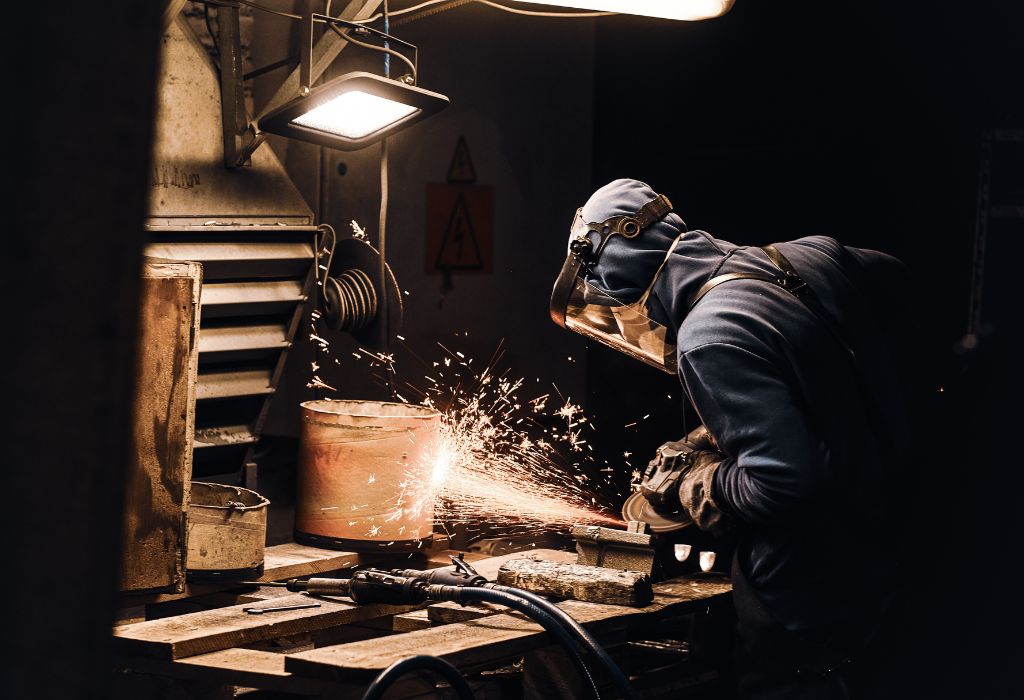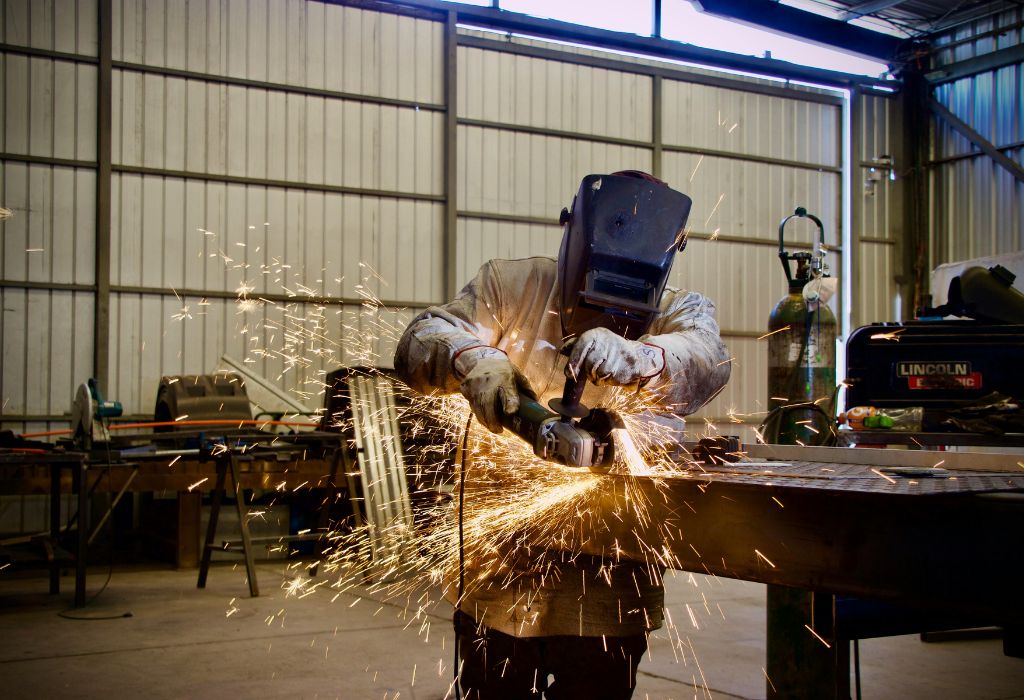
The crackling hiss of a plasma cutter slicing through steel is one of the most satisfying sounds in fabrication. But behind that brilliance lies one critical question — is your welding helmet really protecting you from the intense light and heat of plasma cutting?
Many fabricators assume that if a helmet works for welding, it must be safe for plasma cutting too. Yet plasma arcs generate different brightness, UV radiation, and reflection patterns that require specific shade levels and sensor responses. Using the wrong protection can strain your eyes, distort vision, or even lead to flash burns.
According to OSHA, exposure to high-intensity plasma arcs without proper eye protection can cause corneal burns within seconds (OSHA.gov). The good news? Most modern auto-darkening helmets can indeed be used for plasma cutting — provided they meet the correct standards and have the right shade range.
This guide breaks down exactly when and how you can use a welding helmet for plasma cutting, what settings to choose, and which common mistakes to avoid. By the end, you’ll know how to cut safely without compromising clarity, comfort, or protection.
Understanding Plasma Cutting vs Welding – What’s the Difference?
Welding joins metals by melting edges together with an electric arc, while plasma cutting uses a high-velocity jet of ionized gas to slice through metal. The brightness, UV output, and heat signature differ drastically.
Plasma arcs emit intense visible light and ultraviolet radiation, especially during long continuous cuts. This means that the lens shade and reaction speed needed for cutting can differ from welding.
What makes the plasma arc different from a welding arc?
It’s narrower, hotter, and often brighter in concentrated spots, demanding quick-reacting eye protection.
Why might a welding helmet be insufficient for plasma cutting?
If it lacks a low-shade “cut mode,” the lens may stay too dark or react inconsistently.
How does UV/IR output differ between cutting and welding?
Plasma cutting produces intense UV bursts with less spatter but higher reflected glare.
What are the main eye-protection risks?
Flash burns, eye fatigue, and permanent damage if shade levels are too light.
Does OSHA or ANSI specify shade ranges for plasma cutting?
Yes — ANSI Z87.1 recommends shade 5–9 for cutting, depending on amperage.
Can You Use a Welding Helmet for Plasma Cutting? Yes—but With Conditions
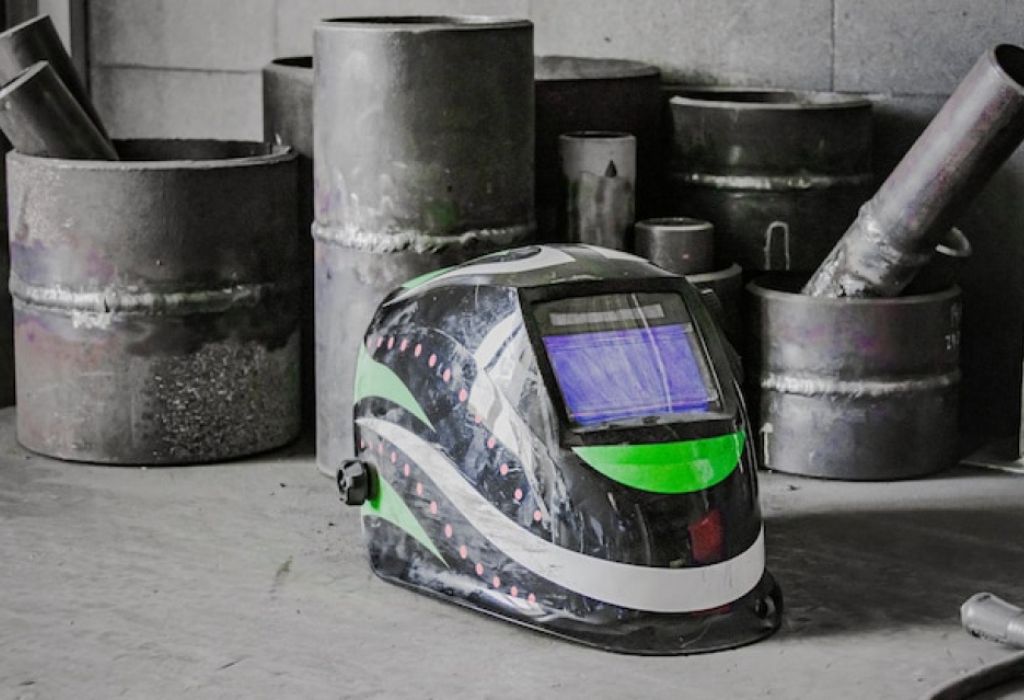
In most cases, yes, you can use a welding helmet for plasma cutting, but only if it meets specific conditions. The helmet must have an adjustable shade range, fast sensor response, and full-face coverage.
Auto-darkening helmets with a cut mode setting are ideal because they allow lighter shades (around 5–8) suitable for plasma operations while still providing UV/IR protection.
What shade rating is best for plasma cutting?
Usually between Shade 5 and 9, depending on arc intensity and amperage.
Are auto-darkening welding helmets suitable for plasma cutters?
Yes — as long as they allow low-shade settings and fast switching time.
What if my helmet doesn’t have a “cut” or “grind” mode?
You can still use it, but ensure the shade is adjustable and not too dark to see the cut line.
Is extra PPE needed with a welding helmet?
Yes, gloves, flame-resistant sleeves, and proper ventilation are still required.
What happens if you use too dark a shade?
You’ll lose visibility, making it hard to follow cut lines and increasing mistake risk.
Key Features to Look For in a Helmet for Plasma Cutting
Not all helmets handle plasma cutting equally. Look for models with adjustable shade levels (5–13), auto-darkening filters, high optical clarity, and reliable sensors.
You also need comfort features such as lightweight shells and good ventilation because plasma cutting often involves longer continuous operations than welding.
Why is adjustable shade essential?
It lets you adapt visibility to the specific brightness of your plasma arc.
How important is reaction time?
Extremely — look for helmets that switch in 1/20,000 second or faster to prevent flashes.
Does plasma cutting create spatter like welding?
Less molten spatter, but more fine debris and sparks — the helmet should resist heat and scratches.
Should a helmet have a “cut” or “grind” mode?
Yes, these modes reduce shade intensity for better visibility without losing UV protection.
How does optical clarity impact performance?
Clearer lenses reduce distortion and allow precise line-following on metal surfaces.
Matching the Right Helmet to Your Plasma Cutting Setup and Budget
The best helmet for plasma cutting depends on how and where you cut. Hobbyists using small 40-amp machines may get by with standard welding helmets that reach Shade 5–9, while industrial fabricators using 100-amp cutters need high-end helmets with advanced ADF sensors.
Budget helmets can be fine for occasional work if they’re ANSI Z87.1 certified and provide consistent auto-darkening response.
Can a budget welding helmet work for plasma cutting?
Yes, if it covers the correct shade range and responds quickly to light changes.
When should you invest in a specialized helmet?
If you use high-amperage plasma cutters or cut for long sessions daily.
Can one helmet handle both welding and plasma cutting?
Yes, multifunction helmets with wide shade ranges (5–13) are designed for both tasks.
What should you verify before cutting with your helmet?
Check the manufacturer’s specs for ANSI rating, shade range, and delay settings.
Is helmet fit important during plasma cutting?
Absolutely — a snug, adjustable fit prevents light leaks from reflections below the visor.
Common Mistakes & How to Avoid Them
Many fabricators unknowingly risk eye damage by using helmets in the wrong setting. The most frequent mistake is cutting with the shade set too light, allowing harmful UV radiation through.
Another is using a welding-only helmet without cut mode, causing flickering or slow response. Failing to wear neck and ear protection can also expose skin to plasma glare.
What happens if you use too low a shade for plasma cutting?
You risk flash burns and long-term eye fatigue from excessive brightness.
Why do some helmets flicker when used for plasma cutting?
Their sensors detect the high-frequency plasma arc as inconsistent light, causing rapid on/off darkening.
Is it wrong to use a fixed-shade helmet for plasma work?
Yes — it lacks flexibility for varying brightness levels.
How does ambient light affect performance?
Bright shop lighting can confuse sensors; use consistent lighting and proper sensitivity settings.
What’s the danger of poor side coverage?
Reflected UV rays can reach your eyes or skin from the sides or underneath.
Future Trends & Technology in Helmets for Cutting Operations

The latest helmets now include dedicated plasma-cutting modes that automatically adjust shade and delay based on arc frequency. These adaptive systems improve comfort and reduce flicker.
Manufacturers are also introducing true-color lenses, which provide better visibility and depth perception while maintaining full UV protection.
What new technologies are emerging for cutting helmets?
Smart sensors that auto-adjust sensitivity and shading in real time.
Are cordless rechargeable helmets becoming standard?
Yes — integrated solar cells with backup lithium batteries extend helmet lifespan.
How will optical standards improve?
Future helmets aim for 1/1/1/1 optical clarity ratings across all models.
Will AI or digital controls become common?
Likely — upcoming designs will feature digital displays and programmable cut/weld presets.
Can budget helmets keep up with these innovations?
Many brands now offer mid-range models with plasma-cutting modes under $150, combining safety and affordability.
Conclusion
So, can you use a welding helmet for plasma cutting? Absolutely — as long as the helmet meets the right safety standards and provides adjustable shade, fast sensors, and full-coverage protection.
Plasma cutting may look similar to welding, but its light intensity and arc pattern require attention to lens shade and clarity. Choose a certified helmet with a proper “cut mode,” maintain clean lenses, and always check your settings before cutting.
The right helmet ensures your eyes stay protected while your cuts stay sharp and precise — every single time.

I’m Darrell Julian, the founder, lead writer, and hands-on welding enthusiast behind ArcWeldingPro.com. With more than 15 years of real-world welding experience, I created this platform to share what I’ve learned in the field, in the shop, and in the heat of the arc.