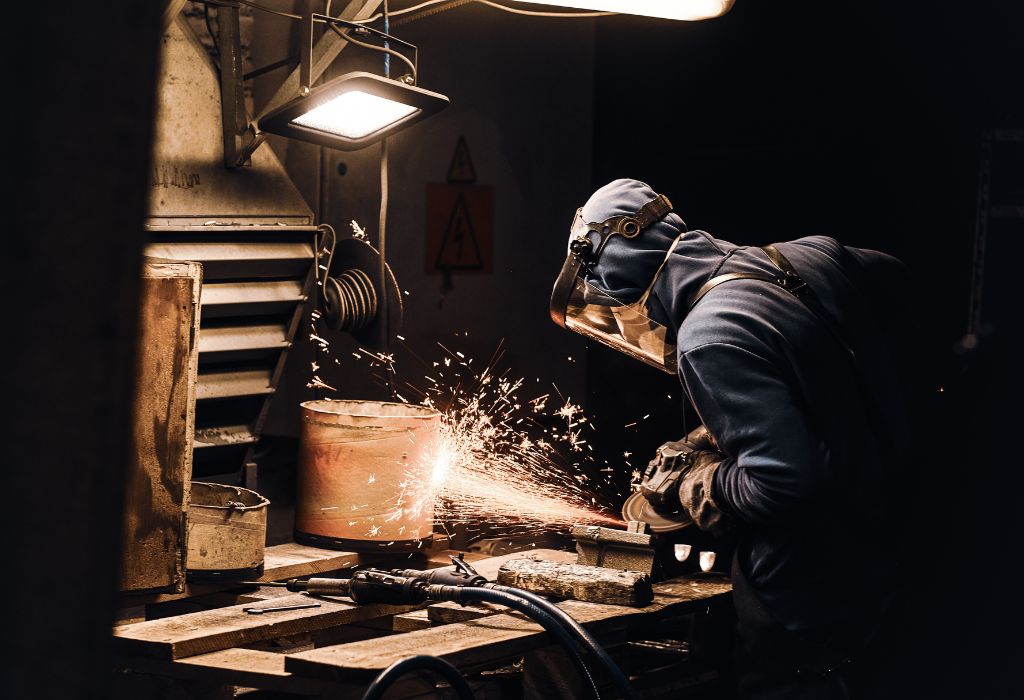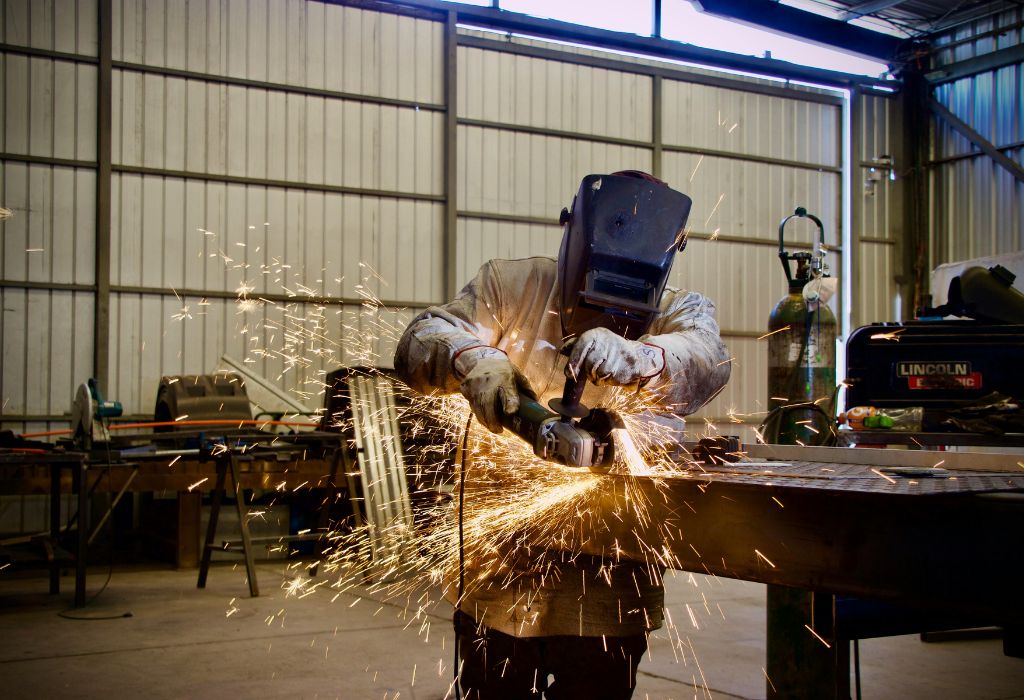
A welding helmet isn’t just a tool — it’s the barrier between a welder and invisible danger. Every arc ignites light brighter than the sun, launches sparks like molten rain, and floods the workspace with heat and radiation. Without protection, a single flash can cause eye burns, and a single spatter can scar.
So, what do welding helmets provide protection from? From ultraviolet and infrared radiation, flying debris, blinding light, and searing heat — the enemies of every welder’s vision and safety.
Why Welders Need Helmets in the First Place
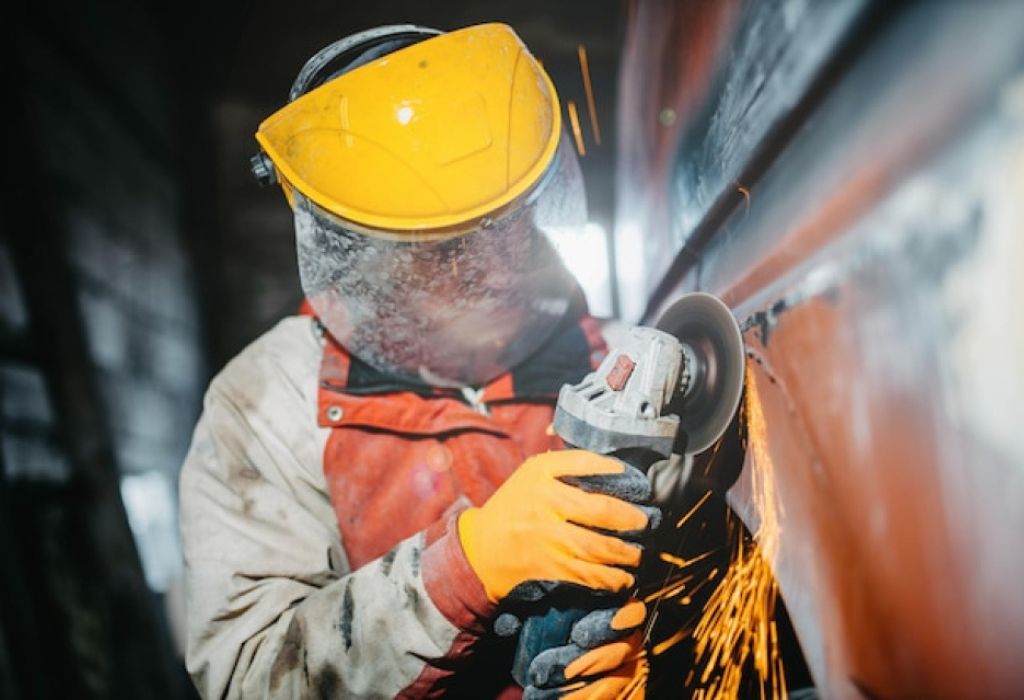
Welding may look routine, but each spark hides a range of invisible hazards. The arc generates UV and IR radiation strong enough to cause burns through clothing, while flying particles and spatter can pierce unprotected skin.
According to OSHA, over 2,000 workers suffer eye injuries daily, many from welding without proper eye protection (OSHA Data). A quality helmet acts as the first line of defense against those risks.
Why do welders wear helmets?
To block radiation, heat, sparks, and metal fragments that can damage eyes and skin.
What happens without one?
Unprotected welding can cause “arc eye,” burns, or permanent vision loss.
Do all helmets offer equal protection?
No. Only helmets certified under ANSI Z87.1 or EN379 provide tested safety standards.
Are they necessary for all welding types?
Yes. Even short tack welds or plasma cuts emit harmful radiation.
Can face shields replace helmets?
No. Regular shields lack UV and IR blocking layers required for welding arcs.
UV and IR Radiation — The Invisible Hazards
Welding arcs release intense ultraviolet (UV) and infrared (IR) radiation. UV exposure burns the eyes and skin in seconds, while IR heat penetrates deep, causing long-term tissue damage.
The auto-darkening filter (ADF) in modern helmets blocks both types of radiation — even when the lens appears “light.”
What does UV radiation do?
It causes “arc eye” or photokeratitis, similar to a sunburn on the cornea.
How does IR radiation harm welders?
Infrared waves deliver heat directly into eye tissue, leading to cataracts over time.
Does shade level affect UV blocking?
All certified helmets block UV/IR regardless of shade level. The shade mainly affects visible light brightness.
Are all helmets UV-proof?
No. Only those tested under standards like EN379 guarantee full protection.
Can reflected UV cause burns?
Yes. It bounces off metal, walls, or floors, harming exposed skin and observers.
Arc Flash and Visible Light — The Blinding Brightness
The visible light from a welding arc is over 10 times brighter than direct sunlight. Without proper shading, it can instantly dazzle and damage the retina.
Auto-darkening helmets react within 1/20,000 of a second to dim the view when the arc ignites, preventing flash burns while keeping visibility.
What is an arc flash?
A burst of extreme light and heat when the welding circuit is completed.
Can sunglasses block arc flash?
No. They filter visible light but not the UV or IR radiation produced during welding.
Why do lenses darken instantly?
Sensors detect the arc and trigger the LCD stack to switch from light to dark mode.
Can arc flash still hurt through the helmet?
Not if the lens is functioning and undamaged — it blocks both the light and radiation.
How to test response speed?
Use the helmet’s test button or point it toward a bright bulb to confirm quick reaction.
Impact, Grinding, and Flying Debris — Physical Protection
Welding environments are full of airborne metal chips, sparks, and abrasive dust. Helmets shield the entire face from impact while protecting the ADF lens from pitting.
The outer shell, typically made of thermoset or nylon composite, meets ANSI Z87+ impact resistance standards.
Why is impact protection important?
Grinding, chipping, or overhead welding can eject sharp particles toward the eyes.
Do helmets protect from grinding sparks?
Yes, when in grind mode — though dedicated shields may add extra coverage.
What’s the cover lens for?
It’s a replaceable layer that absorbs scratches and debris, keeping the main filter clear.
How often should it be replaced?
Whenever visibility drops or spatter marks appear.
Can side shields help?
Yes, they reduce exposure to off-angle sparks and light leaks.
Heat, Sparks, and Molten Spatter — Surface Protection
Even with gloves and jackets, the face and neck remain exposed to heat and molten metal. Helmets are shaped to deflect spatter downward and away from the skin.
At temperatures exceeding 2,500°F (1,370°C), molten droplets can bounce off the shell without penetrating.
Why does spatter stick to some helmets?
Painted or untreated surfaces may hold residue. Heat-resistant coatings help repel metal.
Do helmets protect the neck too?
Yes. Extended brims and leather bibs shield the throat and collar area.
Can synthetic clothing melt under sparks?
Yes. Always wear flame-resistant cotton or leather around the helmet.
Does color affect heat resistance?
No. Light or dark shells perform equally; only the material matters.
When to wear extra neck guards?
During overhead or vertical welding where spatter falls toward the face.
Protection from Dust and Welding Fumes
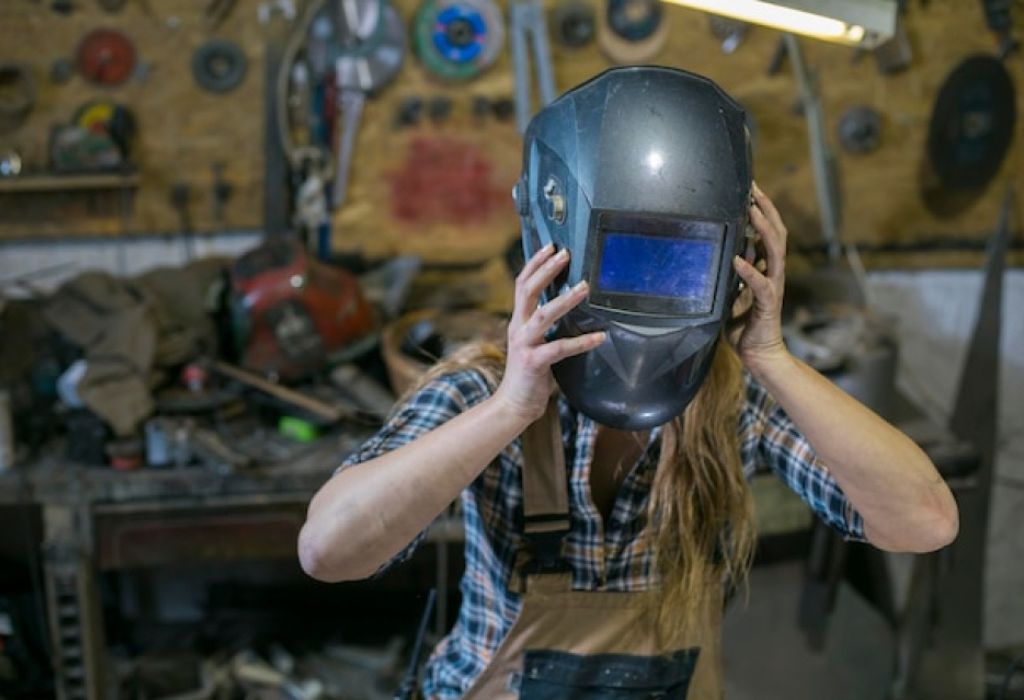
Helmets limit particle exposure to the eyes and face but do not filter toxic gases or fumes. For full respiratory protection, pair the helmet with a PAPR (Powered Air-Purifying Respirator) or a half-mask respirator.
Do helmets protect from fumes?
Partially. They deflect particulates but not chemical vapors.
When is PAPR required?
When welding stainless steel, aluminum, or galvanized metal, which release toxic fumes.
Can respirators fit under helmets?
Yes. Many helmets now include PAPR systems or respirator-compatible shells.
Does fume exposure affect the eyes?
Yes. Metal oxide fumes can cause irritation or temporary blindness.
Is ventilation still necessary?
Always. Even with PAPR, local exhaust keeps airborne contaminants low.
Standards That Define Welding Helmet Protection
Every certified welding helmet meets at least one international safety standard.
- ANSI Z87.1 (U.S.) — governs impact, optical clarity, and UV/IR blocking.
- EN379 (Europe) — rates auto-darkening filters using optical class codes (1/1/1/1 = highest clarity).
What does “Z87+” mean?
It indicates high-impact resistance, tested with fast-moving steel balls.
What does EN379 1/1/1/1 stand for?
It measures optical clarity, diffusion, variation, and uniformity — 1/1/1/1 is the best rating.
Do battery tests fall under these standards?
Yes, to ensure the ADF functions reliably even under voltage drop.
Should helmets have certification marks?
Absolutely. Look for laser-engraved ANSI or CE markings near the lens frame.
Can uncertified helmets fail instantly?
Yes. They may not darken properly or could melt under heat.
Shade, Sensitivity, and Delay Settings — Matching Protection to the Process
The perfect helmet doesn’t just protect; it adapts to the brightness of different arcs.
Each process produces different light intensity, requiring specific settings.
| Process | Shade Range | Sensitivity | Delay |
| SMAW (Stick) | 10–12 | Medium | Medium |
| GMAW (MIG) | 10–13 | Medium | Medium |
| GTAW (TIG) | 9–12 | High | Short |
| FCAW (Flux-Core) | 11–13 | High | Long |
| Plasma Cutting | 5–9 | Medium | Short |
Why start darker first?
It prevents overexposure; you can lighten gradually for better visibility.
Why does sunlight affect sensors?
Bright ambient light can trigger false darkening — adjust sensitivity lower outdoors.
When should delay be longer?
For heavy, high-heat welds where afterglow lingers.
What causes flicker during TIG?
Low amperage or blocked sensors. Increasing sensitivity usually fixes it.
Are memory presets helpful?
Yes. Advanced helmets save shade profiles for different welding types.
Fit, Coverage, and Comfort — The Overlooked Safety Factor
Even the best-rated helmet fails if it doesn’t fit right. A secure headgear alignment ensures full coverage without strain or movement during work.
How should a helmet fit?
Snug but comfortable. It should stay balanced without squeezing your head.
What happens if it’s too loose?
It might slip mid-weld, exposing eyes to the arc flash.
Does head size affect shade performance?
No, but incorrect positioning can misalign sensors and delay darkening.
Should you adjust before or after wearing gloves?
Before — gloves make fine tuning more difficult.
Do sweatbands help?
Yes. They absorb moisture and improve grip during long welding sessions.
Common Misconceptions About Welding Helmets
Many new welders believe that darkness equals safety. In reality, lens quality and certification are what protect — not just how dark it looks.
Is a darker lens always safer?
No. Too dark prevents visibility, leading to poor technique and rework.
Do cheap helmets offer the same protection?
Not necessarily. Non-certified models may lack UV/IR filters or slow reaction times.
Are auto-darkening helmets unsafe for beginners?
No. They’re safer and more convenient when properly set up.
Do helmets need maintenance?
Yes. Dirty lenses or low batteries can delay darkening by crucial milliseconds.
Can welding be done with sunglasses or tinted glass?
Never. They block visible light only, not radiation.
Maintaining Your Helmet for Long-Term Protection
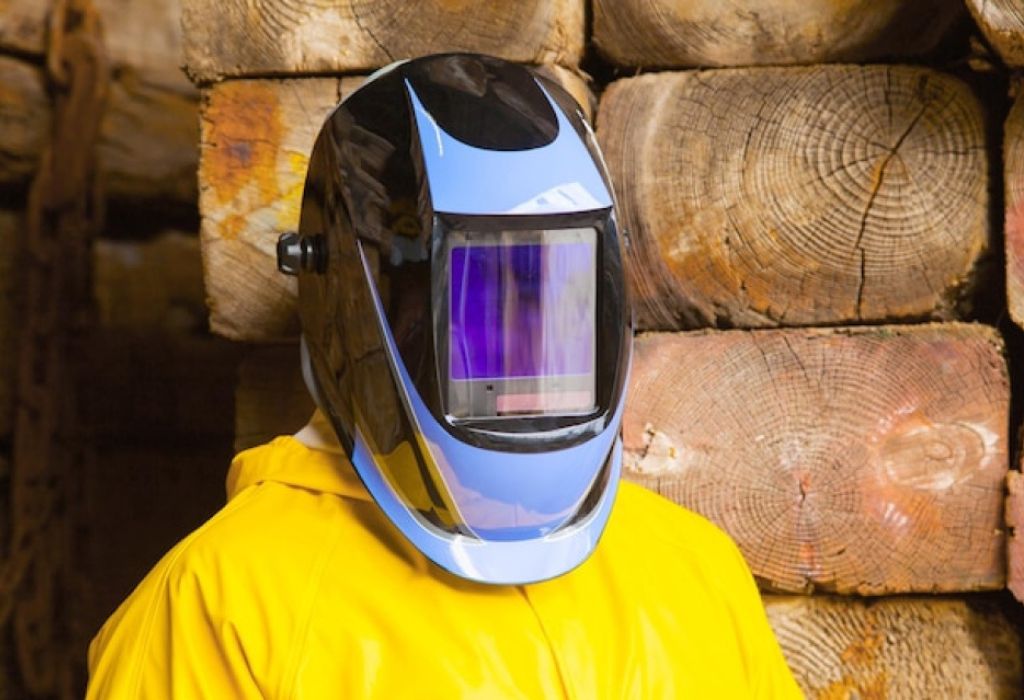
Welding helmets endure high heat, dust, and constant vibration. Routine maintenance ensures consistent protection and clear vision.
Daily Checks
- Wipe lenses and sensors clean with microfiber cloth.
- Check for cracks in shell or cover lens.
- Test auto-darkening function before striking an arc.
Weekly Maintenance
- Replace scratched cover lenses.
- Clean and tighten headgear pivots.
- Recharge or replace batteries if dimming slows.
Quarterly Tasks
- Deep clean sweatbands and pads.
- Test shade response time.
- Inspect seals for deformation or residue buildup.
Why clean regularly?
Dust and spatter reduce optical clarity and can block sensors.
Can chemicals damage the lens?
Yes. Avoid solvents — use mild soap or lens-safe cleaner.
How to store helmets safely?
In a cool, dry bag away from sunlight and metal dust.
When to replace the helmet?
After cracks, failed darkening, or visible delamination appear.
What Welding Helmets Cannot Protect You From
While helmets shield the face and eyes effectively, they don’t replace other PPE.
Can a helmet replace a respirator?
No. It doesn’t filter fumes or gases.
Do helmets stop burns on arms or hands?
No. Gloves and jackets are essential.
Do they prevent noise exposure?
No. Use ear protection in loud workshops.
Can a damaged helmet still block UV?
Cracks and scratches allow leakage; always replace faulty gear.
Are all ADF helmets waterproof?
No. Moisture can damage electronics; keep them dry.
Conclusion: What Do Welding Helmets Provide Protection From?
Welding helmets protect against UV and IR radiation, arc flash, heat, sparks, and flying debris. They prevent eye burns, skin injury, and long-term vision loss — making them one of the most vital pieces of PPE in metal fabrication.
Certified helmets go beyond darkness; they combine clarity, fit, and reaction speed for total protection.
Before each shift, test the lens, check battery life, and inspect for cracks. The difference between a safe weld and a painful one can be just a second of preparation.
Protect your eyes, adjust your helmet properly, and make every weld safe from the first spark to the last bead.

I’m Darrell Julian, the founder, lead writer, and hands-on welding enthusiast behind ArcWeldingPro.com. With more than 15 years of real-world welding experience, I created this platform to share what I’ve learned in the field, in the shop, and in the heat of the arc.