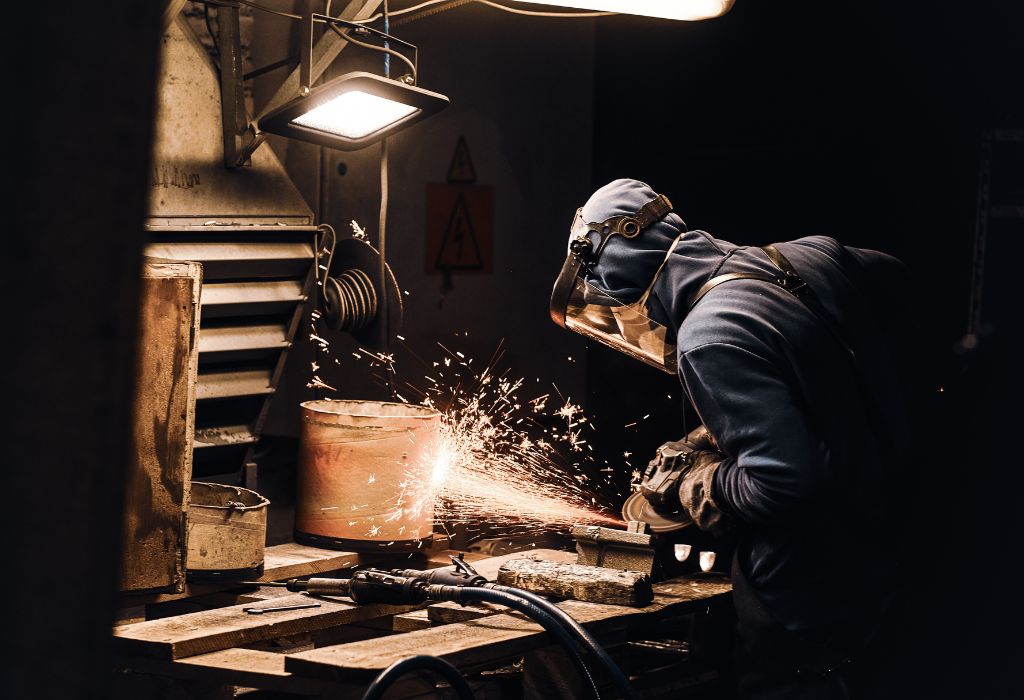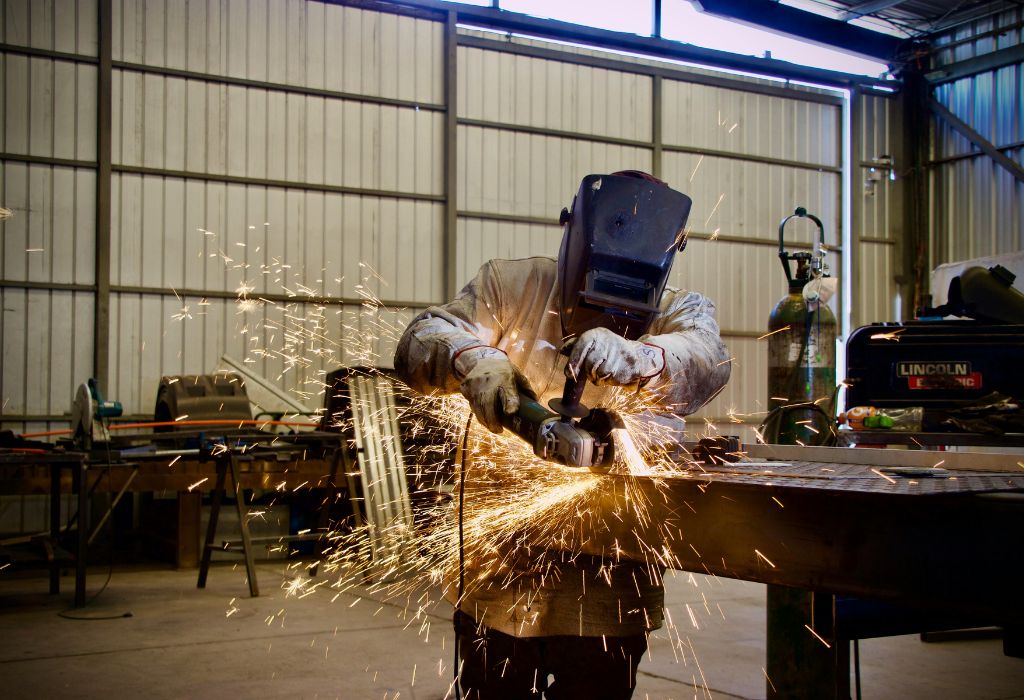
A bright arc lights up the welding booth, but what seems like a routine weld may be silently damaging the welder’s eyes. Many professionals experience gritty vision or light sensitivity the next day because the shade setting was wrong in the helmet. Arc flashes produce not only intense visible light but also invisible UV and IR radiation that can harm the cornea and retina. According to OSHA, welding lens filters must meet minimum shade requirements to prevent eye injury. (osha.gov)
Choosing the correct shade for MIG welding is not just about comfort—it’s about safety and quality. Most auto-darkening helmets cover a range from shade 8 to 13, giving flexibility to match amperage, transfer mode, and ambient light. (arccaptain.com)
This guide explains exactly what shade helmet for MIG welding is appropriate at different amperages and conditions. It covers standards, practical charts, auto‐darkening ADF settings, and comfort factors that influence both safety and productivity. By the end you will know how to select and set your helmet shade so that your eyes are protected and your welds are accurate.
Why MIG Welding Demands the Correct Shade
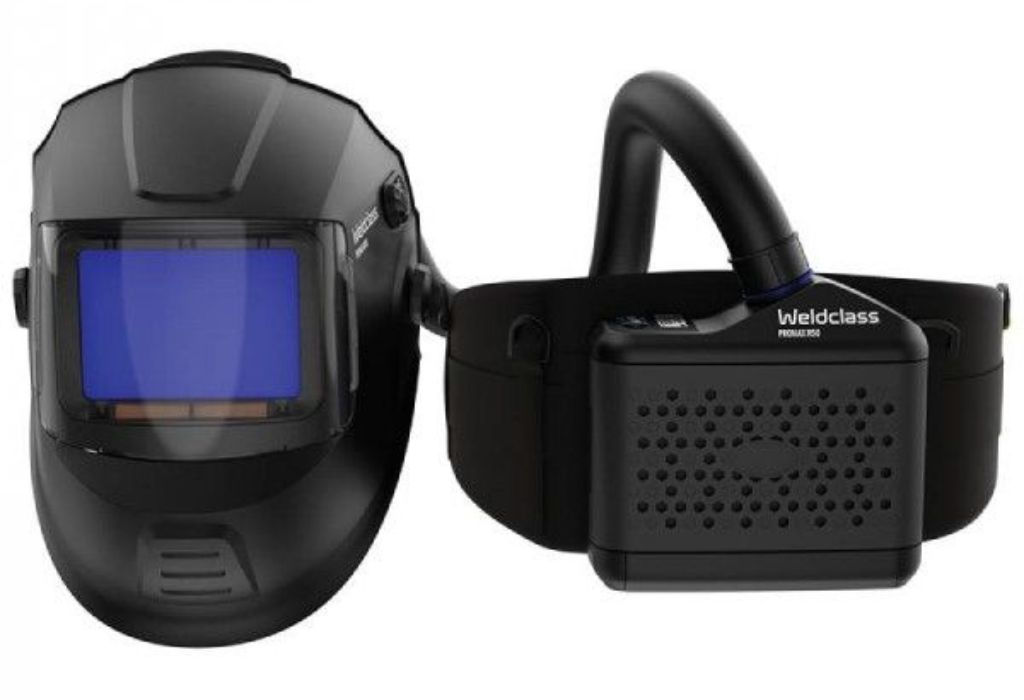
MIG welding (GMAW) involves a continuously fed wire and generates a bright, consistent arc with significant visible and non-visible radiation. Without the correct shade filter the eyes can sustain damage, and weld puddle visibility can suffer.
Industry guides show that for MIG the recommended shade numbers fall in a specific range based on amperage; going darker than necessary reduces visibility and going lighter reduces protection. ([turn0search2])
What injuries result from the wrong shade?
Arc eye (photokeratitis), corneal burns, permanent sensitivity to light and retinal damage are possible.
Why do shade numbers matter?
Shade numbers indicate how dark a filter is; higher means less light passes through and greater protection.
What is the hazard of too light a shade?
Too light a filter allows excessive arc radiation through, risking serious eye injury.
What is the hazard of too dark a shade?
If the shade is too dark, the welder struggles to see the weld pool, impairing accuracy and speed.
Do ambient conditions affect shade needs?
Yes, bright sunlight, reflective materials or overhead lighting can require stepping up the shade number.
Understanding Shade Numbers, Standards, and ADF Basics
Shade numbers follow the DIN scale (and ANSI/OSHA standards in the U.S.) where larger values correspond to darker lenses. Auto-darkening filters (ADF) shift from a light state to a dark state within milliseconds when the arc is struck.
Standards such as ANSI Z87.1 and OSHA’s eye-protection rules specify minimum shade numbers for various welding processes and amperages. ([turn0search0])
What does ANSI Z87.1 cover?
It sets requirements for eyewear and filters related to impact, optical clarity, UV/IR protection and transmittance.
What guidance does OSHA provide?
OSHA publishes minimum shade tables under 29 CFR 1910.133(a)(5) for various welding types based on current. ([turn0search7])
What is the difference between fixed and variable shade helmets?
Fixed shade stays at one darkness level; variable shade allows the user or ADF to shift between a range (e.g., 8–13).
What does light transmittance mean?
It’s the percentage of light allowed through the lens; lower transmittance (higher shade number) means darker lens.
Why do clarity ratings matter?
Better clarity lenses reduce distortion, improve weld pool visibility and reduce eye fatigue.
Recommended Shades for MIG by Amperage
Selecting the correct shade for MIG welding depends on the amperage, metal type, and whether you’re indoors or outdoors. According to shade charts, for GMAW/MIG many recommend shade 10 to 12 across common amperages. ([turn0search2])
For example, MIG under ~60 A might use shade 10; 60-160 A MIG may also use shade 10 or 11; over 250 A spray transfer may warrant shade 11 or 12. ([turn0search1])
What shade for 90 to 130 amps short-arc MIG?
Shade 10 is typically appropriate for general sheet metal work in this range.
What shade for 140 to 200 amps?
Shade 11 offers additional protection without sacrificing visibility in moderate arcs.
What shade for 200 to 300 amps spray transfer?
Shade 11 to 12 helps manage the brighter arc and increased radiant output.
What shade above 300 amps?
Shade 12 to 13 may be required for high-powered spray transfer or bright outdoor conditions.
What if eyes still feel strained despite using recommended shade?
Check for worn lenses or cover plates and consider increasing the shade by one level.
How to Dial in an Auto-Darkening Helmet for MIG
Using a variable shade auto-darkening helmet correctly ensures both safety and efficiency. Begin by setting the shade range (for MIG typically 10-12) and then adjust sensitivity and delay.
Ensure sensors are unobstructed by the torch or hand position, and test the helmet in your actual welding environment.
Why does a helmet occasionally flash lightly?
The sensitivity may be too low or blocked by spatter, preventing proper darkening.
How many sensors are optimal for MIG?
Four sensors provide better coverage and less chance of a sensor being blocked in tight positions.
Why does shop lighting cause flicker?
Some overhead or fluorescent lights can trigger ADFs incorrectly, so adjust sensitivity accordingly.
What about welding outdoors in sunlight?
Bright ambient light and reflections can require raising the shade and checking sensor response.
When should shade 13 be used?
For high-amp MIG in bright outdoor settings or work on highly reflective stainless or aluminum where glare is intense.
Comfort, Clarity, and Productivity Factors
Choosing the right shade is only part of the helmet decision—comfort, clarity and usability matter just as much. A helmet with high optical clarity, true‐colour lens, large viewing area and proper fit reduces fatigue and increases accuracy. ([turn0search3])
Poor clarity or heavy headgear can make weld tasks more tiring and reduce productivity over long shifts.
Does a larger window require a darker shade?
No, but a larger viewing area increases field of view and clarity which may translate into better bead control.
Does true colour change the needed shade?
Not necessarily—the shade number stays based on brightness, but improved colour clarity helps perception of the puddle.
Can too dark a shade reduce weld quality?
Yes—if the puddle is too obscured the welder may lag or produce inconsistent beads.
How to test clarity quickly?
Strike a small test arc on scrap material and verify the puddle and weld zone remain crisp and easy to see.
When to replace lenses or cover plates?
When scratched, hazy or spattered—the damage degrades protection, clarity and may require a darker shade to compensate.
Special Cases and Materials
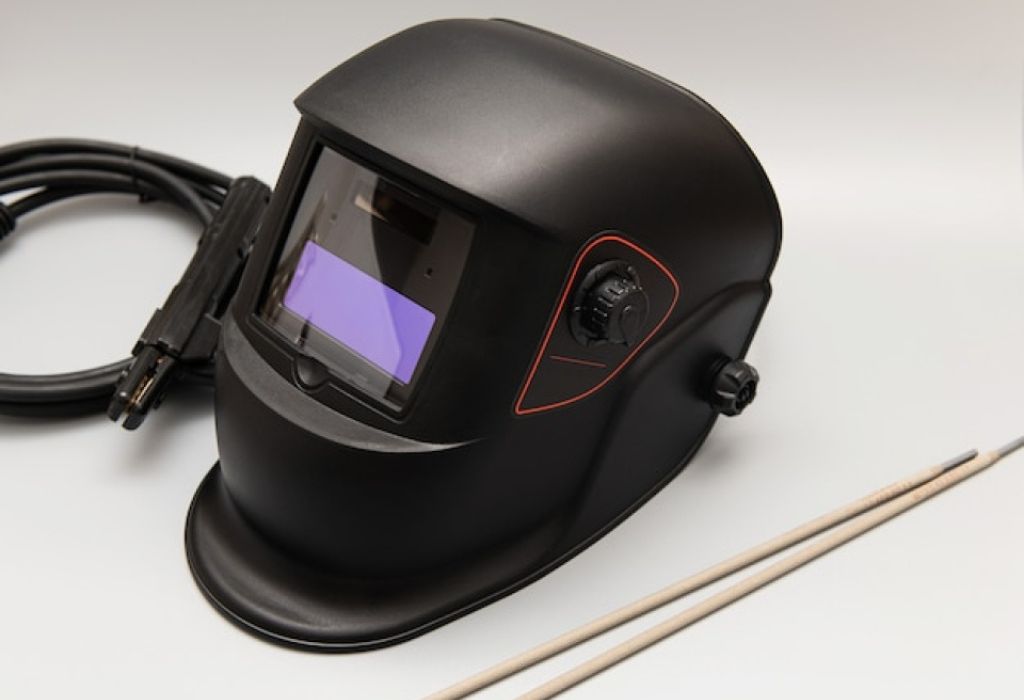
Some materials or welding positions require special consideration beyond the general MIG shade chart. Thin automotive sheet may use lower amperage and thus lower shade numbers (e.g., 9–10) for short tacks, whereas aluminum spray transfer may need higher shade like 12 or 13 due to brightness and reflectivity. ([turn0search2])
Stainless steel reflects arc light strongly so starting at shade 11 and adjusting upward as needed is wise. Flux-cored MIG on heavy production may also generate brighter arcs requiring a step-up.
Best shade for thin auto panels?
Shade 9 to 10 for quick tack welds in low amperage settings.
Best shade for aluminum spray?
Shade 12 to 13 to counter the bright arc and reflective surface.
Best shade for stainless at 180–220 amps?
Shade 11 is often adequate, increase to 12 if glare persists.
What about FCAW compared to MIG at same amps?
Use similar shade as MIG, but monitor arc brightness and adjust if spatter or brightness increase.
Is observer or robotic viewing different?
Observers should follow the same shade guidance and may step up one shade for close proximity to the arc.
Safety Checklist and Quick Setup Routine
Before every shift verify your helmet shell, headgear, lens window, and cover plates are clean and intact. Confirm the shade range, sensitivity and delay settings are correct for the process about to be used and perform a quick test arc on scrap material.
Maintain a simple log of preferred shade settings by material, amperage and position; this consistency saves time and improves safety. Referencing OSHA minimums prevents guesswork: for instance, GMAW/MIG > 60 A minimum shade #10. ([turn0search0])
How often should cover lenses be changed?
Replace when scratched, hazy or filled with spatter—every few months in heavy use environments.
How should a helmet be stored?
Store headgear clean, dry, and away from solvents or direct sunlight that may degrade plastics.
What cleaners are safe for lenses?
Mild soap and water or manufacturer-approved wipes; avoid ammonia or abrasive cleaners.
When should a helmet be retired?
When sensors malfunction, shell cracks, ADF fails or optical clarity is compromised beyond safe levels.
What are signs your shade is inadequate?
Post-shift sore or gritty eyes, sensitivity to light, headaches or inability to focus weld puddle signal too light a shade.
Conclusion and Call to Action
Selecting the right shade helmet for MIG welding ensures both eye protection and the ability to work accurately and efficiently. Start by following recommended shade charts based on amperage and adjust for the working environment, material and transfer mode. Maintain your helmet, set sensitivity and delay correctly, and document your preferred settings for different tasks. Your vision and weld quality rely on setting the right shade and keeping your equipment in prime condition.
Ready to upgrade your helmet or verify your settings? Review your current gear today, compare against the recommended shade chart for MIG welding, and make adjustments. Your eyes—and your welds—will thank you.

I’m Darrell Julian, the founder, lead writer, and hands-on welding enthusiast behind ArcWeldingPro.com. With more than 15 years of real-world welding experience, I created this platform to share what I’ve learned in the field, in the shop, and in the heat of the arc.