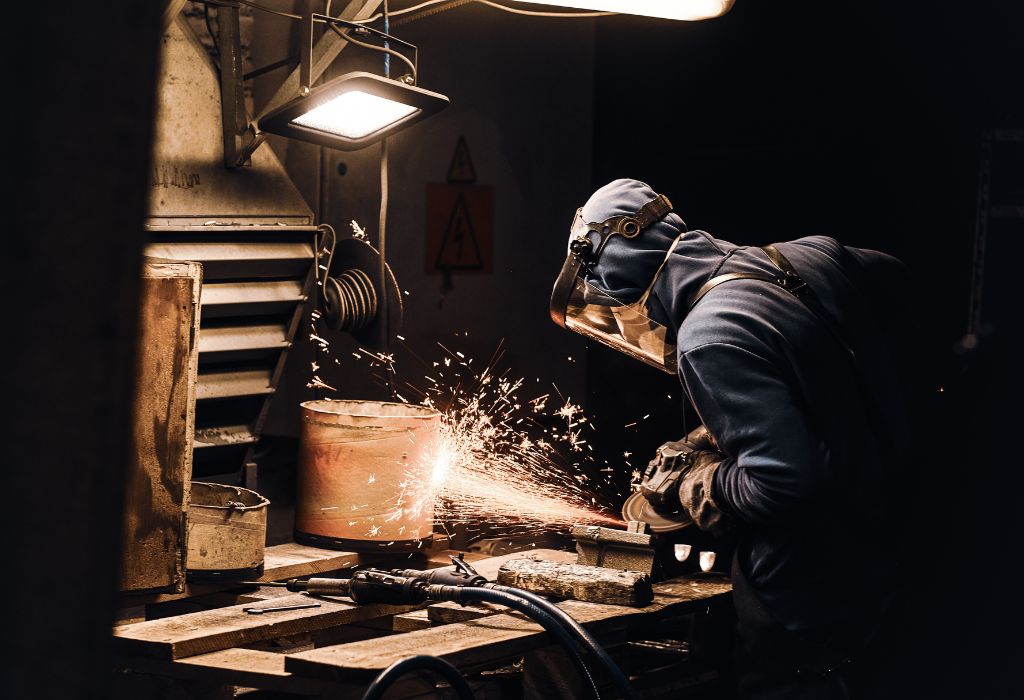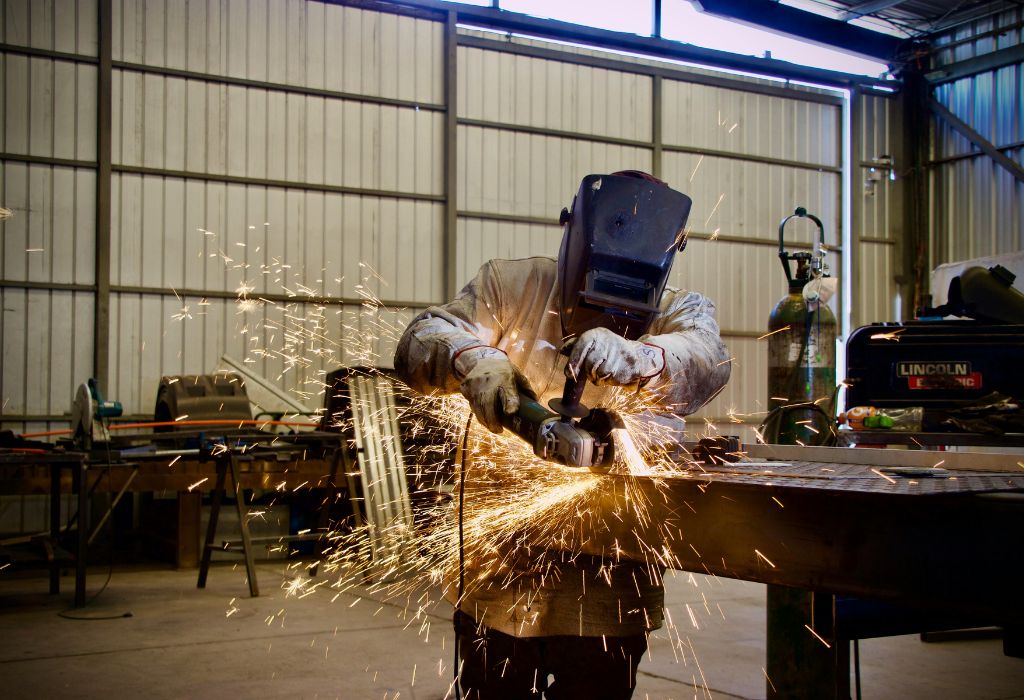
You walk into your truck or shop after a long day’s work, glance at the hood on your tool cart, and notice the striking graphics across the shell of your helmet. You pick up the label, it says “Cornwell Tools,” yet you wonder who actually built this helmet. What matters most isn’t the brand on the shell—it’s the manufacturer behind the optics, sensors, switching speed, and comfort under a welding arc.
Turn on auto-darkening mode: some helmets respond in as little as 1/25,000 seconds, while lower quality units drag and cost you visibility time. According to spec-lists, many mid-tier auto-darkening helmets hit that benchmark. See a typical spec: 1/25,000 s switching time for a Metal Man model. partssource.com+2Metal Man Work Gear Co.+2
In the mobile tool and shop world, Cornwell positions its welding helmets as high value, offering features like “9-13 variable shade,” “grind mode,” and “ANSI/CSA approved.” webcat.cornwelltools.com+1
In this article you’ll discover exactly who manufactures Cornwell welding helmets, how private-label helmet production works, what key specs you should check, how Cornwell’s lineup compares to other brands, and what to look out for when buying or maintaining one. By the end, you’ll be confident in your purchase and know precisely what matters under that hood.
What “Who Makes Cornwell Welding Helmets” Really Means

When you ask “who makes Cornwell welding helmets” you’re really asking: which OEM produces the helmet shells, optics, and electronics—despite the Cornwell badge? In many tool-truck brands the manufacturing is private-label: Brand A contracts Brand B (the OEM) to design, manufacture, and assemble the unit, while Brand A adds graphics, service, distribution, and warranty.
In the case of Cornwell, evidence points to Metal Man as the OEM behind many of the Cornwell welding helmet models. Metal Man’s catalog uses identical specs—shade 9-13, 1/25,000 s switching, grind mode, viewing area sizes—that match Cornwell listings. partssource.com+2Metal Man Work Gear Co.+2
This means when you buy a Cornwell helmet you may essentially be buying a Metal Man-made helmet branded for Cornwell’s tool-truck network. The brand may handle packaging, warranty, parts-access, but the underlying helmet platform is common.
Why does this matter? Because by understanding the OEM, you know the spec-baseline, potential upgrade path, parts compatibility, and how Cornwell’s value stacks up against direct-OEM or premium-brand units.
Who is the OEM for Cornwell welding helmets?
Metal Man (and its parent/partner companies) manufacture the base models that Cornwell rebrands.
Are the Cornwell helmets the same as Metal Man retail models?
In many cases yes—the specifications match or closely align; differences may be graphics, headgear styling or accessory bundling.
Does Cornwell manufacture its own helmet shells?
No publicly-available data indicates Cornwell manufacturing them in-house; sourcing indicates private-label manufacturing.
Does knowing the OEM impact warranty/parts?
Yes—with the OEM identified you may access replacement lenses, headgear or aftermarket parts more easily via either brand’s channels.
Does OEM identity affect safety/performance?
Indirectly yes—if the OEM has proven specs (shade range, switching speed, lens clarity) you can assess Cornwell’s value more accurately.
How Private-Label Welding Helmets Work
Private-label manufacturing allows equipment brands to offer welding helmets under their badge without building the manufacturing infrastructure themselves. A manufacturer (OEM) designs and builds the product, the brand (like Cornwell) buys volumes, applies its branding, and handles distribution/dealer networks.
This model enables competitive pricing and decent specs because the OEM services multiple brands and spreads design/production cost. On the flip side, the distinguishing features and premium optics may be slightly less advanced than specialty premium brands.
What features should you expect from private-label helmets?
Typical specs include variable shade (9-13 or 5-13), switching times like 1/25,000 s, grind mode, multiple arc sensors (2-4-7), ANSI/CSA approval, and solar/battery powered ADF. For example, Metal Man lists exactly these specs on its helmet line. Metal Man Work Gear Co.+1
Are private-label helmets safe?
Yes—provided they adhere to ANSI Z87.1 or equivalent standards for optical and UV/IR protection. The brand matters less than those spec credentials. webcat.cornwelltools.com+1
Is interchangeability of parts common?
Often yes—if multiple brands use the same OEM platform you may find replacement lenses, headgear or batteries shared across brands.
What are the cost vs premium brand tradeoffs?
You may gain value (good specs at lower price), but premium brands may offer higher clarity, better headgear comfort, wider viewing areas, seamless PAPR integration, or ultra-fast switching (1/100,000 s or better).
Should buyers care about OEM identity?
Absolutely. Knowing the OEM gives you insight into specs, parts-availability and resale value—especially if you later upgrade or service the helmet.
Cornwell Lineup — Features & Specs at a Glance
Cornwell’s list of welding helmets shows several models with defined specs that align with the OEM platform mentioned earlier. For example the model MMW56VG lists: “9-13 variable shade,” “grind mode,” “3.86″ x 1.73″ viewing area,” “fast 1/25,000 sec switching time,” “UV/IR protection to shade 16,” “Low Amp TIG to 10 Amps,” “2 arc sensors,” “ANSI & CSA approval.” webcat.cornwelltools.com
Another example: the premium model MMW900PVG describes “180° view,” “three True View Color filters,” “7 sensors,” “built-in 100 lumen high power LED rechargeable via Type-C cable,” “front lens weld mode shade 8-13, cut mode shade 4-8, grind mode shade 3.” webcat.cornwelltools.com
Across the Cornwell catalog you’ll see specs like: variable shade 9-13, viewing area ~3.8″ x ~1.7″, grind mode built-in, solar/battery power, adjustable headgear and ANSI/CSA markings. cornwelltoolsweld.com+1
What spec features should you check?
- True variable shade range (9-13 or 5-13)
- Switching time (1/25,000 s or better)
- Number of sensors (more sensors = better arc detection)
- Viewing area size (larger = better visibility)
- Low-amp TIG capability (if TIG work is needed)
- Headgear comfort and adjustability
- Certification (ANSI Z87.1, CSA)
Are all Cornwell models equal?
No. Entry-models may have fewer sensors, smaller viewing windows or fixed shade ranges. Premium models offer expanded features like panoramic view or LED assist.
Does the price reflect features?
Generally yes—models like MMW900PVG carry higher MSRP (~US$499) while basic models cost much less. webcat.cornwelltools.com+1
Cornwell vs Lincoln, Miller, Jackson, Optrel
When comparing Cornwell helmets to premium brands such as Lincoln Electric, Miller, Jackson Safety or Optrel, the distinguishing points are optics clarity, headgear comfort, accessory ecosystem (especially PAPR integration), and brand prestige.
Cornwell (via Metal Man platform) offers very solid specs for the price—variable shade, grind mode, multi sensors—but may not match the ultra-premium clarity ratings or massive viewing areas of top tier brands. For example, Optrel may advertise 1/100,000 s switching or near-true-color lenses for extended TIG work.
When does Cornwell make sense?
For mobile tool techs, mobile welders, light to moderate fab shops where value and versatility matter more than premium price. When is premium brand worth it?
If you weld full-time in production, require PAPR, do long TIG work with high visual demands, or seek best-in-class optical clarity.
How about warranty and parts access?
Premium brands often have longer warranties, dedicated service networks and accessory ecosystems. Cornwell’s value lies in good features, decent warranty via dealer network, and accessible parts but may not match premium brand length of support.
Has resale or brand perception ever mattered?
Yes—some shops view helmet brand as part of professional image; premium brands may carry higher perceived value, though function under hood matters far more than logo.
Buying Tips — Picking the Right Cornwell Helmet
Step 1: Match the helmet to your process
If you weld Stick/MIG most of the time: variable shade 9-13, standard sensor count will suffice. For TIG or low-amp work: ensure low-amp capability (down to 2-10 A) and high clarity. Cornwell lists low-amp TIG to 10 amps on some models. webcat.cornwelltools.com
Step 2: Check specs that matter
Viewing area size, switching time (1/25,000 s is good), number of arc sensors (2-4 is entry; 7 is more premium), grind mode inclusion, battery/solar power type, headgear fit, and certifications.
Step 3: Try headgear fit if possible
Comfort and weight matter, especially on long sessions. Headgear adjustability and sweatband washability are features Cornwell lists. webcat.cornwelltools.com
Step 4: Warranty & parts availability
Confirm whether your Cornwell dealer handles parts, how fast lenses/headgear can be replaced, and whether OEM (Metal Man) parts also apply.
Step 5: Consider future proofing
If you might upgrade to automated systems, PAPR or change processes, a more premium model with extra features may pay off.
Quick pick suggestions:
- Best value all-round: Cornwell MMW56VG – variable shade 9-13, grind mode, low-amp TIG to 10 A.
- Bigger viewing area / premium features: MMW900PVG – panoramic view, 7 sensors, LED assist.
- If you mostly grind and do intermittent welds: a simpler model with fixed shade or fewer sensors may suffice and save cost.
Care, Maintenance & Safety
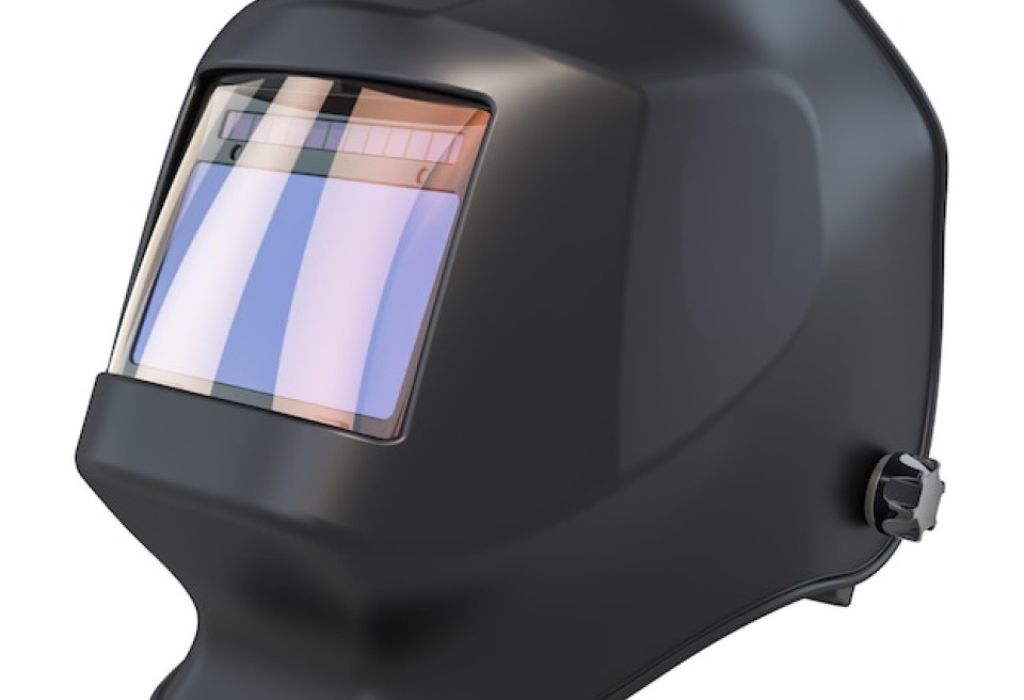
To keep your helmet performing its best and maintaining protective reliability, regular maintenance is essential. Replace outer cover lenses when scratched or hazed, clean the inner lens, keep sensors clear of spatter and inspection debris, and check battery or solar power status.
Why replace cover lenses? Scratches reduce clarity and may delay darkening or distort arc view, affecting weld quality and safety.
Why check switching time? If you notice ghost-images, slow reaction, or arcing brightness lingering, it could indicate batteries failing, sensors obscured or ADF module aging.
Cold-weather or extreme service tips: Keep your helmet in ambient temperature before use, let the battery/solar system stabilize, and verify shade mode and sensitivity are suitable for low-amp TIG or high wind/cold start.
Safety standards to watch: Ensure your helmet shows ANSI Z87.1 (or local equivalent) along with UV/IR protection to Shade 16—these guarantee basic protections from arc flash and ultraviolet/infrared radiation. webcat.cornwelltools.com
When to retire a helmet? If the shell cracks, the auto‐darkening filter fails, switching slows significantly, or the headgear becomes structurally unsafe, replacement is required.
Conclusion
So, who makes Cornwell welding helmets? While the badging reads Cornwell, the core manufacturing platform is produced by Metal Man (and its associated OEM infrastructure). Understanding this gives you insight into specs, parts availability and what you’re really getting.
Cornwell’s lineup offers strong value—features like variable shade 9-13, fast switching time, grind mode, multi-sensor arrays and certifications—all at competitive price points. If you’re working mobile, in service, or looking for a solid mid-tier helmet with good specs, Cornwell makes a very practical choice. For production heavy TIG or ultra-premium clarity demands, a premium brand may still be justified—but for most welders the Cornwell/Metal Man pairing hits the sweet spot between cost and performance.
Before you buy, match the helmet’s specs to your welding process, check viewing area and comfort, verify warranty and parts support, and maintain your gear properly for safety and longevity. If you act now you won’t just choose a helmet—you’ll choose wisely. Ready to pick your next helmet? Talk to your Cornwell dealer, compare models, ask about headgear fit and sensor count, and weld with confidence.

I’m Darrell Julian, the founder, lead writer, and hands-on welding enthusiast behind ArcWeldingPro.com. With more than 15 years of real-world welding experience, I created this platform to share what I’ve learned in the field, in the shop, and in the heat of the arc.