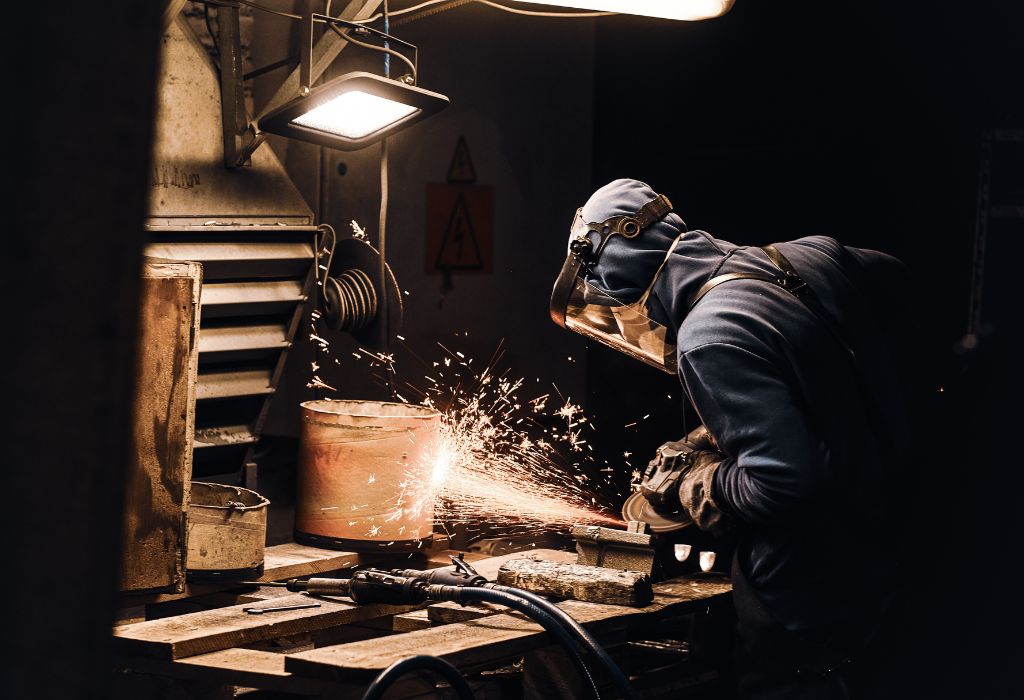
The arc flashes bright across the steel plate as a welder lowers a helmet with the red Snap-on logo. It looks powerful and professional, but one question sparks in every metal shop — who actually makes these helmets?
Snap-on is famous for its premium hand tools and garage gear trusted by professionals for decades. Yet, when it comes to their welding helmets, the brand’s manufacturing origin has always been a bit of a mystery. Behind most big brands are original equipment manufacturers (OEMs) who design and produce the actual products, while the label simply represents the reseller.
That matters because knowing the OEM helps welders match parts, compare safety ratings, and judge value. Confusion between private-label and genuine OEM helmets often leads to mismatched lenses or lower optical performance. Understanding who makes Snap-on welding helmets isn’t just trivia — it’s part of safe welding practice.
According to the American Welding Society, over 70% of welding-related eye injuries are caused by inadequate or low-quality protective gear (source). The Occupational Safety and Health Administration (OSHA) notes that properly certified helmets reduce ultraviolet and infrared exposure injuries by up to 90% (source). These facts highlight why welders care about the quality and origin behind the mask.
This guide uncovers who builds Snap-on welding helmets, how to identify your model’s manufacturer, and what specs to check before you buy. By the end, you’ll know whether your helmet comes from an industry leader — or just wears a familiar logo.
The Quick Answer: Who Makes Snap-on Welding Helmets

Snap-on welding helmets are manufactured by third-party OEMs, not directly by Snap-on Incorporated. Evidence shows that several product lines have been produced by Save Phace, a well-known helmet maker specializing in auto-darkening and graphic welding gear.
Model codes such as EFP2MORBID and EFP2 series correspond exactly with Save Phace product lines, suggesting a partnership for at least some designs. Older models, like the YA4606 and YA4610, may have come from different OEMs during Snap-on’s earlier product cycles.
Does Snap-on build helmets themselves?
No. The company contracts specialized PPE manufacturers, focusing its brand power and distribution through truck dealers.
Who supplies the current models?
Save Phace is the most likely OEM for EFP-series helmets that appear under Snap-on’s branding.
Do OEMs change over time?
Yes. Private-label deals often rotate every few years depending on cost, features, and contract renewals.
Are Snap-on helmets unique?
They share shells and lenses with OEM models but may include exclusive graphics, packaging, or accessories.
How to Identify the OEM Behind a Snap-on Helmet
Finding the real maker starts with reading the model code. Snap-on product pages list names like EFP2MORBID or EFP2ZOMBIE, which mirror Save Phace’s popular EFP line available in independent stores.
Another indicator is the shape of the lens and shell design. Snap-on helmets have the same panoramic curve, extended chin guard, and two-sensor layout seen in Save Phace’s Gen-X helmets.
Finally, look at replacement parts compatibility. If lenses, headgear, or cover plates from Save Phace fit your Snap-on unit perfectly, you’ve found your OEM.
How can you confirm compatibility?
Match replacement part numbers — identical lens codes usually confirm the same manufacturer.
Does Save Phace branding appear anywhere?
It’s often omitted, but the EFP prefix (Extreme Face Protector) is a Save Phace trademark pattern.
Why doesn’t Snap-on mention it openly?
Most private-label deals keep OEM names confidential for branding control.
Do other Snap-on safety products follow this model?
Yes. Gloves, goggles, and protective gear are commonly sourced from partner factories.
Model-by-Model Breakdown: Clues in the Lineup
EFP2MORBID and EFP2 Series
These helmets feature White Skull and Zombie graphics with auto-darkening filters and variable shade ranges (#9–13). Every identifier matches the Save Phace EFP Gen-X line.
Ignite 360° with Light
This model introduces a built-in LED light strip, advertised through Snap-on’s official store and social media. The OEM isn’t listed, but its shell differs slightly from the EFP line, hinting at a possible alternative supplier.
YA-Series (YA460x, YA461x)
Earlier helmets sold under Snap-on’s YA code originated from earlier OEM partnerships, likely discontinued. Manuals and parts lists from those years no longer appear in Snap-on’s online catalog.
Is Save Phace the only OEM?
Most evidence points to Save Phace for newer helmets, but historic series may differ.
Are the specifications identical?
Almost — both use the same 180° lens technology and ADF (auto-darkening filter) housing.
Do prices match OEM listings?
Snap-on versions are usually 15–25% higher due to distribution, branding, and warranty coverage.
Private-Label Manufacturing Explained
Private labeling is common in the welding gear industry. Well-known brands often license OEM products, customizing graphics, packaging, and distribution channels.
This allows brands like Snap-on to expand into PPE without maintaining manufacturing plants. The result is a helmet built by an expert but sold under a trusted automotive brand.
Why do brands choose OEMs?
It cuts production costs while leveraging existing engineering.
Does that affect quality?
Not necessarily. Many OEMs like Save Phace or Jackson build to the same ANSI standards for every client.
Is this practice unique to Snap-on?
No — many global brands rebrand helmets from established safety manufacturers.
Can welders still trust private-label helmets?
Yes, as long as the helmet meets ANSI Z87.1 and CSA Z94.3 certifications.
How to Verify Safety Standards
Every authentic welding helmet should list safety markings on the inside shell or user manual. These include ANSI Z87.1 (U.S. impact and optical standard) and CSA Z94.3 (Canada).
Snap-on and its OEMs follow these standards to ensure eye protection from UV, IR, and flying debris. Checking for these marks confirms your helmet is lab-tested and compliant.
Where are safety markings located?
Usually inside the headgear or near the chin area on the shell.
What if the label is missing?
Avoid using it for professional welding — missing certifications can mean counterfeit or decorative models.
Are all helmets dual-certified?
Many are. Look for dual ANSI/CSA markings if you work across regions.
Do ANSI standards ever change?
Yes, they’re updated periodically — newer helmets should meet ANSI Z87.1-2020.
Snap-on vs OEM Performance
In most cases, Snap-on helmets and their OEM equivalents perform nearly identically. The key difference lies in branding, warranty, and distribution support.
Snap-on’s value comes from its on-truck service model, offering immediate warranty swaps or parts orders for professionals. The OEM’s own version might be cheaper online but lacks this convenience.
Does paying more guarantee better quality?
Not always — both helmets may come from the same assembly line.
Why do professionals still prefer Snap-on?
Reliable after-sales service and payment flexibility through dealer routes.
Is warranty handled by Snap-on or the OEM?
Warranty claims go through Snap-on directly, not the manufacturing partner.
Do both share identical lenses?
Often yes, but check replacement part listings to confirm.
Alternative Brands Often Compared
If you’re exploring options beyond Snap-on, top competitors include Miller Electric, Lincoln Electric, Jackson Safety, ESAB, and Optrel.
These brands design and manufacture their helmets in-house or through established industrial networks. Their specs vary, but all meet or exceed ANSI standards.
Which brand has best clarity?
Optrel and ESAB lead in optical clarity ratings (1/1/1/1).
Which is most affordable for beginners?
Jackson and Lincoln offer dependable entry-level models.
Who dominates professional markets?
Miller’s Digital Elite series remains a shop favorite for advanced sensors and comfort.
Is Save Phace a solid OEM?
Yes. Save Phace produces certified helmets widely used under multiple labels.
Buying Checklist: Verify Before You Pay

Before investing in a Snap-on welding helmet, verify key specifications:
- Optical Class: Look for 1/1/1/1 clarity rating.
- Shade Range: Adjustable #9–13 with grind mode.
- Switching Speed: 1/20,000 second or faster.
- Sensor Count: Minimum two; four preferred.
- Viewing Area: Around 3.5 x 4 inches for better visibility.
Why does switching speed matter?
A faster lens transition prevents flash burns and eye strain.
How can you test optical clarity?
Hold the helmet toward bright light — distortion or color tint means lower class.
Is grind mode necessary?
Yes. It lets you prep and clean welds without removing the helmet.
Can you replace lenses easily?
Yes, as long as you use compatible OEM parts (often Save Phace EFP replacements).
Maintenance & Longevity Tips
Regular cleaning and correct storage extend a helmet’s life. Always remove dust, slag, and oil from sensors and lenses using a microfiber cloth.
Replace outer cover lenses frequently to maintain clear vision and avoid scratches that affect sensor accuracy.
How often should you replace outer lenses?
Every 2–4 weeks under heavy use or when visibility drops.
Should you store the helmet in sunlight?
No. Excess heat or UV can degrade sensors and electronics.
Can batteries be replaced?
Most ADF lenses have replaceable coin cells; check your model’s manual.
Does helmet age affect protection?
Yes. Replace every 5–7 years or sooner if cracked or warped.
Why OEM Transparency Matters
Knowing the real manufacturer helps ensure you get proper replacement parts, consistent safety, and trustworthy specs. When brands rebrand OEM gear, transparency allows professionals to make smarter purchasing decisions.
Is it wrong for brands to use OEMs?
No — it’s industry-standard practice. The key is open disclosure and quality assurance.
Can two brands sell the same helmet?
Yes, often with different logos and accessories.
Does the OEM name appear on manuals?
Sometimes. Look for small print or U.S. import addresses that reveal the maker.
How can buyers stay informed?
Always read technical sheets, ask for part numbers, and compare visuals with OEM catalogs.
Conclusion
So, who makes Snap-on welding helmets?
The most consistent evidence points to Save Phace as the OEM for current models like the EFP2 series, while older YA-series helmets may have come from other manufacturing partners.
Each Snap-on helmet is designed to meet ANSI and CSA safety standards, ensuring reliable protection whether you’re working in a garage, body shop, or industrial environment. The brand’s real strength lies in its support network — on-truck warranties, easy payment options, and fast part replacements.
Still, understanding the OEM connection helps welders make better-informed decisions. Whether you choose the Snap-on label or go directly to the OEM brand, what matters most is safety, clarity, and compliance. A trusted helmet isn’t just a tool — it’s the shield between your vision and the arc.

I’m Darrell Julian, the founder, lead writer, and hands-on welding enthusiast behind ArcWeldingPro.com. With more than 15 years of real-world welding experience, I created this platform to share what I’ve learned in the field, in the shop, and in the heat of the arc.