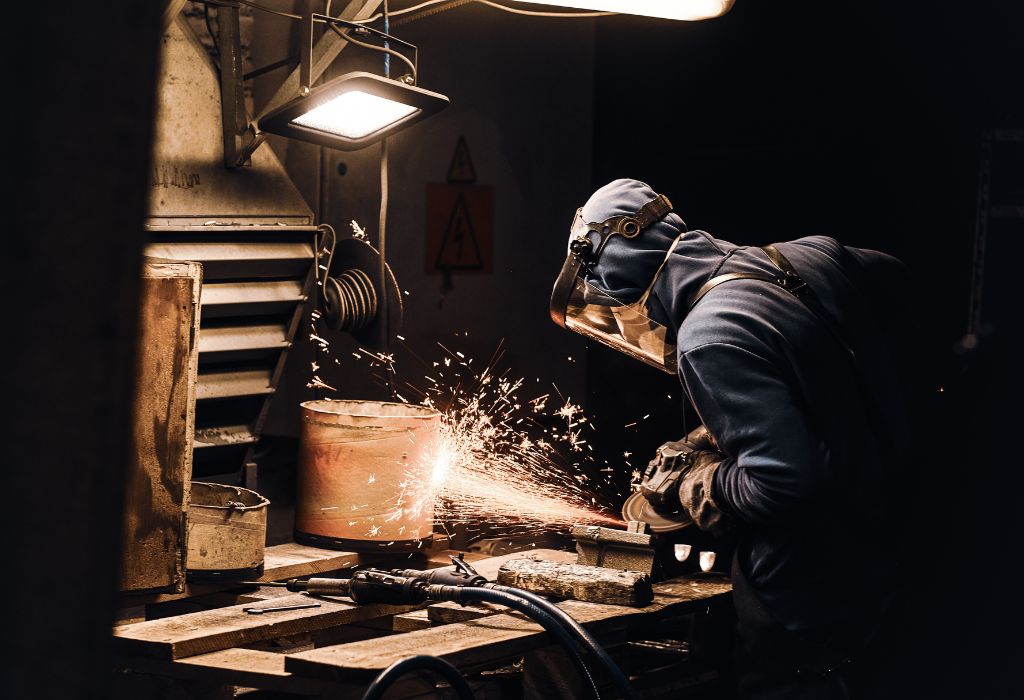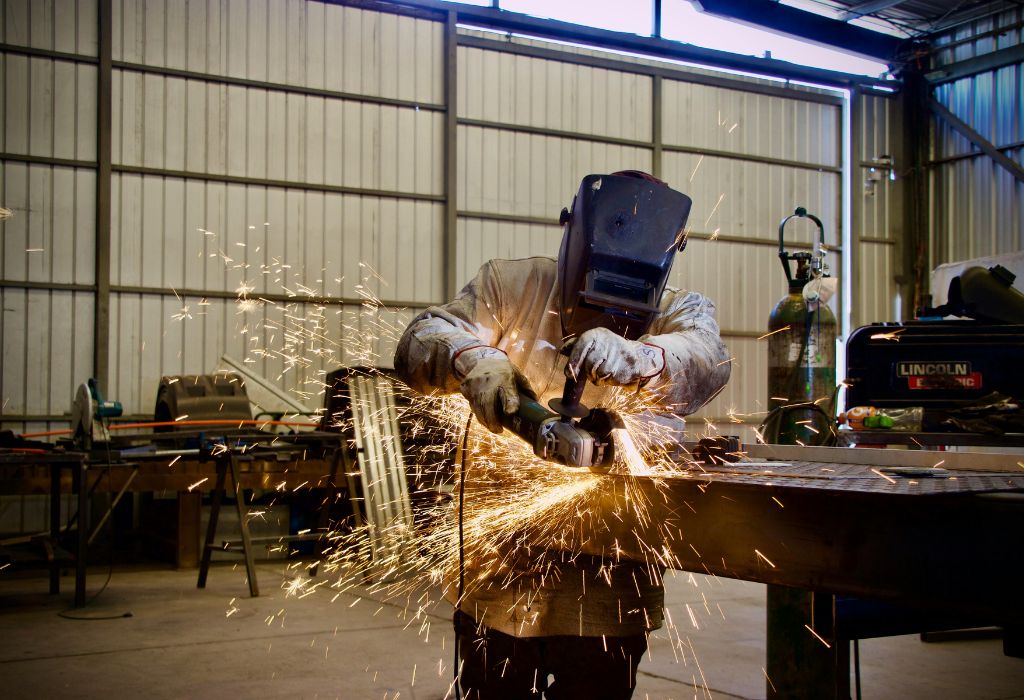
A welder’s helmet should be a shield of safety, not a source of distraction. Yet few things are more unsettling than seeing your lens flicker or flash while the arc burns bright. The momentary burst of light not only disrupts concentration but also puts eye safety at serious risk.
Every year, thousands of welders experience eye irritation or “arc flash” due to inconsistent lens darkening. In fact, about 2,000 workers in the U.S. suffer job-related eye injuries each day, many linked to improper protection or malfunctioning helmets (NIOSH). Another study found that nearly 60 % of welding-related eye injuries result from sudden exposure to intense light when helmets fail to darken correctly (PubMed).
A flashing helmet usually signals a deeper problem within the auto-darkening filter or sensor system. Weak batteries, blocked sensors, or incorrect sensitivity settings often cause the lens to switch rapidly between light and dark. Even environmental factors like LED lighting, sunlight reflections, or low-amp TIG welding can confuse sensors and trigger unwanted flicker.
Understanding why a welding helmet flashes is vital not only for comfort but also for long-term eye health. With proper maintenance, correct settings, and awareness of light interference, welders can prevent flashes before they start.
This guide breaks down the real causes behind a flashing welding helmet, explains quick troubleshooting methods, and shares expert-level prevention tips. By mastering these details, every welder can protect their vision, maintain consistent arc visibility, and weld with complete confidence.
What Flashing Means on an Auto-Darkening Helmet
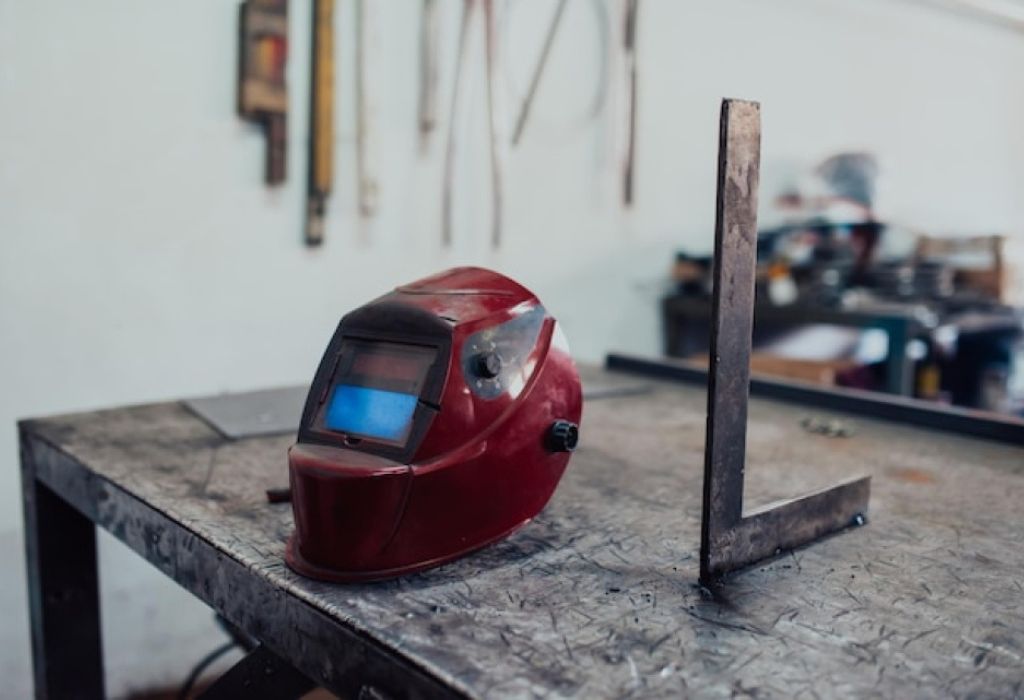
Flashing occurs when the auto-darkening filter rapidly switches between dark and light while welding. The filter’s sensors detect arc brightness and signal the lens to darken, but any delay or weak signal can cause momentary flickers.
These flashes expose the welder’s eyes to ultraviolet (UV) and infrared (IR) radiation. Even small bursts can accumulate damage over time, resulting in eye fatigue or photokeratitis — a condition often described as “welder’s flash.”
According to safety data, eye injuries make up more than one-fourth of welding-related accidents each year (OSHA). That makes stable lens performance critical for every welding process.
What is flashing in an auto-darkening helmet?
It’s the inconsistent switching between light and dark states caused by sensor or power issues.
Why is flashing dangerous?
Intermittent UV exposure strains the cornea and can cause temporary blindness or long-term sensitivity.
Does flashing always mean the lens is broken?
Not necessarily; most flashing comes from low power, poor sensitivity settings, or sensor interference rather than lens failure.
Can lighting in the shop cause flashing?
Yes, bright LED or overhead lights can confuse the sensors and cause false triggers.
How can flashing affect welding quality?
Inconsistent darkening interrupts puddle visibility, making bead control and penetration uneven.
Core Causes of a Flashing Welding Helmet
Flashing rarely has one single cause — it’s a combination of mechanical, optical, and environmental factors.
Weak or dead batteries are the most common reason. Auto-darkening filters (ADF) rely on constant voltage to switch states; once batteries weaken, the lens struggles to react in time.
Dirty or blocked sensors also cause trouble. Spatter, dust, or even gloved fingers can partially block the sensors, preventing them from detecting the full brightness of the arc.
Incorrect shade or sensitivity settings create confusion in the sensor logic. If the shade is too light or sensitivity too low, the helmet may think the arc isn’t bright enough to stay dark.
Environmental factors like backlighting, sunlight, or reflective metals amplify the problem. LED lights and stainless surfaces can bounce light into sensors, causing false readings.
Do weak batteries cause flashing?
Yes — when voltage drops, switching response slows, creating flicker.
Can blocked sensors trigger flashing?
Absolutely; even thin dust or spatter over the sensors can disrupt detection.
Will wrong shade settings cause strobing?
Yes, shades that are too light can force the lens to hunt between light and dark states.
Can low-amp TIG welding cause the helmet to flash?
Yes, because low amperage produces less UV radiation, sometimes below the sensor’s activation threshold.
Does temperature affect lens response?
Cold conditions can slow LCD reactions, making flashes more noticeable.
Quick Diagnostic Checklist
Before replacing parts, perform a short inspection.
Start by replacing the batteries with manufacturer-recommended cells. Even solar-assist helmets need charged batteries to react consistently.
Next, clean the sensors and both the inner and outer cover lenses. Wipe off spatter, grease, and dust using a microfiber cloth to avoid scratches.
If the lens still flickers, test the helmet under different lighting. Turn off overhead LEDs or move to a shaded area; if the flashing stops, ambient light interference is confirmed.
How to know if power is the issue
Replace batteries and test under the same welding current; if flashing disappears, the cause was low voltage.
What proves a blocked sensor?
If cleaning restores stable darkening, the sensors were obstructed.
Can lighting interference be identified easily?
Yes, if the problem only occurs under bright shop lights or sunlight.
When should the cover lens be replaced?
Whenever it’s scratched, fogged, or tinted — these reduce sensor accuracy.
Is it safe to keep welding during flashing?
No; stop immediately to prevent eye strain and permanent damage.
Adjusting Shade, Sensitivity, and Delay
Proper configuration often solves 80 % of flashing problems.
Most welding helmets allow control of shade, sensitivity, and delay. The shade determines how dark the lens becomes, the sensitivity sets how easily it reacts, and delay defines how long it stays dark after the arc stops.
For MIG welding, start around shade 10–12; for Stick, use 10–11; for TIG, use 9–11 at high sensitivity. Reference the official OSHA/ANSI shade chart for current guidelines.
What shade is ideal for Stick welding?
Use 10–11 for 90–150 A.
How should sensitivity be adjusted for low-amp TIG?
Increase sensitivity and delay so the arc keeps the lens dark even during short bursts.
Why extend delay during pulsed MIG?
A longer delay prevents flicker during pulse pauses.
Can shade too dark cause flashing?
Sometimes; if too dark, sensors may not detect arc start, causing delayed darkening.
Does every helmet handle settings the same?
No — always check the manufacturer’s instructions before adjusting sensitivity.
Environmental and Lighting Pitfalls
Shop lighting can create invisible interference.
Modern LED and fluorescent lights emit flickering frequencies that disrupt sensors. Bright skylights or sunlight through a window can also cause the lens to alternate states.
Positioning also matters; working with the sun or strong backlight behind you can trick the sensors into believing the arc has stopped.
Can sunlight cause flashing?
Yes, especially when welding outdoors facing the sun.
Do reflective metals increase flashing?
Highly reflective stainless steel can bounce arc light into sensors, confusing the ADF.
What helps prevent environmental flicker?
Use side shields or a hood to block external light.
Will changing helmet angle help?
Tilting the helmet slightly downward reduces reflections.
Can dark curtains around the workspace help?
Yes, welding booths or curtains minimize ambient light interference.
Maintenance Practices That Prevent Flashing
Routine maintenance extends the life and reliability of every welding helmet.
Replace cover lenses regularly; even minor scratches scatter light and reduce sensor accuracy. Check battery levels monthly, especially on solar-assist helmets stored indoors.
Clean the sensor windows with a soft cloth and avoid harsh cleaners that cloud the surface. Always store the helmet in a dry, room-temperature place away from direct sunlight or humidity.
How often should cover lenses be replaced?
Every few weeks under heavy use or when visibly scratched.
Do solar helmets need maintenance?
Yes; solar panels must remain clean to charge efficiently.
Should helmets be stored inside the shop?
Preferably; temperature extremes damage electronics.
How often should batteries be replaced?
Typically every 6–12 months, depending on use frequency.
What other parts require attention?
Headgear straps and shell alignment should also be checked for comfort and stability.
When to Repair or Replace the Helmet

Even the best helmets have limits.
If flashing continues after battery replacement, cleaning, and settings adjustment, the auto-darkening cartridge might be failing.
Cracked housings, unresponsive sensors, or visible liquid-crystal discoloration mean it’s time for replacement.
What are the signs of a failing ADF cartridge?
Random darkening without an arc or constant flickering even in low light.
Should the lens be repaired or replaced?
Replace if the cartridge fails continuity or warranty coverage applies.
Can professional recalibration fix some helmets?
Yes, some premium brands offer calibration services.
How long do ADFs typically last?
Around 5–7 years with proper maintenance.
Is it safe to keep using a flashing lens?
Never — any unpredictable darkening compromises eye safety.
Eye Safety and Long-Term Protection
Repeated flashes don’t just distract; they damage.
Photokeratitis, also known as “arc eye,” occurs when the cornea absorbs UV radiation. It causes redness, tearing, and intense pain several hours after exposure.
What are common symptoms of arc eye?
Burning, gritty feeling, light sensitivity, and blurred vision.
How can flashing contribute to injury?
Each flicker allows UV light through, accumulating damage over time.
What should be done after exposure?
Rest in a dark room, use lubricating eye drops, and seek medical attention if pain persists.
Can anti-UV drops or eyewear fully prevent arc eye?
No; only a properly functioning auto-darkening helmet provides full protection.
How do training and awareness help?
Proper education ensures welders recognize early signs of flashing and fix the issue before injury.
Conclusion
A flashing welding helmet is more than a nuisance — it’s a warning that protection isn’t working as intended. Power issues, blocked sensors, environmental light, or misadjusted settings can all cause erratic darkening.
By understanding the causes and following routine maintenance, welders can restore stability, improve comfort, and prevent vision damage.
Clean sensors, check batteries, and fine-tune sensitivity before every project. Small habits like these ensure reliable lens performance and consistent weld quality.
Take Action: Inspect your helmet today, clean the sensors, test delay and shade, and replace worn lenses. Reliable darkening isn’t just convenience — it’s critical protection for your most valuable tool: your eyes.

I’m Darrell Julian, the founder, lead writer, and hands-on welding enthusiast behind ArcWeldingPro.com. With more than 15 years of real-world welding experience, I created this platform to share what I’ve learned in the field, in the shop, and in the heat of the arc.